Healthcare Cybersecurity

At Least 560 U.S. Healthcare Facilities Were Impacted by Ransomware Attacks in 2020

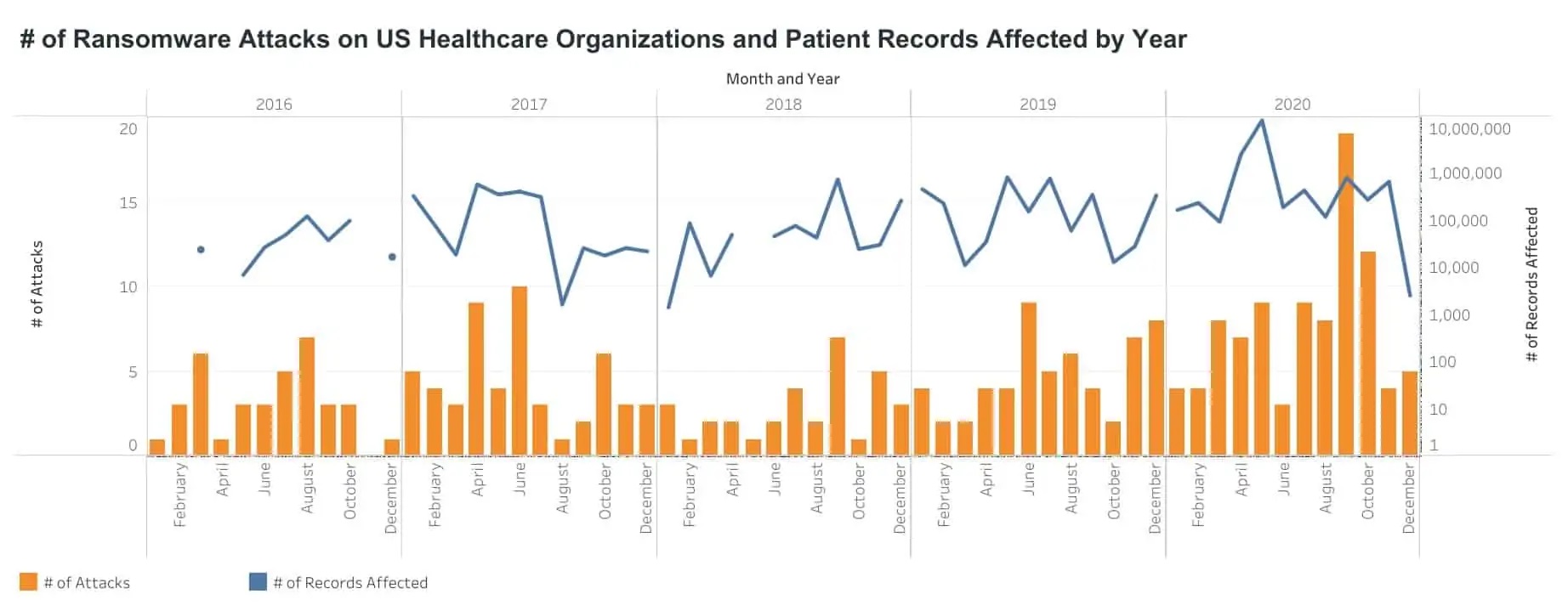
Ransomware attacks have had a massive impact on businesses and organizations in the United States, and 2020 was a particularly bad year. The healthcare industry, education sector, and federal, state, and municipal governments and agencies have been targeted by ransomware gangs and there were at least 2,354 attacks on these sectors in 2020, according to the latest State of Ransomware report from the New Zealand-based cybersecurity firm Emsisoft.

The number of ransomware attacks increased sharply toward the end of 2019, and while the attacks slowed in the first half of 2020, a major coordinated campaign was launched in September when attacks dramatically increased and continued to occur in large numbers throughout the rest of the year.

In 2020 there were at least 113 ransomware attacks on federal, state, and municipal governments and agencies, 560 attacks on healthcare facilities in 80 separate incidents, and 1,681 attacks on schools, colleges, and universities.

These attacks have caused significant financial harm and in some cases the disruption has had life threatening consequences. Healthcare services have had to be suspended, ambulances have been redirected to alternative facilities, 911 services have been interrupted, medical appointments have been postponed and test results have been delayed. “The fact that there were no ransomware-related deaths in the US last year was simply due to good luck. Security needs to bolstered across the public sector before that luck runs out and lives are lost,” said Fabian Wosar, CTO, Emsisoft.

One of the most damaging attacks was on Universal Health Services, a health system that operates more than 400 hospitals and healthcare facilities in the United States. The attack affected all its locations and caused considerable disruption. An attack on the University of Vermont Health Network forced systems offline, including its EHR system. Several hospital systems remained out of action for several weeks after the attack. The ransomware attack cost the health system around $1.5 million a day in additional expenses and lost revenue while it recovered. “Statistics let us know that the average ransomware incident costs $8.1 million and 287 days to recover,” said Gus Genter, CIO, Winnebago County, who was quoted in the report.

It has become increasingly common for ransomware threat actors to steal sensitive data prior to file encryption and for threats to be issued to publish or sell the stolen data if the ransom is not paid. This tactic was first adopted by the Maze ransomware gang, but many other threat groups have now adopted the same tactic. Emsisoft said only the Maze ransomware gang was exfiltrating data prior to file encryption at the start of 2020, but now at least 17 other threat groups are stealing data and publishing it on leak sites if the ransom is not paid.

In some cases, even payment of the ransom does not guarantee the stolen data will be deleted. Several ransomware gangs, including Sodinokibi (REvil), Netwalker, and Mespinoza are known to have leaked stolen data even after the ransom was paid.

Emsisoft notes that in the first half of 2020, only one of the 60 ransomware attacks on federal, state, county, and municipal governments and agencies resulted in stolen data being leaked; however, in the second half of the year, 23 out of the 53 attacks saw stolen data released on leak sites. At least 12 healthcare organizations that were attacked with ransomware had sensitive data stolen and leaked online.

2020 was clearly a bad year, but there is little to suggest 2021 will be any better. Ransomware attacks are likely to continue at pace and may even increase. “Unless significant action is taken, we anticipate 2021 being another banner year for cybercriminals,” explained Emsisoft in the report.

The post At Least 560 U.S. Healthcare Facilities Were Impacted by Ransomware Attacks in 2020 appeared first on HIPAA Journal.

2020 Healthcare Data Breach Report: 25% Increase in Breaches in 2020

More large healthcare data breaches were reported in 2020 than in any other year since the HITECH Act called for the U.S. Department of Health and Human Services’ Office for Civil Rights to start publishing healthcare data breach figures on its website.

In 2020, healthcare data breaches of 500 or more records were reported at a rate of more than 1.76 per day. 2020 saw 642 large data breaches reported by healthcare providers, health plans, healthcare clearing houses and business associates of those entities – 25% more than 2019, which was also a record-breaking year.

More than twice the number of data breaches are now being reported than 6 years ago and three times the number of data breaches that occurred in 2010.

Key Takeaways

  • 25% year-over-year increase in healthcare data breaches.
  • Healthcare data breaches have doubled since 2014.
  • 642 healthcare data breaches of 500 or more records were reported in 2020.
  • 76 data breaches of 500 or more healthcare records were reported each day in 2020.
  • 2020 saw more than 29 million healthcare records breached.
  • One breach involved more than 10 million records and 63 saw more than 100K records breached.
  • Hacking/IT incidents accounted for 67% of data breaches and 92% of breached records.
  • 3,705 data breaches of 500 or more records have been reported since October 2009.
  • 78 million healthcare records have been breached since October 2009.

U.S. Healthcare Data Breaches 2009 to 2020

2020 was the third worst year in terms of the number of breached healthcare records, with 29,298,012 records reported as having been exposed or impermissibly disclosed in 2020. While that is an alarming number of records, it is 29.71% fewer than in 2019. 266.78 million healthcare records have been breached since October 2009 across 3,705 reported data breaches of 500 or more records.

U.S. Healthcare data breaches - exposed records 2009-2020

The Largest Healthcare Data Breaches in 2020

The largest healthcare data breach of 2020 was a ransomware attack on the cloud service provider Blackbaud Inc. The actual number of records exposed and obtained by the hackers has not been made public, but more than 100 of Blackbaud’s healthcare clients were affected and more than 10 million records are known to have been compromised. The breach does not appear on the OCR breach portal, as each entity affected has reported the breach separately.

Prior to deploying ransomware, the hackers stole the fundraising and donor databases of many of its clients which included information such as names, contact information, dates of birth, and some clinical information. Victims included Trinity Health (3.3 million records), Inova Health System (1 million records), and Northern Light Health Foundation (657,392 records).

The Florida-based business associate MEDNAX Services Inc, a provider of revenue cycle management and other administrative services to its affiliated physician practice groups, experienced the largest phishing attack of the year. Hackers gained access to its Office 365 environment and potentially obtained the ePHI of 1,670 individuals, including Social Security numbers, driver’s license numbers, and health insurance and financial information.

Magellan Health’s million-record data breach also started with a phishing email but and ended with ransomware being deployed. The breach affected several of its affiliated entities and potentially saw patient information stolen.

Dental Care Alliance, a dental support organization with more than 320 affiliated dental practices across 20 states, had its systems hacked and the dental records of more than 1 million individuals were potentially stolen.

63 security incidents were reported in 2020 by HIPAA-covered entities and business associates that involved 100,000 or more healthcare records.

Name of Covered Entity Covered Entity Type Individuals Affected Type of Breach
Trinity Health Business Associate 3,320,726 Hacking/IT Incident
MEDNAX Services, Inc. Business Associate 1,290,670 Hacking/IT Incident
Inova Health System Healthcare Provider 1,045,270 Hacking/IT Incident
Magellan Health Inc. Health Plan 1,013,956 Hacking/IT Incident
Dental Care Alliance, LLC Business Associate 1,004,304 Hacking/IT Incident
Luxottica of America Inc. Business Associate 829,454 Hacking/IT Incident
Northern Light Health Business Associate 657,392 Hacking/IT Incident
Health Share of Oregon Health Plan 654,362 Theft
Florida Orthopaedic Institute Healthcare Provider 640,000 Hacking/IT Incident
Elkhart Emergency Physicians, Inc. Healthcare Provider 550,000 Improper Disposal
Aetna ACE Health Plan 484,157 Hacking/IT Incident
Saint Luke’s Foundation Healthcare Provider 360,212 Hacking/IT Incident
NorthShore University HealthSystem Healthcare Provider 348,746 Hacking/IT Incident
SCL Health – Colorado Healthcare Provider 343,493 Hacking/IT Incident
AdventHealth Healthcare Provider 315,811 Hacking/IT Incident
Nuvance Health Healthcare Provider 314,829 Hacking/IT Incident
Magellan Rx Management Business Associate 314,704 Hacking/IT Incident
The Baton Rouge Clinic Healthcare Provider 308,169 Hacking/IT Incident
Allegheny Health Network Healthcare Provider 299,507 Hacking/IT Incident
Northeast Radiology Healthcare Provider 298,532 Hacking/IT Incident

Main Causes of 2020 Healthcare Data Breaches

Hacking and other IT incidents dominated the healthcare data breach reports in 2020. 429 hacking/IT-related data breaches were reported in 2020, which account for 66.82% of all reported breaches and 91.99% of all breached records. These incidents include exploitation of vulnerabilities and phishing, malware, and ransomware attacks, with the latter having increased considerably in recent months.

causes of 2020 healthcare data breaches

A recent report from Check Point revealed there was a 71% increase in ransomware attacks on healthcare providers in October, and a further 45% increase in healthcare cyberattacks in the last two months of 2020. Some of the year’s largest and most damaging breaches to affect the healthcare industry in 2020 involved ransomware. In many cases, systems were taken out of action for weeks and patient services were affected. Ryuk, Sodinokibi (REvil), Conti, and Egregor ransomware have been the main culprits, with the healthcare industry heavily targeted during the pandemic.

Unauthorized access/disclosure incidents accounted for 22.27% of the year’s breaches and 2.69% of breached records. These incidents include the accessing of healthcare records my malicious insiders, snooping on medical records by healthcare workers, accidental disclosures of PHI to unauthorised individuals, and human error that exposes patient data.

Breach Type Number of breaches Records breached

Mean Records Breached

Median Records Breached
Hacking/IT Incident 429 26,949,956 62,820 8,000
Unauthorized Access/Disclosure 143 787,015 5,504 1,713
Theft 39 806,552 20,681 1,319
Improper Disposal 16 584,980 36,561 1,038
Loss 15 169,509 11,301 2,298

Location of Breached Protected Health Information

The increased use of encryption and cloud services for storing data have helped to reduce the number of loss/theft incidents, which used to account for the majority of reported breaches. Phishing attacks are still a leading cause of data breaches in healthcare and are often the first step in a multi-stage attack that sees malware or ransomware deployed.

Email account breaches were reported at a rate of more than 1 every two days in 2020, but email-related breaches took second spot this year behind breaches of network servers. Network servers often store large amounts of patient data and are a prime target for hackers and ransomware gangs.

While the majority of healthcare data breaches have involved electronic protected health information, a significant percentage of breaches in 2020 involved paper/film copies of protected health information which were obtained by unauthorized individuals, lost, or disposed of in an insecure manner.

Location of compromised data in healthcare data breaches 2020

Which Entities Suffered the Most Data Breaches in 2020?

The pie chart below shows the breakdown of HIPAA covered entities affected by data breaches of 500 or more records in 2020. Healthcare providers suffered the most breaches with 497 reported incidents. Business associates reported 73 data breaches, but it should be noted that in many cases a breach was experienced at the business associate, but the incident was reported by the covered entities affected. In total, 258 of the year’s breaches had some business associate involvement, which is 40.19% of all breaches. There were 70 breaches reported by health plans, and 2 breaches reported by healthcare clearinghouses.

2020 healthcare data breaches in the United States by Entity type

2020 Healthcare Data Breaches by State

South Dakota, Vermont, Wyoming residents survived 2020 without experiencing any healthcare data breaches, but there were breaches reported by entities based in all other states and the District of Columbia.

California was the worst affected state with 51 breaches, followed by Florida and Texas with 44, New York with 43, and Pennsylvania with 39.

State No. Breaches State No. Breaches State No. Breaches State No. Breaches
California 51 Virginia 18 New Jersey 9 Kansas 3
Florida 44 Indiana 17 South Carolina 9 Nebraska 3
Texas 44 Massachusetts 17 Washington 9 West Virginia 3
New York 43 Maryland 16 Delaware 8 District of Columbia 2
Pennsylvania 39 North Carolina 16 Utah 8 Idaho 2
Ohio 27 Colorado 14 Louisiana 6 Nevada 2
Iowa 26 Missouri 14 Maine 6 Oklahoma 2
Michigan 21 Arizona 12 New Mexico 6 Mississippi 1
Georgia 20 Arkansas 12 Oregon 5 Montana 1
Illinois 20 Kentucky 12 Hawaii 4 New Hampshire 1
Minnesota 20 Wisconsin 12 Alabama 3 North Dakota 1
Connecticut 19 Tennessee 10 Alaska 3 Rhode Island 1

HHS HIPAA Enforcement in 2020

2020 was a busy year in terms of HIPAA enforcement. The HHS’ Office for Civil Rights, the main enforcer of HIPAA compliance, conducted 19 HIPAA compliance investigations that resulted in financial penalties. More penalties were agreed with HIPAA covered entities and business associates in 2020 than in any other year since OCR started enforcing HIPAA compliance.  $13,554,900 was paid in penalties across the 19 cases.

It can take several years from the start of an investigation before a financial penalty is levied. Some of the largest settlements of the year date back to breaches that were experienced in 2015 or earlier; however, the large increase in financial penalties in 2020 is largely due to a HIPAA enforcement drive launched by OCR in late 2019 to tackle noncompliance with the HIPAA Right of Access. There were 11 settlements reached with healthcare providers in 2020 to resolve cases where individuals were not provided with timely access to their medical records.

You can view a summary of OCR’s 2020 HIPAA enforcement actions in this post.

State AG HIPAA Enforcement in 2020

OCR is not the only enforcer of HIPAA compliance. State attorney generals also have the authority to take action against entities found not to be in compliance with the HIPAA Rules. There has been a trend for state attorneys general to work together and pool resources in their legal actions for noncompliance with the HIPAA Rules. In 2020, two multi-state actions were settled with HIPAA covered entities/business associates to resolve violations of the HIPAA Rules.

The health insurer Anthem Inc. settled a case that stemmed from its 78.8 million-record data breach in 2015 and paid financial penalties totalling $48.2 million to resolve multiple potential violations of HIPAA and state laws.

CHSPSC LLC, a Tennessee-based management company that provides services to subsidiary hospital operator companies and other affiliates of Community Health Systems, also settled a multi-state action and paid a financial penalty of $5 million to resolve alleged HIPAA violations. The case stemmed from a 2014 data breach that saw the ePHI of 6,121,158 individuals stolen by hackers.

About This Report

The Health Insurance Portability and Accountability Act (HIPAA) requires all healthcare data breaches to be reported to the HHS’ Office for Civil Rights. A summary of breaches of 500 or more records is published by the HHS Office for Civil Rights. This report was compiled using data on the HHS website on 01/19/21 and includes data breaches currently under investigation and archived cases.

The post 2020 Healthcare Data Breach Report: 25% Increase in Breaches in 2020 appeared first on HIPAA Journal.

December 2020 Healthcare Data Breach Report

2020 ended with healthcare data breaches being reported at a rate of 2 per day, which is twice the rate of breaches in January 2020. Healthcare data breaches increased 31.9% month over month and were also 31.9% more than the 2020 monthly average.

There may still be a handful more breaches to be added to the OCR breach portal for 2020 but, as it stands, 565 healthcare data breaches of 500 or more records have been reported to OCR in 2020. That is more than any other year since the HITECH Act required OCR to start publishing data breach summaries on its website.

2020 Healthcare Data Breaches

December was the second worst month of 2020 in terms of the number of breached records. 4,241,603 healthcare records were exposed, compromised, or impermissibly disclosed across the month’s 62 reported data breaches. That represents a 272.35% increase in breached records from November and 92.25% more than the monthly average in 2020. For comparison purposes, there were 41 reported breaches in December 2019 and 397,862 healthcare records were breached.

healthcare records breached in 2020

Largest Healthcare Data Breaches Reported in December 2020

Name of Covered Entity State Covered Entity Type Individuals Affected Type of Breach Cause
MEDNAX Services, Inc. FL Business Associate 1,290,670 Hacking/IT Incident Phishing attack
Dental Care Alliance, LLC FL Business Associate 1,004,304 Hacking/IT Incident Unspecified hacking incident
Aetna ACE CT Health Plan 484,157 Hacking/IT Incident Phishing attack (business associate)
Allegheny Health Network PA Healthcare Provider 299,507 Hacking/IT Incident Ransomware attack (Blackbaud)
AMITA Health IL Healthcare Provider 261,054 Hacking/IT Incident Ransomware attack (Blackbaud)
Community Eye Care, LLC NC Health Plan 149,804 Hacking/IT Incident Email account breach
GenRx Pharmacy AZ Healthcare Provider 137,110 Hacking/IT Incident Ransomware attack
Wilmington Surgical Associates, P.A. NC Healthcare Provider 114,834 Hacking/IT Incident Ransomware attack
Agency for Community Treatment Services, Inc. FL Healthcare Provider 73,825 Hacking/IT Incident Ransomware attack
Sonoma Valley Healthcare District CA Healthcare Provider 69000 Hacking/IT Incident Ransomware attack

There were two healthcare data breaches reported in December that each impacted more than 1 million individuals. The largest breach was a phishing attack on the Florida-based business associate, MEDNAX Services, Inc. MEDNAX provides revenue cycle management and other administrative services to its affiliated physician practice groups. Hackers gained access to its Microsoft Office 365-hosted email system after employees responded to phishing emails. The compromised accounts contained the protected health information of 1,290,670 patients of its clients.

Dental Care Alliance is a Sarasota, FL-based dental support organization with more than 320 affiliated dental practices in 20 U.S. states. Little information has been released about the exact nature of the cyberattack, other than hackers gaining access to its systems and viewing files containing patient information.

Causes of December 2020 Healthcare Data Breaches

Ransomware gangs continue to target healthcare organizations and attacks have increased considerably in recent months. 5 of the worst data breaches reported in December involved ransomware, as did many of the smaller breaches. Several healthcare providers have only just reported being affected by the ransomware attack on Blackbaud Inc., which was discovered by the cloud service provide in May 2020.

Phishing continues to be a major cause of healthcare data breaches. There were 13 data breaches involving unauthorized accessing of email accounts, the majority of which used credentials stolen in phishing attacks. While most of the month’s breaches involved unauthorized accessing of electronic protected health information, 17.75% of the month’s breaches involved paper records and films, highlighting the importance of also protecting physical records.

cvauses of December 2020 healthcare data breaches

33 hacking/IT incidents were reported to OCR in December 2020. Those incidents accounted for 98.39% of the month’s breached records (4,173,519 records). An average of 126,470 records were breached per incident with a median breach size of 8,000 records per incident.

There were 21 unauthorized access/disclosure incidents reported to OCR which involved a total of 57,837 records. The average breach size was 2,754 records and the median breach size was 1,020 records.

There were 7 theft and loss incidents reported (5 theft/2 loss). The average breach size was 1,392 records and the median breach size was 856 records. There was also one incident involving the improper disposal of 501 records.

Location of PHI in December 2020 healthcare data breaches

Entities Reporting Data Breaches in December 2020

Healthcare providers were the worst affected covered entity in December 2020 with 39 breaches reported, but there was a major increase in data breaches reported by health plans. 17 health plans reported breaches of 500 or more records in December, which is a 183% increase from November.

There were 6 data breaches reported by business associates of HIPAA covered entities, but 40% of the month’s breaches (25) had some business associate involvement. In many cases, the breach was experienced by the business associate but was reported by the covered entity.

December 2020 healthcare data breaches by covered entity type

December 2020 Healthcare Data Breaches by State

HIPAA covered entities and business associates in 58% of U.S. states reported data breaches in December. Florida was the worst affected of the 29 states with 9 reported data breaches. Pennsylvania also had a particularly bad month with 7 reported breaches, followed by Missouri and Texas with 4, and Illinois, North Carolina, and Tennessee with 3.

There were two breaches reported in each of Arizona, Connecticut, Georgia, Massachusetts, Minnesota, Ohio, and Wisconsin, and one breach reported in each of Arkansas, California, Colorado, Delaware, Indiana, Iowa, Kentucky, Louisiana, Maine, Mississippi, Nebraska, Oregon, Utah, Virginia, and West Virginia.

HIPAA Enforcement in December 2020

2020 has been a busy year in terms of HIPAA enforcement. More financial penalties were imposed on HIPAA covered entities and their business associates to resolve potential HIPAA violations in 2020 than in any other year since the HHS was given the authority to enforce HIPAA compliance.  19 settlements were reached to resolve cases where HIPAA Rules appeared to have been violated.

OCR announced one further financial penalty in December – The 13th financial penalty under its HIPAA Right of Access initiative. Peter Wrobel, M.D., P.C., dba Elite Primary Care, agreed to pay OCR a $36,000 to resolve a case involving the failure to provide two patients with timely access to their medical records.

You can read more about 2020 HIPAA enforcement in our end of year summary.

The post December 2020 Healthcare Data Breach Report appeared first on HIPAA Journal.

CISA Warns of Hackers Exploiting Poor Cyber Hygiene to Access Cloud Environments

The DHS’ Cybersecurity and Infrastructure Security Agency (CISA) has issued a warning that threat actors are exploiting poor cyber hygiene to gain access to enterprise cloud environments. The alert was issued after CISA observed a surge in attacks on organizations that have transitioned to a largely remote workforce in response to the pandemic.

While some of the tactics outlined in the report may have been used by the hackers behind the SolarWinds Orion supply chain attack, these tactics have not been tied to any specific threat group and are being used by multiple threat actors to gain access cloud environments and obtain sensitive data.

According to the alert, threat actors are using a variety of tactics, techniques, and procedures to attack cloud environments, including brute force attacks to guess weak passwords, phishing attacks, and the exploitation of unpatched vulnerabilities and weaknesses in cloud security practices.

Phishing is commonly used to obtain credentials to remotely access cloud resources and applications. The phishing emails typically include hyperlinks to malicious websites where credentials are harvested. If multi-factor authentication has not been implemented, the credentials can be used by the attackers to access cloud resources. The phishing emails often appear to be secure messages and link to seemingly legitimate file hosting account logins. The compromised email accounts are then used to send further phishing emails internally to other employees. These internally sent phishing emails often link to documents within what appears to be the organization’s file hosting service.

There have been cases where auto-forwarding rules have been set up in the compromised email accounts to collect sensitive emails, or for search rules to be set up to locate and collect sensitive data. “In addition to modifying existing user email rules, the threat actors created new mailbox rules that forwarded certain messages received by the users (specifically, messages with certain phishing-related keywords) to the legitimate users’ Really Simple Syndication (RSS) Feeds or RSS Subscriptions folder in an effort to prevent warnings from being seen by the legitimate users,” explained CISA.

In addition to using phishing emails to steal login credentials, brute force tactics are used to guess weak passwords. In many cases, brute force and phishing attacks have succeeded but were thwarted by multi-factor authentication, which prevented the stolen credentials from being used; however, CISA identified one attack where multi-factor authentication was bypassed to gain access to cloud resources using ‘pass-the-cookie’ tactics. A pass-the-cookie attack involves the use of a stolen cookie for an already authenticated session to log into online services or web apps. These attacks can succeed even if an organization has correctly implemented multi-factor authentication.

Threat actors have been targeting employees who work remotely using personally owned or company provided devices to access their organization’s cloud resources from home. While organizations have implemented security solutions to block these attacks, many have succeeded as a result of poor cyber hygiene practices.

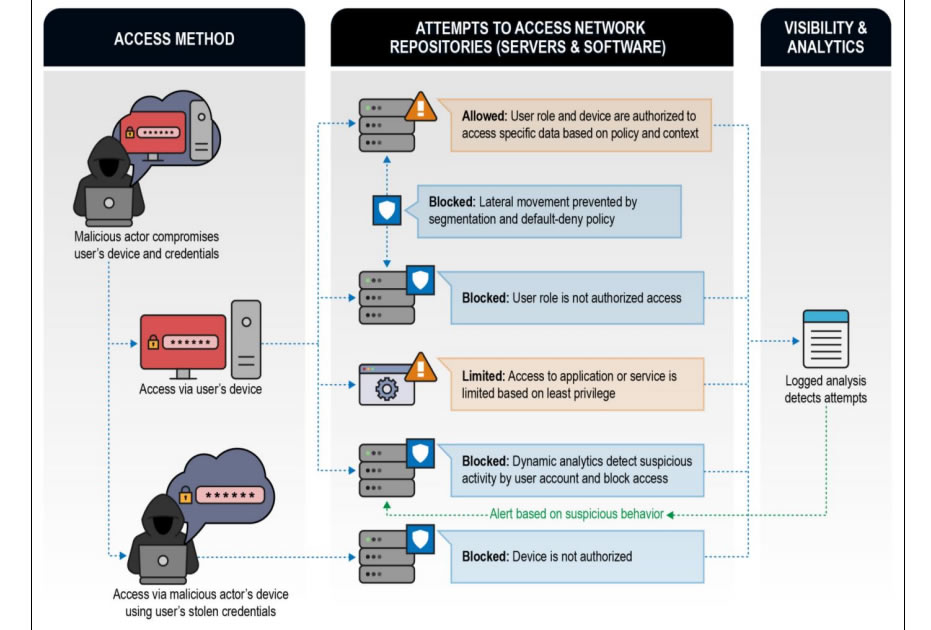
In the alert, CISA details best practices that can be adopted to improve cyber hygiene and strengthen cloud security configurations to block attacks on cloud services. These include implementing conditional access, reviewing Active Directory sign-in logs and unified audit logs for suspicious activity, enforcing MFA for all users, reviewing email forwarding rules regularly, following guidance on securing privileged access, resolving client site requests internal to the network, and recommends IT teams should adopt a zero-trust mindset. Specific recommendations have also been provided to help enterprise organizations secure their M365 environments.

Enterprise organizations have been advised to read the Strengthening Security Configurations to Defend Against Attackers Targeting Cloud Services Analysis Report and implement the recommendations.

The post CISA Warns of Hackers Exploiting Poor Cyber Hygiene to Access Cloud Environments appeared first on HIPAA Journal.

Healthcare Industry Web Application Attacks Increased by 51% in December

There has been a significant increase in healthcare industry web application attacks according to new data published by cybersecurity firm Imperva. Imperva Research Labs monitored a 51% increase in web application attacks between November 2020 and December 2020, which coincided with the start of the rollout of COVID-19 vaccines.

Imperva SVP Terry Ray said 2020 had been an unprecedented year of cyber activity, with healthcare web application attack volume up 10% year-over-year. On average there were 187 million web application attacks on healthcare targets each month in 2020, with each organization monitored by Imperva experiencing an average of 498 attack a month. The top targets were located in the United States, United Kingdom, Brazil, and Canada.

In December, Imperva Research Labs detected significant increases in four types of attacks. The largest increase was seen in protocol manipulation attacks, which increased 76% from the previous month and were the third most common attack type. There was a 68% increase in remote code execution / remote file inclusion attacks, although they only accounted for a relatively small volume of attacks.

Cross-site scripting (XSS) attacks were the most common attack type, with attack volume increasing 43% from the previous month. SQL injection attacks were the second most common attack type, with these attacks increasing by 44% since November.

While the number of web application attacks increased, reports of actual data breaches decreased globally. “My hypothesis is that many organizations likely don’t know the extent or impact of these attacks yet. The reason being: for most of the year, healthcare was focused on trying to enable remote work while managing the frontline logistics of a global pandemic. Thus, less time was spent on threat research, incident response and incident analysis,” said Ray.

Healthcare organizations will likely only discover the impact those attacks have had in the first few weeks of 2021. Worryingly, Imperva detected a 43% increase in healthcare data leakage in the first three days of 2021. This is the unauthorized transmission of data from within an organization to an external recipient, which is often the result of a security breach.

2020 has certainly been a challenging year, and that has seen IT transformation significantly accelerated. Ray explained that in healthcare the speed of transformation has been impressive, with IT projects that would normally take 10 years being shortened to just three, with some digital initiatives having a timeline of weeks or months.

While the acceleration is impressive, it has resulted in risks being introduced.  “Many healthcare organizations rely on third-party applications anytime they can, instead of writing their own, for the convenience it offers, to reduce IT development risks and costs and to facilitate greater collaboration,” said Ray. “While there are sometimes business advantages to third-party applications, the risks include: patching only on the vendor’s timeline, known exploits that are widely publicized and constant zero-day research on widely used third-party tools and APIs.”

The increased reliance on JavaScript APIs and third-party applications has had the effect of creating a threat landscape of complex, automated, and opportunistic cybersecurity risks, which are difficult for organizations to detect and block.

The increase in attacks is certainly bad news, but there are steps that healthcare organizations can take to reduce risk. Systems should be modernized, and investment in application and data security should be increased. Rather than using point solutions to address each unique risk, an integrated platform should be used that can optimize web performance while protecting against all the main web application threats.

The post Healthcare Industry Web Application Attacks Increased by 51% in December appeared first on HIPAA Journal.

Hackers Leak Data Stolen in European Medicines Agency Cyberattack

In December, the European Medicines Agency (EMA) suffered a cyberattack and hackers gained access to third party documents. Some of the data stolen in the attack has now been leaked online.

The EMA is the agency responsible for regulating the assessments and approvals of COVID-19 vaccines, treatments, and research in the EU. The EMA had previously issued an update on investigation into the cyberattack and said only one IT application had been compromised. The EMA said all third parties had been notified about the attack, although those companies were not named. In the updates on the investigation, the EMA said the primary goal of the attackers was to gain access to COVID-19 medicine and vaccine information. While it was clear that documents had been accessed, the EMA has only just confirmed that data was exfiltrated by the attackers.

Prior to the cyberattack, BioNTech and Pfizer submitted their vaccine data to the EMA as part of the approval process and the server accessed by the hackers contained documents related to the regulatory submissions by Pfizer and BioNTech. Pfizer and BioNTech issued a joint statement in December confirming documents relating to their BNT162b2 vaccine had been unlawfully accessed. Reuters has reported Moderna data was also compromised in the attack, but that has yet to be confirmed by Moderna.

In an update issued on January 12, 2021, the EMA confirmed data had been exfiltrated by the attackers and some of the unlawfully accessed documents related to COVID-19 medicines had been leaked on the Internet. The EMA also confirmed for the first time that some personal data had also been compromised.

Neither the EMA, BioNTech, nor Pfizer have disclosed which documents were leaked or what information has been made public; however, Bleeping Computer reported data stolen in the attack had been made available on several hacking forums. Several sources in the cybersecurity intelligence community had confirmed that the leaked data included screenshots of emails, peer review data, and several PDF files, Word documents, and PowerPoint presentations.

“The agency continues to fully support the criminal investigation into the data breach and to notify any additional entities and individuals whose documents and personal data may have been subject to unauthorized access,” said the EMA. The EMA is working closely with law enforcement agencies to remove and secure the leaked data and identify the individuals responsible for the attack. It is currently unclear who was responsible for the cyberattack and if there is a nation-state link.

The investigation into the attack is continuing, but the EMA has confirmed that there will be no impact on the timeline for the review and approval process for the vaccines.

The post Hackers Leak Data Stolen in European Medicines Agency Cyberattack appeared first on HIPAA Journal.

2020-2021 HIPAA Violation Cases and Penalties

The Department of Health and Human Services’ Office for Civil Rights (OCR) settled 19 HIPAA violation cases in 2020. More financial penalties were issued in 2020 than in any other year since the Department of Health and Human Services was given the authority to enforce HIPAA compliance. $13,554,900 was paid to OCR to settle the HIPAA violation cases. 2021 saw a slight reduction in the number of settlements and fines for HIPAA violations, with 14 enforcement actions announced by OCR. Even so, 2021 had the second-highest number of HIPAA fines of any year since OCR started enforcing compliance with the HIPAA Rules.

While the number of penalties was still high in 2021, there was a sizeable reduction in penalty amounts which totaled $5,982,150 for the year, and $5,100,000 of that total came from just one enforcement action. The reason for this is that most of the penalties were for violations of the HIPAA Right of Access, and were in response to investigations of complaints filed by patients who had not been provided with timely access to their medical records, rather than penalties for violations of multiple HIPAA Rules that impacted large numbers of individuals. The $5,100,000 penalty, imposed on Excellus Health Plan, was so large because there were multiple violations of the HIPAA Rules, over multiple years, that led to a breach of the ePHI of 9,358,891 individuals.

Penalties for Noncompliance with the HIPAA Right of Access

In late 2019, OCR announced a new HIPAA enforcement initiative to tackle non-compliance with the Right of Access standard of the HIPAA Privacy Rule. Since then, OCR has been rigorously enforcing compliance with the HIPAA Right of Access and as of December 2021, has imposed 25 penalties for HIPAA Right of Access violations totaling $1,564,650. The fines range from $3,500 to $200,000. There have been 24 settlements and one civil monetary penalty, with many of the fines imposed on small healthcare providers.

The HIPAA Right of Access standard – 45 C.F.R. § 164.524(a) – gives patients the right to access, inspect, and obtain a copy of their own protected health information in a designated record set.  When a request is received from an individual or their personal representative, the records must be provided within 30 days. A reasonable, cost-based fee may be charged for providing a copy of the requested records. A request for access to an individual’s health records may be denied, but only in very limited circumstances.

OCR investigates complaints from individuals who allege they have been denied access to their health records, have not received records within 30 days, or have been charged excessive amounts for copies of their records. The financial penalties imposed by OCR in 2020 for HIPAA Right of Access violations ranged from $15,000 to $160,000 and stemmed from refusals to provide copies of records or long delays. In many cases, records were only provided after OCR intervened.

2021 HIPAA Right of Access Enforcement Actions

Covered Entity Penalty Outcome
Banner Health 200,000 Settlement
Rainrock Treatment Center LLC (dba monte Nido Rainrock) 160,000 Settlement
Dr. Robert Glaser 100,000 Civil Monetary Penalty
Children’s Hospital & Medical Center 80,000 Settlement
Renown Health 75,000 Settlement
Sharpe Healthcare 70,000 Settlement
Arbour Hospital 65,000 Settlement
Advanced Spine & Pain Management 32,150 Settlement
Denver Retina Center 30,000 Settlement
Village Plastic Surgery 30,000 Settlement
Wake Health Medical Group 10,000 Settlement

Other 2021 HIPAA Violation Penalties

Covered Entity Penalty Outcome
Excellus Health Plan $5,100,000 Settlement
AEON Clinical Laboratories (Peachstate) $25,000 Settlement

Only two HIPAA enforcement actions in 2021 were not the result of HIPAA Right of Acess violations.

Excellus Health Plan

Rochester, New York-based Excellus Health Plan, a member of the Blue Cross Blue Shield Association, was investigated to identify potential HIPAA compliance issues following a report of a data breach of 9,358,891 records in 2015. It was one of three mega data breaches to be reported by health plans that year, Anthem Inc and Premera Blue Cross being the other two, both of which had settled their cases and paid sizeable penalties.

Excellus discovered the breach in August 2015, with its investigation revealing hackers had access to its systems between December 23, 2013, and May 11, 2015. The breach was reported to OCR on September 9, 2015. Malware had been installed which allowed the hackers to exfiltrate the data of around 7 million Excellus Health Plan members and approximately 2.5 million members of Lifetime Healthcare, its non-BlueCross subsidiary, which included names, contact information, dates of birth, Social Security numbers, health plan ID numbers, claims data, financial account information, and clinical treatment information.

OCR’s investigation uncovered multiple HIPAA violations, including the failure to conduct an accurate and thorough organization-wide risk analysis, the failure to reduce risks and vulnerabilities to ePHI to a reasonable and appropriate level, and a lack of technical policies and procedures to limit data access to authorized persons and software programs. Excellus chose to settle the case and paid a $5,100,000 penalty and agreed to implement a comprehensive Corrective Action Plan to address all areas of non-compliance.

Peachstate Health Management LLC, dba AEON Clinical Laboratories

The enforcement action against Peachstate Health Management is notable because this was the first OCR investigation to result in a financial penalty for HIPAA violations identified in a company that was not the initial subject of the investigation.

OCR launched an investigation after receiving a report from the Department of Veteran Affairs in 2015 about a data breach involving its business associate, Authentidate Holding Corporation (AHC). AHC managed the VA’s Telehealth Services Program and suffered a data breach. While investigating, OCR learned that AHC had entered into a reverse merger with Peachstate Health Management on January 27, 2016, which saw Peachstate acquired by AHC. Peachstate is a CLIA-certified laboratory that provides clinical and genetic testing services through its publicly traded parent company, AEON Global Health Corporation (AGHC).

OCR then launched an investigation of Peachstate to assess HIPAA Privacy and Security Rule compliance and found multiple violations of the HIPAA Rules. OCR identified multiple HIPAA Security Rule failures, including risk assessment, risk management, audit controls failures, as well as the failure to maintain documentation of HIPAA Security Rule policies and procedures. The case was settled for $25,000, and a corrective action plan was agreed to resolve the HIPAA violations.

2020 HIPAA Right of Access Enforcement Actions

Covered Entity Penalty Outcome
Dignity Health, dba St. Joseph’s Hospital and Medical Center $160,000 Settlement
NY Spine $100,000 Settlement
Beth Israel Lahey Health Behavioral Services $70,000 Settlement
University of Cincinnati Medical Center $65,000 Settlement
Housing Works, Inc. $38,000 Settlement
Peter Wrobel, M.D., P.C., dba Elite Primary Care $36,000 Settlement
Riverside Psychiatric Medical Group $25,000 Settlement
Dr. Rajendra Bhayani $15,000 Settlement
All Inclusive Medical Services, Inc. $15,000 Settlement
Wise Psychiatry, PC $10,000 Settlement
King MD $3,500 Settlement

Other 2020 HIPAA Violation Penalties

The remaining HIPAA violation penalties issued in 2020 were issued for non-compliance with several provisions of the HIPAA Rules. The penalty amounts reflect the seriousness of the violations, the harm caused, the number of individuals affected, the level of cooperation with OCR, the voluntary actions taken to address the violations, and the ability of the entity to pay. In each of the HIPAA violation cases below, OCR discovered multiple violations of the HIPAA Rules.

Covered Entity Amount Outcome
Premera Blue Cross $6,850,000 Settlement
CHSPSC LLC $2,300,000 Settlement
Athens Orthopedic Clinic $1,500,000 Settlement
Lifespan Health System Affiliated Covered Entity $1,040,000 Settlement
Aetna $1,000,000 Settlement
City of New Haven, CT $202,400 Settlement
Steven A. Porter, M.D $100,000 Settlement
Metropolitan Community Health Services dba Agape Health Services $25,000 Settlement

Second Largest HIPAA Violation Penalty for Premera Blue Cross

The largest HIPAA violation penalty of 2020 was imposed on the health insurer Premera Blue Cross. Premera Blue Cross was investigated over a data breach in which the protected health information of 10,466,692 individuals was obtained by hackers.

During the investigation, OCR discovered multiple potential violations of the HIPAA Security Rule. Premera Blue Cross had failed to conduct a comprehensive risk analysis, had not reduced risks to the confidentiality, integrity, and availability of ePHI to a reasonable and appropriate level, and had implemented insufficient hardware and software controls.

Premera Blue Cross agreed to pay a financial penalty of $6,850,000 to resolve the case and adopted a corrective action plan to address all areas of noncompliance.

In addition to the OCR penalty, Premera Blue Cross settled a multi-state action for $10 million and a class action lawsuit filed on behalf of victims of the breach for $74 million.

The financial penalty was the second-largest ever to be issued by OCR. The largest HIPAA violation penalty – $16 million – was paid by Anthem Inc. in 2018 and resolved an investigation into its 78.8 million record data breach that was discovered in 2015. Following on from that settlement, in 2020 Anthem Inc settled a multi-state action and paid $48.2 million in penalties. Anthem also settled a class action lawsuit filed on behalf of victims of the breach in 2018 for $115 million.

CHSPSC LLC

CHSPSC LLC, a Tennessee-based management company that provides services to many subsidiary hospital operator companies and other affiliates of Community Health Systems, suffered a cyberattack in April 2014 in which compromised admin credentials were used by hackers to gain access to its systems. The hackers stole the ePHI of 6,121,158 individuals.

OCR investigated and found systemic noncompliance with the HIPAA Security Rule. CHSPSC had failed to conduct a comprehensive risk analysis, was not conducting information system activity reviews, and had implemented insufficient access controls and security incident response procedures. When notified about the cyberattack by the FBI, it took CHSPSC two months to respond.

CHSPSC LLC settled the case, paid a $2,300,000 penalty, and adopted a corrective action plan to address all areas of noncompliance. Community Health Systems and CHSPSC LLC also settled a multi-state action with 28 state Attorneys General over the breach for $5,000,000.

Athens Orthopedic Clinic

The Athens, GA-based healthcare provider Athens Orthopedic Clinic suffered a cyberattack in 2016 in which a hacker stole a database containing the PHI of 208,557 patients and demanded payment not to release the stolen data. When payment was not received the database was published.

OCR’s investigation into the breach uncovered systemic noncompliance with the HIPAA Rules. Athens Orthopedic Clinic had failed to conduct a comprehensive risk analysis, had not implemented security procedures to reduce risks to ePHI to a reasonable and appropriate level, had failed to implement appropriate hardware, software, and procedures for recording and analyzing information system activity, and did not implement HIPAA policies until August 2016.

OCR also found the clinic had not entered into business associate agreements with three vendors and did not provide HIPAA Privacy Rule training to the entire workforce until January 15, 2018.

Athens Orthopedic Clinic agreed to settle the case, paid a $1.5 million penalty, and adopted a corrective action plan to address all areas of noncompliance.

Lifespan Health System Affiliated Covered Entity

Lifespan Health System Affiliated Covered Entity is a Rhode Island not-for-profit health system with many healthcare provider affiliates in the state. In February 2017, an unencrypted laptop computer was stolen from an employee’s vehicle. The laptop contained the ePHI of 20,431 patients.

OCR investigated the breach and discovered systemic noncompliance with the HIPAA Rules. Lifespan had conducted a risk analysis and determined encryption was required for its mobile devices due to the high risk of data exposure but failed to implement encryption on mobile devices. The movement of the devices in and out of its facilities was not tracked and there was no comprehensive inventory of mobile devices. OCR also found that there was no business associate agreement between Lifespan Corporation and Lifespan ACE.

Lifespan ACE agreed to settle the case, paid a $1,040,000 penalty, and adopted a corrective action plan to address all areas of noncompliance.

Aetna

Aetna Life Insurance Company and its affiliated covered entity (Aetna) were investigated by OCR after reporting three data breaches in 2017. The first breach involved the exposure of the protected health information of 5,002 plan members over the Internet, and the other two breaches involved mailings in which sensitive PHI could be viewed through the windows of the envelopes. In the first mailing to 11,887 individuals the words ‘HIV medication’ could be viewed through the windows of the envelopes. In the second mailing to 1,600 individuals, the name and logo of an atrial fibrillation study could be viewed.

OCR determined Aetna had not performed periodic technical and non-technical evaluations of operational changes affecting the security of their ePHI, procedures had not been implemented to verify the identity of individuals or entities looking to access their ePHI, disclosures of ePHI had not been limited to the minimum necessary information to achieve the purpose for the disclosures, and there was a lack of appropriate administrative, technical, and physical safeguards to ensure the privacy of ePHI.

Aetna agreed to settle the case, paid a $1 million penalty, and agreed to adopt a corrective action plan to address all areas of noncompliance.

Other penalties related to be breach include a $1.15 million settlement with the New York Attorney General, a $935,000 settlement with the California Attorney General, and similar settlements with Connecticut ($99,959), the District of Columbia ($175,000), and New Jersey ($365,211.59). A class action lawsuit filed on behalf of victims of the breach was settled for $17.2 million.

City of New Haven, CT

In January 2017, the City of New Haven in Connecticut reported a data breach of the ePHI of 498 individuals to OCR. The city had terminated an employee in 2016 during her probationary period. The former employee returned to the New Haven Health Department with her union representative after she had been terminated, used her work key to access her old office, and locked herself inside. She used her login credentials to access a work computer and copied data onto a USB drive before leaving.

In addition to failing to terminate the former employee’s access rights, OCR discovered a comprehensive risk analysis had not been performed, the city had failed to implement HIPAA Privacy Rule policies, and had not issued unique IDs to allow system activity to be tracked.

The City of New Haven settled the case, paid a $202,400 financial penalty, and agreed to adopt a corrective action plan to address all areas of noncompliance.

Steven A. Porter, M.D

The medical practice of Steven A. Porter, M.D in Ogden, UT provides gastroenterological services to more than 3,000 patients. On November 13, 2013, OCR received a breach notification alleging Dr. Porter’s electronic medical record company was impermissibly using patients’ electronic medical records by blocking the practice’s access to ePHI until a $50,000 bill was paid.

OCR investigated and found serious violations of the HIPAA Security Rule at the practice. At the time of the investigation, a risk analysis had never been performed and risks to the confidentiality, integrity, and availability of ePHI had not been managed and reduced to a reasonable and acceptable level. The practice had also allowed Dr. Porter’s EHR company to create, receive, maintain, or transmit ePHI on behalf of the practice, without entering into a business associate agreement.

Dr. Porter settled the case, paid a $100,00 financial penalty, and agreed to adopt a corrective action plan to address all areas of noncompliance.

Metropolitan Community Health Services / Agape Health Services

Metropolitan Community Health Services is a Washington, NC-based Federally Qualified Health Center that provides integrated medical, dental, behavioral health & pharmacy services for adults and children. Operating as Agape Health Services, Metro provides discounted medical services to the underserved population in rural North Carolina.

In June 2011, Metro notified OCR about a breach of the PHI of 1,263 patients. OCR conducted a compliance review and identified longstanding, systemic noncompliance with the HIPAA Security Rule.

Prior to the breach, Metro had not implemented HIPAA Security Rule policies and procedures, had failed to conduct an accurate risk analysis, and had not provided security awareness training to its workforce for more than 16 years.

Metro settled the case, paid a $25,000 penalty, and agreed to adopt a corrective action plan to address all areas of noncompliance.

Further information on HIPAA Penalties

You can view a summary of the HIPAA violation penalties in previous years on this link.

The post 2020-2021 HIPAA Violation Cases and Penalties appeared first on HIPAA Journal.

HITECH Act Amendment Creating Cybersecurity Safe Harbor Signed into Law

On January 5, 2020, President Trump added his signature to a bill (HR 7898) that amends the Health Information Technology for Economic and Clinical Health Act (HITECH Act) and creates a safe harbor for companies that have implemented recognized security best practices prior to experiencing a data breach.

While the bill does not go as far as preventing the Department of Health and Human Services’ Office for Civil Rights from imposing financial penalties for HIPAA compliance issues that contributed to a data breach, the amendment requires OCR to take into consideration the security measures that were in place to reduce cybersecurity risk in the 12 months prior to a data breach.

The main aim of the bill is to incentivize healthcare organizations to adopt an established, formalized, and recognized cybersecurity framework and adhere to industry security best practices, as doing so will provide a degree of insulation against regulatory enforcement actions.

The bill requires the HHS to consider an entity’s use of recognized security best practices when investigating reported data breaches and considering HIPAA enforcement penalties or other regulatory actions. If an entity has adopted the NIST Cybersecurity Framework or HITRUST CSF for example, it will be taken into consideration when calculating fines related to security breaches. Adoption of security best practices will mitigate remedies that would otherwise be agreed between an entity and the HHS to resolve potential violations of the HIPAA Security Rule.

The bill also requires the HHS to decrease the extent and length of audits if an entity is determined to have achieved industry-standard security best practices and makes it clear that the HHS is not authorized to increase fines for entities found not to have adhered to recognized security practices.

Recognized security practices are defined as “the standards, guidelines, best practices, methodologies, procedures, and processes developed under section 2(c)(15) of the National Institute of Standards and Technology (NIST) Act, the approaches promulgated under section 405(d) of the Cybersecurity Act of 2015, and other programs and processes that address cybersecurity and that are developed, recognized, or promulgated through regulations under other statutory authorities. Such practices shall be determined by the covered entity or business associate, consistent with the HIPAA Security Rule.”

The healthcare industry is extensively targeted by hackers and healthcare data breaches are becoming much more common. Each year, the number of successful cyberattacks on healthcare organizations and their business associates increases and 2020 was no exception. 2020 was the worst ever year for healthcare industry data breaches by far. It is also worth noting that 2020 saw more HIPAA penalties imposed on HIPAA covered entities and business associates by the HHS’ Office for Civil Rights than any other year since the HHS was given the authority to impose financial penalties for HIPAA violations.

Healthcare organizations and HIPAA business associates that have not yet adopted a common cybersecurity framework or other recognized security practices should consider doing so now. Adoption of recognized security practices will help to reduce the risk of a data breach as well as the negative consequences if a data breach does occur.

The post HITECH Act Amendment Creating Cybersecurity Safe Harbor Signed into Law appeared first on HIPAA Journal.

FBI Issues Warning About Increasing Egregor Ransomware Activity

The Federal Bureau of Investigation (FBI) has issued a Private Industry Alert about the growing threat of Egregor ransomware attacks.

Egregor ransomware is a ransomware-as-a-service operation that was first identified in September 2020. The threat actors behind the operation recruit affiliates to distribute their ransomware and give them a cut of any ransoms they generate. The affiliates have been highly active over the past three months and have conducted attacks on many large enterprises. High-profile victims include Barnes & Noble, Ubisoft, Kmart, Crytek, and the Canadian transportation agency TransLink.

The threat group claims to have gained access to more than 150 corporate networks and deployed their ransomware, with the ransom demands exceeding $4 million. Many affiliates have been recruited by the Egregor ransomware gang and each has their preferred method of distributing the ransomware. With a wide range of tactics, techniques, and procedures used to deliver the ransomware, defending against attacks can be a challenge for network defenders.

Initial access to corporate networks is often gained through phishing attacks targeting corporate email accounts using attachments with malicious code that downloads the ransomware payload. Other tactics include brute force attacks on weak passwords and the exploitation of vulnerabilities in Remote Desktop Protocol (RDP) and Virtual Private Networks (VPNs).

Once a network has been compromised, the attackers escalate privileges and move laterally within networks using tools such as Advanced IP Scanner, Cobalt Strike, AdFind, and malware such as QakBot. The network is explored to find sensitive data, which is exfiltrated using 7zip and Rclone, sometimes hiding the activity as a Service Host Process (svchost). The exfiltrated data is used to pressure victims into paying the ransom with the threat actors threatening to sell or publish the data if payment is not made.

The ransomware first appeared around the same time as the Maze ransomware operation shut down and any Maze ransomware affiliates switched to distributing Egregor ransomware. Several security researchers have suggested the Maze ransomware gang is running the Egregor ransomware operation due to the arrival of Egregor as the Maze operation shut down, similarities between the companies attacked and the ransom notes. The threat actors running the Egregor ransomware operation also appear to have considerable experienced running ransomware-as-a-service operations.

The FBI has advised against paying the ransom demands as there is no guarantee that valid keys will be supplied to unlock encrypted data and that stolen data may not be deleted even if the ransom is paid. Paying the ransom helps to fund future attacks and encourages the threat actors to continue.

Due to the diverse tactics, techniques, and procedures used to distribute the ransomware, network defenders need to harden security organization-wide. To ensure data can be recovered in the event of an attack, regular backups should be performed of critical data, and those backups should be stored offline, in the cloud or on an external hard drive that is not connected to the network. Backups should never be accessible from the network where the data resides.

Antivirus and antimalware solutions should be deployed and set to update automatically, email security gateways should be used to block phishing attacks, and multi-factor authentication should be implemented on corporate email accounts and remote access solutions. If multi-factor authentication cannot be implemented, it is essential to use strong passwords.

Secure networks should be used for remote access and public Wi-Fi networks should be avoided. Public-facing remote access solutions should be regularly updated and patches should be applied promptly. Several attacks saw networks compromised by exploiting vulnerabilities in RDP such as CVE-2020-0609, CVE-2020-0610, CVE-2020-16896, CVE-2019-1489, CVE-2019-1225, CVE-2019-1224, CVE-2019-1108. Patching these vulnerabilities should be prioritized. The FBI also recommends reviewing suspicious .bat and .dll files with recon data, such as .log files, and monitoring for the use of exfiltration tools.

Victims of Egregor ransomware attacks are being encouraged to report the attacks to their local FBI office or the FBI’s 24/7 CyberWatch. Victims should bear in mind that payment of a ransom potentially carries sanctions risks. Last year, the Office of Foreign Assets Control (OFAC) of the Treasury Department warned that paying a ransom could violate OFAC regulations if it involves a sanction nexus. OFAC should be contacted prior to victims paying any ransom payment in order to avoid future sanctions.

The post FBI Issues Warning About Increasing Egregor Ransomware Activity appeared first on HIPAA Journal.