HIPAA Breach News

HHS’ Office for Civil Rights Imposes Further 5 Financial Penalties for HIPAA Right of Access Violations

The HHS’ Office for Civil Rights (OCR) is continuing with its enforcement of compliance with the HIPAA Right of Access and has recently announced a further 5 financial penalties. The HIPAA Right of Access enforcement initiative was launched in the fall of 2019 in response to a significant number of complaints from patients who had not been provided with timely access to their medical records.

The HIPAA Privacy Rule requires covered entities to provide individuals with access to their medical records. A copy of the requested information must be provided within 30 days of the request being received, although an extension of 30 days may be granted in limited circumstances. HIPAA-covered entities are permitted to charge patients for exercising this important Privacy Rule right, but may only charge a reasonable, cost-based fee. Labor costs are only permitted for copying or otherwise creating and delivering the PHI after it has been identified.

The enforcement actions to date have not been imposed for charging excessive amounts, only for impermissibly refusing to provide a copy of the requested records or for unnecessary delays. In some cases, patients have had to wait many months before they were provided with a copy of their records.

The latest announcement by OCR brings the total number of HIPAA Right of Access enforcement actions under the 2019 enforcement initiative up to 25.

In all of the new cases below, OCR determined the healthcare providers were in violation of 45 C.F.R. § 164.524 and had not provided timely access to protected health information about the individual after receiving a request.

Advanced Spine & Pain Management, a provider of chronic pain-related medical services in Cincinnati and Springboro, OH, agreed to settle OCR’s investigation and paid a $32,150 financial penalty and will be monitored by OCR for compliance with its corrective action plan for 2 years. The investigation stemmed from a complaint from a patient who requested his medical records on November 25, 2019, but was not provided with the records until March 19, 2020.

Denver Retina Center, a Denver, CO-based provider of ophthalmological services, settled its investigation with OCR and paid a $30,000 financial penalty and will be monitored for compliance with its corrective action plan for 12 months. A patient alleged she had requested her records in December 2018 but did not receive a copy of her records until July 26, 2019. OCR had provided technical assistance to the healthcare provider following receipt of a previous HIPAA Right of Access complaint from the same patient and closed the case. When evidence was received of continued non-compliance the case was reopened. OCR determined that in addition to the delay, Denver Retina Center’s access policies and procedures were not compliant with the HIPAA Privacy Rule, as required by 45 C.F.R. § 164.530(i).

Rainrock Treatment Center LLC (dba Monte Nido Rainrock), a Eugene, OR-based provider of residential eating disorder treatment services, settled OCR’s investigation and paid a $160,000 financial penalty and will be monitored for compliance with the corrective action plan for 12 months. OCR had received three complaints from a patient who had not been provided with a copy of her medical records. The patient had requested a copy of her records on October 1, 2019, and November 21, 2019, and did not receive the requested records until May 22, 2020.

Wake Health Medical Group, a Raleigh, NC-based provider of primary care and other health care services, settled OCR’s investigation and paid a $10,000 financial penalty and has agreed to take corrective action to prevent further HIPAA Right of Access violations. OCR had received a complaint from a patient who requested a copy of her medical records on June 27, 2019 and paid a $25 flat fee, which is the standard fee charged by Wake Health Medical Group for providing copies of medical records. As of the date of the settlement, the patient has still not been provided with the requested records.

Dr. Robert Glaser, a New Hyde Park, NY-based cardiovascular disease and internal medicine doctor, did not cooperate with OCR during the investigation, although did not contest the findings and waived his right to a hearing. A civil monetary penalty of $100,000 was imposed by OCR. An investigation was launched following receipt of a complaint from a former patient who alleged he had made several written and verbal requests for a copy of his medical records between 2013 and 2014. The complaint was filed with OCR on November 9, 2017, and the case was closed by OCR on December 15, 2017, after advising Dr. Glaser to investigate the complaint and provide the requested records if the requests were in line with the HIPAA Right of Access. The patient filed a further complaint with OCR on March 20, 2018, and provided evidence of further written requests. OCR tried to contact Dr. Glaser on multiple occasions by letter and phone, but he repeatedly failed to respond, hence the decision to impose a civil monetary penalty.

“Timely access to your health records is a powerful tool in staying healthy, patient privacy and it is your right under law,” said OCR Director Lisa J. Pino. “OCR will continue its enforcement actions by holding covered entities responsible for their HIPAA compliance and pursue civil money penalties for violations that are not addressed.”

The post HHS’ Office for Civil Rights Imposes Further 5 Financial Penalties for HIPAA Right of Access Violations appeared first on HIPAA Journal.

One Community Health Patients Notified About April 2021 Cyberattack and Data Theft

Sacramento, CA-based One Community Health has recently notified patients that its systems were compromised between April 19 and April 20, 2021. An unauthorized individual was discovered to have gained access to systems containing the personal and protected health information of certain employees and patients.

A comprehensive forensic investigation was conducted by a third-party cybersecurity firm to determine the nature and scope of the attack, and One Community Health was notified on October 6, 2021, that the attacker had exfiltrated files from its network that included full names and one or more of the following data elements: Address, other demographic information, telephone number, email address, date of birth, Social Security number, driver’s license number, insurance information, diagnosis information, and treatment information.

Notification letters started to be sent to all affected patients on November 22, 2021. There have been no reported cases of identity theft or fraud; however, complimentary credit monitoring services have been offered to affected individuals as a precaution against identity theft and fraud.

One Community Health said it has been working with cybersecurity experts to augment its defenses against cyberattacks, and has improved endpoint detection, email security, and has signed up for 24×7 managed detection response.

Email Error by Eye Care Product Manufacturer Results in PHI Disclosure

Alcon, a provider of eye care products, has discovered an email error that resulted in the disclosure of certain patients’ protected health information to healthcare providers not authorized to view the information.

On October 5, 2021, Alcon emailed patients’ protected health information to healthcare providers to facilitate billing. The emails were supposed to only contain information about each healthcare providers’ patients; however, a technical error meant the emails contained the information of patients of other healthcare providers.

The emails contained a limited amount of information about patients who had recently received an Alcon intraocular lens implant, namely, first and last names, device serial numbers, dates of implant, and treating physician names.

All healthcare providers who received the email were contacted and told to delete the email and Alcon has reviewed and updated its policies and procedures to prevent similar breaches in the future. Due to the nature of the information disclosed and the entities that received the information, Alcon does not believe any patient information will be used inappropriately.

The post One Community Health Patients Notified About April 2021 Cyberattack and Data Theft appeared first on HIPAA Journal.

Sarasota MRI, Consociate Health, & Upstate Homecare Notify Patients About Data Breaches

Sarasota MRI, Consociate Health, and Upstate Homecare have recently notified regulators and patients about security incidents involving personal and protected health information.

Upstate Homecare Notifies 5,100 Patients About Ransomware Attack

The Albany, NY-based home healthcare provider, Upstate Healthcare, has notified 5,114 patients about a recent ransomware attack in which patient data was stolen.

It is unclear from the breach notification letters when the attack occurred; however, an investigation conducted by a third-party cybersecurity firm determined on November 4, 2021, that patient data had been stolen and posted to a data leak website on the darknet.

The stolen data included full names, dates of birth, addresses, telephone numbers, email addresses, driver’s license numbers, bank account information, Social Security numbers, treatment information physicians’ names, patient ID numbers, and Medicare/Medicaid numbers.

Following the attack, Upstate Healthcare performed a comprehensive review of its security measures and has implemented additional safeguards to better protect its systems and data against future attacks. Affected individuals were notified on November 24, 2021, and have been offered complimentary access to identity theft monitoring and restoration services.

Sarasota MRI Notifies Patients About Potential PHI Exposure

Florida-based Sarasota MRI has started notifying certain patients about the potential exposure of some of their protected health information. In late July 2020, Sarasota MRI was contacted by a third-party, unaffiliated cybersecurity firm and was notified that one of its servers had been misconfigured, which allowed information on the server to be accessed.

The server in question was determined not to be in use and data had been migrated to a different server. Further, a review of the server uncovered no evidence to suggest it had been accessed by unauthorized individuals, other than the security company that detected the misconfiguration.

However, since it was not possible to rule out the exposure of individuals’ names, dates of birth, medical records, and medical images, affected individuals are now being notified. According to the breach notification letter sent to the Vermont attorney general on November 12, 2021, Sarasota moved quickly to correct the misconfiguration and conducted an investigation into a potential breach, and has taken steps to ensure the security of its systems.

Consociate Health Discovers Breach at Employee Benefits Plan Administrator

Consociate Health, a provider of employee benefits programs and plan administration services, has recently completed a 10-month investigation into a data breach involving the protected health information of 982 individuals. The investigation revealed the breach only affected the PHI of individuals from January 1, 2014, through December 31, 2015.

The types of exposed data included names, addresses, dates of birth, diagnosis codes, medical record numbers, health insurance information, medical record information, and Social Security numbers.

No evidence was found to indicate any PHI has been misused but, as a precaution, affected individuals have been offered complimentary access to identity theft monitoring services for 12 months.

The post Sarasota MRI, Consociate Health, & Upstate Homecare Notify Patients About Data Breaches appeared first on HIPAA Journal.

Former Huntington Hospital Employee Charged with Criminal HIPAA Violation

A former employee of Huntington Hospital in New York has been charged with a criminal HIPAA violation over the unauthorized accessing of 13,000 patient records.

The employee worked the night shift at the hospital impermissibly accessed the medical records of patients between October 2018 and February 2019. The types of information viewed by the employee included demographic information such as names, dates of birth, telephone numbers, addresses, internal account numbers, medical record numbers, and clinical information including diagnoses, medications, lab test results, treatment information, and healthcare provider names. Huntington Hospital said it found no evidence to suggest Social Security numbers, insurance information, credit card numbers, and other payment-related information were accessed.

When the unauthorized access was discovered, the employee was immediately suspended while a comprehensive investigation was conducted. The investigation concluded on February 25, 2019, the employee was terminated for the HIPAA violation, and law enforcement was notified.

The hospital said all employees are provided with HIPAA training and are made aware of their responsibilities with respect to the protected health information of patients, and that its training program is ongoing. The hospital has security tools in place that monitor for unauthorized access and regular audits of access logs are conducted. The breach has prompted the hospital to improve its access controls and additional, targeted training has been provided to the workforce to reemphasize the importance of ensuring patient confidentiality.

Huntington Hospital recently issued a press release about the unauthorized access and has now sent breach notification letters to all affected individuals. While the HIPAA Breach Notification Rule requires notification letters to be sent to affected patients within 60 days of the discovery of a data breach, notifications can be delayed at the request of law enforcement. In this case, law enforcement requested the hospital delay issuing notifications so as not to impede the investigation. Law enforcement gave the hospital the go-ahead to issue breach notification letters this month.

While Social Security numbers and financial information are not believed to have been accessed, the hospital has offered affected individuals complimentary identity theft protection services for 12 months, or longer if required to do so by state laws.

The law enforcement investigation concluded the unauthorized access warranted criminal charges for the HIPAA violation.

Southwestern Vermont Medical Center Notifies Patients About Insider Data Breach

Southwestern Vermont Medical Center has issued notification letters to certain patients whose medical records were obtained by a former resident physician.

On or around September 16, 2021, the Bennington hospital discovered the former physician had copied portions of certain patients’ medical records and sent them to a personal email account in June 2021 prior to completing their residency. The theft of patient data has been reported to law enforcement and the hospital is assisting with the investigation. At this stage of the investigation it is unclear why the medical records were copied.

The types of information obtained by the physician varied from patient to patient and may have included one or more of the following types of protected health information: First and last name, date of birth, medical record number, treating provider name, summaries of care, and other limited information that was recorded to provide medical services to patients.

Southwestern Vermont Medical Center said it has not been made aware of any misuse of patient data; however, affected patients are being encouraged to monitor the statements they receive from their healthcare providers and insurers.

The post Former Huntington Hospital Employee Charged with Criminal HIPAA Violation appeared first on HIPAA Journal.

Hacking Incidents Reported by Retinal Consultants Medical Group, Three Rivers Regional Commission, & ACE Surgical Supply

Retinal Consultants Medical Group, ACE Surgical Supply, and Three Rivers Regional Commission have recently reported cyberattacks in which the protected health information of patients may have been obtained by unauthorized individuals.

Retinal Consultants Medical Group Hacking Incident Affects 11,603 Patients

Vitreo-Retinal Medical Group Inc., dba Retinal Consultants Medical Group, says it was the victim of a sophisticated cyberattack that was detected on or around July 12, 2021 and caused a service disruption.

Vitreo-Retinal Medical Group engaged third-party cybersecurity consultants to help restore its systems and investigate the nature and scope of the attack. While the investigation confirmed unauthorized individuals had gained access to its computer network, it was not possible to tell if any protected health information was accessed or exfiltrated, although no reports have been received that suggest actual or attempted misuse of patient data.

A comprehensive manual and programmatic review of the affected systems confirmed the following types of protected health information had potentially been compromised: name, address, date of birth, medical condition or treatment information, medical record number, diagnosis code, patient account number, Medicare/Medicaid information, treating physician name, health insurance information, and username/password. A limited number of Social Security numbers were also stored on the affected systems.

Vitreo-Retinal Medical Group says third-party cybersecurity experts have been assisting with a review of its security systems and additional measures will be implemented, as appropriate, to improve data security.

Affected individuals started to be notified on November 9, 2021, and complimentary credit monitoring services have been made available where required.

12,122 Individuals Affected by Cyberattack on ACE Surgical Supply

Brockton, MA-based ACE Surgical Supply has discovered its IT environment was accessed by an unauthorized individual who may have viewed or obtained the protected health information of 12,122 individuals.

Its systems were accessed on June 29, 2021, and the breach was detected the same day. The investigation confirmed the affected systems contained personal information along with financial account numbers, debit/credit card information, and information that could potentially allow accounts to be accessed.

ACE Surgical Supply said affected individuals have been offered credit monitoring and identity theft protection services for 24 months at no cost.

Three Rivers Regional Commission Ransomware Attack Impacts 2,000 Patients

The Griffin, GA-based regional planning organization, Three Rivers Regional Commission, has discovered the protected health information of around 2,000 individuals may have been obtained by unauthorized individuals in a ransomware attack.

The attack was detected on July 20, 2021, when employees were prevented from accessing its computer systems. Assisted by third-party cybersecurity experts, Three Rivers Regional Commission determined the attacker gained access to its systems between July 18, 2021 and July 20, 2021 and prior to the use of ransomware, exfiltrated files containing sensitive data.

The forensic investigation is ongoing and notification letters will be sent to affected individuals when their identities and contact information have been determined. At this stage, the following types of information are believed to have been obtained in the attack: Name, address, driver’s license number, Social Security number, and medical information, including diagnosis and treatment information, lab test results, medications, and Medicare/Medicaid identification numbers.

Three Rivers Regional Commission said it is implementing additional administrative and technical safeguards to further secure the information in its systems.

The post Hacking Incidents Reported by Retinal Consultants Medical Group, Three Rivers Regional Commission, & ACE Surgical Supply appeared first on HIPAA Journal.

PHI of 57,000 Patients Potentially Compromised in TriValley Primary Care Cyberattack

Perkasie, PA-based TriValley Primary Care has started notifying 57,596 patients that some of their personal and protected health information has potentially been compromised.

Suspicious activity was detected in its IT environment on October 11, 2021. Steps were immediately taken to secure its systems and prevent further unauthorized access, and third-party forensic experts were engaged to conduct an investigation to determine the nature and scope of the cyberattack.

The investigation into the breach concluded on November 4 and while no evidence of actual or attempted misuse of patient data was identified, unauthorized access and potential theft of protected health information could not be ruled out. As such, affected patients have been advised to be vigilant against identity theft and fraud, and complimentary credit monitoring services have been provided to affected individuals.

A review of the files on the affected systems confirmed the following types of patient data may have been compromised: First and last name, gender, home address, phone number, email address, date of birth, Social Security number, health insurance policy/group plan number, group plan provider, claim information, medical history, diagnosis, treatment information, dates of service, lab test results, prescription information, provider name, medical account number, and other information contained in medical records.

TriValley Primary Care said it is working with cybersecurity experts to improve its cybersecurity policies, procedures, and protocols to reduce the risk of further data breaches and the workforce is being provided with additional cybersecurity training.

The post PHI of 57,000 Patients Potentially Compromised in TriValley Primary Care Cyberattack appeared first on HIPAA Journal.

Data Breaches Reported by True Health New Mexico & Educators Mutual Insurance Association

The Albuquerque, NM-based health insurance agency True Health New Mexico has started notifying certain health plan members about the exposure and potential theft of some of their protected health information.

A data security incident was detected on October 5, 2021, and steps were immediately taken to secure its IT systems. The internal incident response team launched an investigation and third-party cybersecurity defense firms were engaged to assist with the forensic investigation.

The investigation revealed an unauthorized individual had gained access to its IT systems in early October and may have viewed or exfiltrated files that contained protected health information such as names, dates of birth, ages, home addresses, email addresses, insurance information, medical information, Social Security numbers, health account member IDs, provider information, and date(s) of service.

True Health New Mexico said at the time of issuing notification letters, no evidence had been found of misuse of members’ information; however, as a precaution against identity theft and fraud, affected individuals have been offered credit monitoring and identify theft protection services at no cost.

The cyberattack has been reported to law enforcement and a criminal investigation has been launched. The data breach has been reported to the HHS’ Office for Civil Rights as affecting 62,983 individuals.

Educators Mutual Insurance Association

Murray, UT-based Educators Mutual Insurance Association (EMIA) has discovered an unauthorized individual had access to its computer network between July 29, 2021, and August 10, 2021, and may have viewed or obtained the protected health information of some of its members.

The breach was detected by EMIA on August 23, 2021, with the subsequent investigation confirming malware had been installed on its network. A review of the files on the parts of the compromised system revealed they contained protected health information such as names, addresses, dates of birth, clinical information, health insurance identification numbers, driver’s license numbers, and Social Security numbers. Full financial numbers of members are not believed to have been exposed.

A third-party cybersecurity firm has been engaged to conduct a forensic investigation, which is still ongoing. While no evidence of attempted or actual misuse of patient data has been found, affected individuals have been advised to remain vigilant against instances of identity theft.

EMIA says it will continue to regularly audit its system to identify unauthorized network activity and will be enhancing its network monitoring tools.

The post Data Breaches Reported by True Health New Mexico & Educators Mutual Insurance Association appeared first on HIPAA Journal.

October 2021 Healthcare Data Breach Report

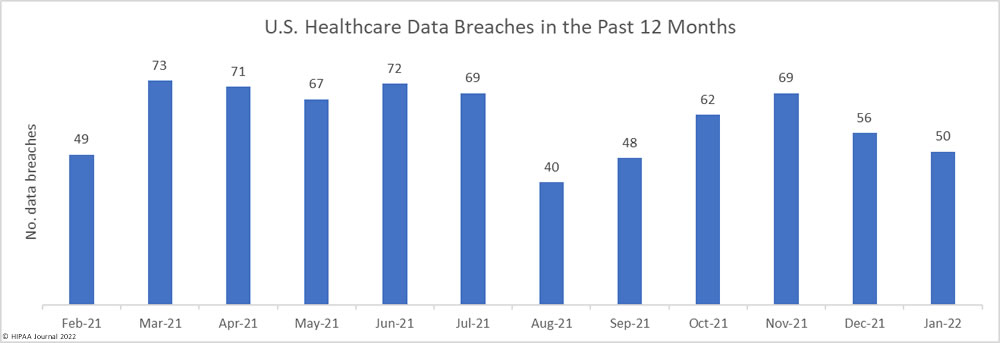
October saw 59 healthcare data breaches of 500 or more records reported to the Department of Health and Human Services’ Office for Civil Rights, which represents a 25.5% increase from September. Over the past 12 months, from November 2020 to October 2021, there have been 655 reported breaches of 500 or more records, 546 of which have been reported in 2021.

Healthcare Data Breaches (November 20-October 21)

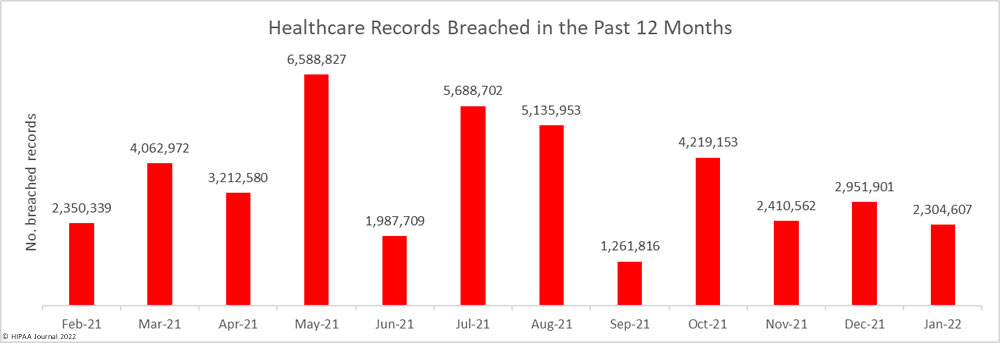
The protected health information (PHI) of 3,589,132 individuals was exposed, stolen, or impermissibly disclosed across the 59 reported data breaches, which is 186% more records than September. Over the past 12 months, from November 2020 to October 2021, the PHI of 39,938,418 individuals has been exposed or stolen, with 34,557,664 individuals known to have been affected by healthcare data breaches so far in 2021.

Healthcare records breached (november 20-october 21)

Largest Healthcare Data Breaches in October 2021

There were 18 data breaches reported to the HHS’ Office for Civil Rights in October that impacted 10,000 or more individuals, as detailed in the table below.

Name of Covered Entity State Covered Entity Type Individuals Affected Type of Breach Breach Cause
Eskenazi Health IN Healthcare Provider 1,515,918 Hacking/IT Incident Ransomware attack
Sea Mar Community Health Centers WA Healthcare Provider 688,000 Hacking/IT Incident Ransomware attack
ReproSource Fertility Diagnostics, Inc. MA Healthcare Provider 350,000 Hacking/IT Incident Ransomware attack
QRS, Inc. TN Business Associate 319,778 Hacking/IT Incident Unauthorized network server access
UMass Memorial Health Care, Inc. MA Business Associate 209,048 Hacking/IT Incident Phishing attack
OSF HealthCare System IL Healthcare Provider 53,907 Hacking/IT Incident Ransomware attack
Educators Mutual Insurance Association UT Health Plan 51,446 Hacking/IT Incident Unauthorized network access and malware infection
Lavaca Medical Center TX Healthcare Provider 48,705 Hacking/IT Incident Unauthorized network access
Professional Dental Alliance, LLC PA Healthcare Provider 47,173 Unauthorized Access/Disclosure Phishing attack on a vendor
Nationwide Laboratory Services FL Healthcare Provider 33,437 Hacking/IT Incident Ransomware attack
Professional Dental Alliance of Michigan, PLLC PA Healthcare Provider 26,054 Unauthorized Access/Disclosure Phishing attack on a vendor
Syracuse ASC, LLC NY Healthcare Provider 24,891 Hacking/IT Incident Unauthorized network access
Professional Dental Alliance of Georgia, PLLC PA Healthcare Provider 23,974 Unauthorized Access/Disclosure Phishing attack on a vendor
Professional Dental Alliance of Florida, LLC PA Healthcare Provider 18,626 Unauthorized Access/Disclosure Phishing attack on a vendor
Professional Dental Alliance of Illinois, PLLC PA Healthcare Provider 16,673 Unauthorized Access/Disclosure Phishing attack on a vendor
Professional Healthcare Management, Inc. TN Healthcare Provider 12,306 Hacking/IT Incident Ransomware attack
Professional Dental Alliance of Tennessee, LLC PA Healthcare Provider 11,217 Unauthorized Access/Disclosure Phishing attack on a vendor
Professional Dental Alliance of New York, PLLC PA Healthcare Provider 10,778 Unauthorized Access/Disclosure Phishing attack on a vendor

Ransomware attacks continue to plague healthcare organizations and threaten patient safety. Half of the top 10 data breaches involved ransomware, including the top three data breaches reported in October.

The worst breach of the month was reported by Eskenazi Health. The PHI of more than 1.5 million patients was exposed and patient data is known to have been stolen in the attack. A major ransomware attack was also reported by Sea Mar Community Health Centers. Its systems were first compromised in December 2020, the ransomware attack was identified in March 2021, and Sea Mar was notified about the posting of patient data on a darknet marketplace in June. It took until late October to issue notifications to affected individuals.

Hackers often gain access to healthcare networks through phishing attacks, and phishing remains the leading attack vector in ransomware attacks. Large quantities of sensitive data are often stored in email accounts and can easily be stolen if employees respond to phishing emails. A phishing attack on UMass Memorial Health Care resulted in the exposure of the PHI of 209,048 individuals, and a phishing attack on a vendor used by the Professional Dental Alliance exposed the PHI of more than 174,000 individuals.

Causes of October 2021 Healthcare Data Breaches

Data breaches classified as hacking/IT incidents, which include ransomware attacks, were the main cause of data breaches in October. 57.63% of all breaches reported in the month were classified as hacking/IT incidents and they accounted for 94.14% of all breached records (3,378,842 records). The average size of the data breaches was 99,378 records and the median breach size was 5,212 records.

Causes of October 2021 healthcare data breaches

22 breaches were classified as unauthorized access/disclosure incidents and involved the PHI of 200,887 individuals. Those breaches include the phishing attack that affected the Professional Dental Alliance. The average breach size was 9,131 records and the median breach size was 4,484 records.

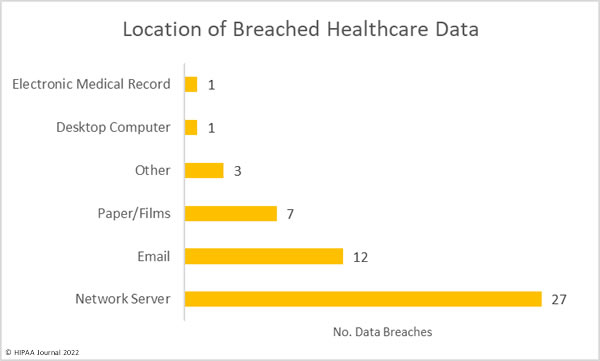
There were 4 breaches reported that involved the loss or theft of physical PHI or electronic devices containing PHI, 3 of which were theft incidents and 1 was a lost laptop computer. The PHI of 9,403 individuals was exposed as a result of those incidents. The average breach size was 2,351 records and the mean breach size was 1,535 records.

Location of breached protected health information -October 2021

Healthcare Data Breaches by HIPAA-Regulated Entity Type

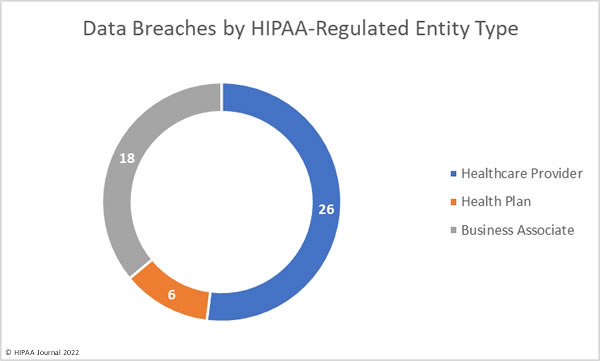
Healthcare providers were the worst affected covered entity type with 43 reported breaches. 8 data breaches were reported by business associates of HIPAA-covered entities and 8 were reported by health plans. Many data breaches occur at business associates of HIPAA-covered entities but are reported by the affected covered entity. The pie chart below shows the breakdown of breaches based on where they occurred.

October 2021 healthcare data breaches by HIPAA-regulated entity type

Healthcare Data Breaches by State

Healthcare data breaches were reported by HIPAA-regulated entities in 26 states. Pennsylvania was the worst affected state with 12 reported breaches, although 11 of those breaches were the same incident – the phishing attack on the Professional Dental Alliance vendor that was reported separately by each affected HIPAA-covered entity.

State No. Breaches
Pennsylvania 12
California 5
Illinois, Indiana, & Texas 4
New York & Washington 3
Connecticut, Florida, Massachusetts, New Jersey, North Carolina & Tennessee 2
Alabama, Arkansas, Kansas, Kentucky, Minnesota, Mississippi, Nebraska, Ohio, South Carolina, Utah, Virginia, & West Virginia 1

HIPAA Enforcement Activity in October 2021

There was only one HIPAA enforcement action announced in October. The New Jersey Attorney General agreed to settle an investigation into a data breach reported by Diamond Institute for Infertility and Menopause that resulted in the exposure of the PHI of 14,663 New Jersey residents.

The New Jersey Department of Law and Public Safety Division of Consumer Affairs uncovered violations of 29 provisions of the HIPAA Privacy and Security Rules, and violations of the New Jersey Consumer Fraud Act. In addition to paying $495,000 in civil monetary penalties and investigation costs, Diamond agreed to implement additional measures to improve data security.

The post October 2021 Healthcare Data Breach Report appeared first on HIPAA Journal.

PHI of 127,000 NorthCare Patients Potentially Compromised in Ransomware Attack

NorthCare, an Oklahoma City, OK-based mental health clinic, was the victim of a ransomware attack in June 2021 in which patients protected health information may have been compromised.

NorthCare identified suspicious network activity on June 1, 2021, when ransomware was used to encrypt files. The investigation into the attack confirmed its network was breached on May 29, 2021. The attackers rapidly deployed ransomware to prevent access to files and demanded payment of a ransom for the keys to decrypt files.

Steps were immediately taken to contain the attack and while it was not possible to prevent file encryption, it was possible to restore its systems and data from backups without paying the ransom.

The parts of the network accessed by the attackers contained patients’ protected health information. While data exfiltration was not confirmed, NorthCare is assuming the attackers accessed patient data. The types of data potentially compromised in the attack included full names, addresses, dates of birth, medical diagnoses, and Social Security numbers.

Following the attack, third-party forensics experts were engaged to assist with the investigation and remediation efforts, the Federal Bureau of Investigation was notified, and NorthCare has been working with technical experts to improve the security of its systems and limit network access.

Since protected health information was potentially accessed and obtained, NorthCare has offered identity monitoring, fraud consultation, and identity theft restoration services to affected individuals for 12 months at no cost.

The breach notification sent to the Maine attorney general indicates the protected health information of 127,883 patients was potentially compromised.

The post PHI of 127,000 NorthCare Patients Potentially Compromised in Ransomware Attack appeared first on HIPAA Journal.