Healthcare Cybersecurity

Study Reveals How Well Consumers Feel Health Data is Protected

The results of a study on healthcare cybersecurity from the perspective of consumers has recently been published by cybersecurity firm Morphisec. More than 1,000 consumers were surveyed to obtain their opinions on healthcare cybersecurity, the healthcare threat landscape, how their personal health information is being targeted, and how well they feel their health information is protected.

The transition from paper records to electronic health records has improved efficiency and allows health information to be shared more easily, but vulnerabilities have been introduced that can be exploited by hackers.

Morphisec notes that cyberattacks on the healthcare industry occur at more than double the rate of attacks on other industry sectors. The volume of attacks and frequency that they are reported in the media undoubtedly affects how secure consumers believe their health records are.

Since 2009, more than 190 million healthcare records have been exposed or stolen, which is equivalent to 59% of the population of the United States, yet when consumers were asked if their providers have experienced a data breach, 54% did not know. 40% said no breach had occurred to their knowledge and only 6% said one of their providers has been affected. HIPAA requires notifications to be sent to consumers when their health records are exposed, but it would appear that many consumers feel they are not informed about data breaches.

Consumers Concerned About Privacy and Security of Health Data

When asked who is responsible for protecting health data, 51% of consumers felt it was a joint responsibly between consumers and their providers. Only 29% felt that it was the sole responsibility of their provider to keep health data private and confidential. Only 8% of consumers felt that it was their own responsibility to keep health that has been exchanged with them to be kept private.

As more and more healthcare providers give patients access to their health information through patient portals, and consumers are encouraged to obtain copies of their health data, it is not surprising that so many consumers feel the responsibility for protecting health data is shared. The use of patient portals has increased from 28% to 42% in the past 12 months – an increase of 14%.

55% of consumers feel their health data is more secure when stored by providers. 45% believe that health information stored on personal electronic devices is more secure than data held by their providers. It is unclear whether consumers do not trust their providers to secure data, whether they think a cyberattack on a provider is more likely than an attack on them personally, or if they feel that there is little difference between their own security defenses and those of their providers.

What is clear is consumers believe there are many weak links that need to be addressed, in particular web browser defenses, which almost a quarter of respondents (24.1%) felt was the weakest link in security. A fifth of respondents felt the weak point was endpoint defenses (21%), email phishing defenses (20.9%) or patient portal defenses (20.1%). Only 13.8% felt medical device security was the weakest link.

Healthcare Organizations Only Achieving a Baseline Level of Security

HIPAA requires healthcare organizations to implement security measures to keep protected health information private and confidential. Heavy fines can be issued if a data breach is experienced and providers are discovered to have failed to implement appropriate defenses. HIPAA has certainly helped to improve the standard of security across the healthcare industry as a whole, but many providers have only implemented security defenses to ensure compliance with HIPAA. Once the minimum standard of security has been achieved, the checkbox is ticked, and little is done to further reduce risk.

Through compliance, risk can be reduced, but HIPAA compliance does not mean cyberattacks will not succeed nor that attacks have been made difficult for hackers.

“With nearly 90% of health organization CIOs indicating they purchase cybersecurity software to comply with HIPAA, rather than to reduce threat risk, consumers have a right to be worried about the cyber defenses protecting their health data,” said Tom Bain, VP of Security Strategy at Morphisec. “Merely checking the box that cybersecurity defenses meet HIPAA requirements isn’t enough to protect healthcare organizations today from advanced and zero-day attacks from FIN6 and other sophisticated attackers.”

That sentiment has been echoed by many industry professionals who believe that the threat of financial penalties is stopping healthcare organizations from improving their defenses further. Many just achieve the minimum level of security to comply with HIPAA.

Several stakeholders have suggested a safe harbor should be established for healthcare providers who meet HIPAA security standards to ensure they are immune from financial penalties. With the threat of financial penalties gone, it is felt that healthcare organizations would be more likely to invest more heavily in cybersecurity defenses.

The post Study Reveals How Well Consumers Feel Health Data is Protected appeared first on HIPAA Journal.
Hardin Memorial Health Cyberattack Results in EHR Downtime

Hardin Memorial Health in Kentucky has experienced a cyberattack which caused disruption to its IT systems and EHR downtime.

The cyberattack started on the evening of Friday April 5. A statement issued by a spokesperson for the health system confirmed that IT systems were disrupted as a result of a security breach. Details of the cyberattack have not yet been released so it is unclear whether this was a hacking incident, malware or ransomware attack.

The health system has been working round the clock to restore affected systems and servers. Hardin Memorial Health’s IT team has already brought most IT systems back online and has restored access to its EHR system in some units.

Despite the lack of access to its EHR system, business continued as usual and the hospital did not have to cancel appointments. All 50 of its locations remained open. “At no time during this event has the quality and safety of patient care been affected,” said HMH Vice President and Chief Marketing and Development Officer, Tracee Troutt.

Upon discovery of the security breach, emergency procedures were implemented, and an IT assessment was conducted to determine the nature and extent of the incident. That assessment is ongoing, but most of the issues associated with the attack were resolved within 24 hours.

Extra staff were brought in over the weekend to assist with its remediation efforts and to conduct administrative processes manually until systems could be brought back online.

“A combined team of some 40 internal IT and patient care specialists, complemented by external experts, importantly including our Baptist Health partners, worked over the weekend to resolve issues quickly and is working on the assessment,” said Troutt.

The hospital was well prepared for system downtime. The Hardin Memorial Health IT team regularly tests emergency procedures to make sure they can be implemented quickly and are effective at preventing disruption to patient services. Extra protocols have already been implemented to reinforce system security.

This incident shows that while it may not be possible to prevent all cyberattacks, with tried and tested backup and emergency response plans it is possible to recover from a cyberattack quickly and prevent disruption to patient services.

The post Hardin Memorial Health Cyberattack Results in EHR Downtime appeared first on HIPAA Journal.

Malware Alters CT Scans to Create and Remove Tumors

There is growing concern about hackers gaining access to medical devices and conducting attacks to cause harm to patients. Now malware has been created that can add fake tumors to CT scans.

The malware is not being used in real-world attacks. It has been created by researchers at the Ben Gurion University Cybersecurity Center in Israel to demonstrate just how easy it is to exploit vulnerabilities in medical imaging equipment.

In addition to adding tumors to medical images the malware could be used to remove real tumors. The former could be conducted for political reasons such as preventing a candidate from running for office, the latter would prevent individuals from receiving treatment for a life-threatening illness. The technique could also be used for insurance fraud, sabotaging of medical trials, and cyber terrorism.

Prior to a patient being prescribed radiation therapy or chemotherapy additional tests would be performed and the incorrect diagnosis would be identified, but patients would still be caused considerable emotional distress. The removal of tumors to make the patient appear healthy could have much more serious implications. Treatment could be delayed until a point when it is too late to be effective.

The researchers used a deep learning neural network called a generative adversarial network to alter the CT scans intercepted by the malware.

The attack scenario demonstrated by the researchers would require a man-in-the-middle device to be built and physical access to a hospital. The device could be planted close to the scanner, such as at night when there is less chance of detection. With the device in place it would be possible to intercept CT scans and manipulate them at will.

The researchers created such a device from a Raspberry Pi 3 which was connected to a USB to Ethernet adapter. Both could be purchased for around $40.

The device was loaded with the Raspbian OS and was configured as a network bridge and set up as a WiFi access point. Once connected to the network, the device was capable of intercepting scan data as it was sent to the PAC system. The attacker had full control over scan data and could alter it at will and create or remove any number of tumors while retaining the same anatomy as the original scans.

But how effective is the malware at altering CT scans? Were the alterations good enough to fool trained radiologists?

In tests, 70 images were manipulated. The accuracy of the alterations was such that it was possible to fool three radiologists in 99% of instances where fake tumors were added and 94% of images where real tumors were removed. The altered images fooled AI systems every time.

When the radiologists were made aware that scans had been altered, in a second test using a mix of genuine and doctored images, they were still fooled by 60% of the images that had tumors added and 87% of images where tumors had been removed.

In the tests, the researchers used lung scans and injected fake tumors, but brain tumors could be created or removed just as easily and the system could be used on a wide range of health conditions such as bone fractures, blood clots, or spinal problems.

The alteration of images would be difficult to detect as scans are typically not encrypted nor digitally signed. Healthcare organizations are usually good at implementing robust perimeter controls to prevent attacks from remote threat actors but are less good at protecting internal networks. This eggshell approach to security leaves hospitals vulnerable to attacks conducted inside the facility by malicious insiders.

A video of the simulated attack can be viewed on the following link: https://youtu.be/_mkRAArj-x0


The post Malware Alters CT Scans to Create and Remove Tumors appeared first on HIPAA Journal.

Cross-sector and Bi-partisan Collaboration Critical for Improving Healthcare Organizations

On February 21, 2019, Sen. Mark Warner (D-Va) wrote to several healthcare organizations and federal agencies requesting feedback on how the U.S. government and the healthcare industry can improve cybersecurity.

Sen. Warner is concerned about the number of successful healthcare cyberattacks in recent years, the huge numbers of Americans who are impacted by the attacks, and the cost to the healthcare industry of remediating the attacks. In his letter, Sen. Warner referenced a study conducted by Accenture in 2015 that suggested cyberattacks would cost the healthcare industry more than $305 billion over the next 5 years.

Se. Warner asked healthcare industry stakeholders several well-crafted questions inviting them to share their thoughts on steps that are currently being taken to improve cybersecurity, address vulnerabilities, and respond to attacks. He also sought suggestions on potential strategies for the U.S. government to adopt to improve cybersecurity at a national level.

Many of those contacted have responded to the request, including AdvaMed, the American Hospital Association (AHA), the American Medical Association (AMA), the College of Healthcare Information Management Executives (CHIME), the Healthcare Leadership Council (HLC), HITRUST, and the Virginia Hospital and Healthcare Association (VHHA).

Responses to Sen. Warner’s letter have been collected, amalgamated, and analyzed by the Institute for Critical Infrastructure Technology (ICIT).

ICIT identified several general themes from the responses. A common theme across all responses was the need for meaningful collaboration between public and private sector stakeholders and experts.

“Meaningful collaboration has proven one of the most under-utilized, cost-effective, and impactful strategies organizations can engage to mitigate hyper-evolving cyber threats,” wrote ICIT in its report (PDF).

Meaningful collaboration improves detection and response efforts and helps to prevent pass-through and supply chain attacks. While large healthcare organizations may have the resources to prevent, detect, and mitigate attacks, small healthcare organizations do not and are particularly vulnerable. Through collaboration, not only will smaller healthcare organizations be better protected, it will protect larger organizations against lateral movement from small partner networks.

There is a need for improved cybersecurity education and information sharing, which was highlighted by both the HLC and the AHA. The importance of ISAOs was also highlighted by AdvaMed. ISAOs provide timely cybersecurity information to allow members to be more proactive and prevent cyberattacks and data breaches.

Proactive cybersecurity was also a key theme. Healthcare organizations need to shift from reacting to incidents when they occur to being proactive and preventing data breaches. A lack of a proactive approach means patients suffer, as it is their sensitive data which will be stolen. While proactive cybersecurity naturally comes at a cost, it can be cost-effective as fines, breach remediation costs, and lawsuits can be avoided.

The AHA drew attention to the risks of attacks on legacy systems, which were developed at a time when cybersecurity was not a major consideration. The AHA stressed the importance of the FDA assisting in raising awareness of the threats to legacy systems and how to bolster cybersecurity.

The complexity of healthcare networks is a major concern, especially with the growing use of IoT devices. While many healthcare organizations have secured their servers, desktops, and laptops, management of other devices such as drug infusion pumps, embedded devices, and imaging systems needs to improve. Many healthcare organizations cannot even keep track of all the devices that connect to their networks, let along evaluate the security of each device.

“If health systems are forced to trust a conglomeration of open commercial networks to manage their endpoints, we will continue to have an issue securing our medical devices and other critical systems,” explained CHIME. “Unless we have a separate secure system, where trusted parties are vetted securely, as is done with military or other government networks, our medical devices and other end points will still be at risk.”

The complex nature of HIPAA means many resources need to be committed to compliance, yet only minimal standards for healthcare privacy and security are offered. Complying with HIPAA does not necessarily help prevent data breaches. Healthcare organizations that are HIPAA-compliant also tend to have fewer resources to commit to proactive cybersecurity.

“Instead of focusing on punishing healthcare providers who suffer cybersecurity incidents, and thereby further reducing their resources available to modernize systems or adopt layered security controls, emerging governance should incentivize organizations to learn from their mistakes and share those lessons with other stakeholders,” suggested ICIT.

HITRUST, CHIME, HLC, and the AHA all recommend the creation of a safe harbor for healthcare organizations that demonstrate they are in compliance with security regulations to give them immunity from enforcement actions following data breaches. The safe harbor would incentivize them to implement security controls that they might otherwise forgo. It would likely result in improvements to cybersecurity defenses instead of healthcare organizations opting for the minimal level of protection to ensure compliance.

Sen. Warner’s letter has started an important conversation about healthcare cybersecurity. It is hoped that the points raised and continued cross-sector and bi-partisan collaboration will help to see major improvements made to cybersecurity across the healthcare sector.

The post Cross-sector and Bi-partisan Collaboration Critical for Improving Healthcare Organizations appeared first on HIPAA Journal.

OCR Issues Warning on Advanced Persistent Threats and Zero-Day Exploits

The HHS’ Office for Civil Rights has raised awareness of the risk of advanced persistent threats and zero-day exploits in its spring cybersecurity newsletter.

Healthcare organizations are attractive targets for hackers due to quantity of sensitive data they store. Individual’s protected health information is highly valuable as it can be used for many different purposes, including identity theft, tax fraud, and gaining access to medical services. Sensitive information about medical conditions can also be used to blackmail individuals.

Healthcare organizations also store research data, genetic data, and data from experimental treatments, all of which are of great value cybercriminals. The information can be used by foreign governments to drive innovation.

There are many techniques that hackers use to break through defenses and silently gain access to networks, two of the most serious threats being advanced persistent threats and zero-day exploits.

An advanced persistent threat (APT) is a term used to refer to repeated cyberattacks that attempt to exploit vulnerabilities to gain access to information systems. These attacks are often sophisticated, but even relatively simple attacks are dangerous due to their persistence.

The aim of the attacks is to stealthily gain access to information systems and steal information over a long period of time. “Advanced” comes from the techniques used to access networks and remain undetected, such as the use of malware. “Persistent” refers to the length of time that systems are accessed and information is stolen. Several APT groups have succeeded in gaining access to healthcare IT systems in the United States and have used that access to steal sensitive patient information and propriety healthcare data.

Zero-day exploits – or zero-day attacks – involve the use of previously unknown vulnerabilities to attack organizations. By their very nature, these types of attacks can be difficult to prevent. Since the vulnerabilities are only known to hackers, no patches exist to correct the flaws.

Oftentimes, vulnerabilities are discovered as a result of them being exploited. Patches are promptly released to correct the flaws, but hackers will continue to take advantage of the vulnerabilities until systems are patched. It is therefore essential to apply patches promptly and ensure that all operating systems and software are kept up to date.

Once a zero-day vulnerability is publicly disclosed it doesn’t take long for an exploit to be developed. Oftentimes, exploits for recently discovered vulnerabilities are developed and used in attacks within days of a patch being released.

If patches cannot be applied promptly, such as if extensive testing is required, it is important to implement workarounds or other security controls to prevent the vulnerabilities from being exploited. The use of encryption and access controls can help to ensure that even if access to a network is gained through the exploitation of a vulnerability, damage is minimized.

OCR has warned of the danger of combination attacks involving APTs and zero-day exploits, such as the use of the NSA’s EternalBlue exploit. Within days of the exploit being made available online, it was incorporated into WannaCry ransomware which infected hundreds of thousands of computers around the world. A patch for the vulnerability that EternalBlue exploited was released by Microsoft 2 months before the WannaCry attacks. Organizations that patched promptly were protected against the exploit and WannaCry.

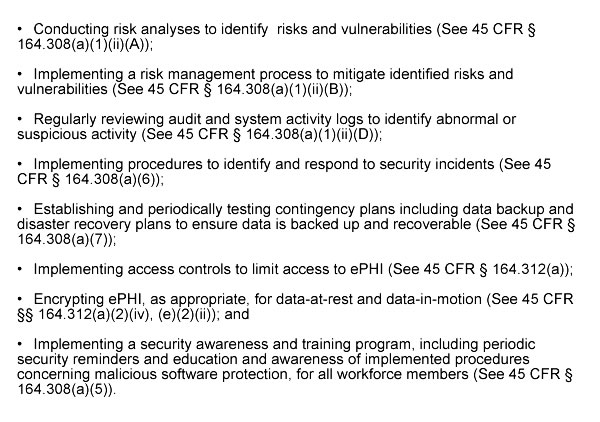
Healthcare organizations and their business associates can Improve their defenses against zero-day exploits and APTs by implementing measures outlined in the HIPAA Security Rule. OCR has draw attention to the following requirements of the Security Rule which can help prevent and mitigate zero-day exploits and APTs:

The post OCR Issues Warning on Advanced Persistent Threats and Zero-Day Exploits appeared first on HIPAA Journal.

Webinar: April 4, 2019: Email Security, DMARC, and Sandboxing

The healthcare industry is particularly vulnerable to phishing attacks and successful attacks commonly result in significant data breaches. It is now something of a rarity for a week to pass without a healthcare phishing attack being reported.

While healthcare organizations are providing security awareness training to staff and are using email security solutions, those defenses are not always effective.

To improve understanding of why advanced attacks are managing to evade detection by traditional email security solutions, email security solution provider TitanHQ is hosting a webinar.

During the webinar TitanHQ will explain about the threat from phishing and how organizations can protect themselves and their customers/patients. The webinar will also explain how two new features of TitanHQ’s SpamTitan email security solution – DMARC authentication and sandboxing – can protect against advanced email threats, zero-day attacks, malware, phishing, and spoofing.

Webinar Details:

Date : Thursday, April 4th, 2019

Time: 12pm EST

Duration: 30 minutes

Sign up to the Webinar here.

Disclaimer

This is not a sponsored event.  HIPAA Journal has no business relationship with the event holder.  HIPAA Journal promotes events that might be of interest to its readers. You may submit your event information on our contact page. HIPAA Journal does not accept payment for promoting events.

The post Webinar: April 4, 2019: Email Security, DMARC, and Sandboxing appeared first on HIPAA Journal.

Study Reveals Health Information the Least Likely Data Type to be Encrypted

Health information is the least likely data type to be encrypted, even though health information is highly valuable to cybercriminals, according to the Global Encryption Trends Study conducted by the Ponemon Institute on behalf of cryptographic solution provider nCipher.

The study was conducted on 5,856 people across several industry sectors in 14 countries, including the United States. The aim of the study was to investigate data encryption trends, the types of data most likely to be encrypted, how extensively encryption has been adopted to improve security, and the challenges faced by companies when encrypting data.

The study shows the use of encryption has steadily increased over the past four years. 45% of surveyed organizations said they have an overall encryption plan or strategy that is applied across the whole organization. 42% said they have a limited encryption plan or strategy, with encryption only used on certain applications and data types. 13% of respondents said they do not use encryption at all on any type of data.

The use of encryption varies considerably from country to country. Germany leads the world with the highest prevalence of encryption, followed by the United States, Australia, and the United Kingdom. Out of the 14 countries represented in the survey, the Russian Federation and Brazil had the lowest prevalence of encryption. 65% of companies in the United States had an overall encryption plan that was consistently applied across the whole organization.

The industries that had the highest prevalence of encryption were tech & software (52%), financial services (50%), and the healthcare and pharmaceutical industries (49%).

Encryption technology varied considerably and there was no single technology that dominates in organizations. The most common uses of encryption were for Internet communications, databases and laptop hard drives.

The main reasons for implementing encryption, cited by 54% of respondents, were to protect sensitive intellectual property and customers’ personal information.

The types of data most commonly encrypted are payment-related data (55%), financial records (54%), HR/employee data (51%), and intellectual property (51%). Health information was the least likely type of data to be encrypted. This is surprising, given the value of healthcare data to cybercriminals and the harm that can be caused should information fall into the wrong hands. Only 24% of respondents said health data was routinely encrypted.

Organizations looking to encrypt data face several challenges. The biggest challenge which was faced by 69% of respondents was identifying all sensitive data on the network. The initial implementation of encryption was a major challenge for 49% of respondents and 32% of respondents said they faced problems classifying which data they should encrypt.

One of the biggest encryption headaches is key management. Respondents were asked to rate key management on a pain scale of 1-10. 61% of respondents said key management was very painful and managing keys was a major challenge.

The main reason why key management is difficult is a lack of clear ownership of the key management function, a lack of skilled personnel, and isolated or fragmented key management systems.

Various key management systems are used by organizations, the most common being formal key management policy (KMP), followed by formal key management infrastructure (KMI) and manual process.

The post Study Reveals Health Information the Least Likely Data Type to be Encrypted appeared first on HIPAA Journal.

Concerns Raised About the Sharing of Health Data with Non-HIPAA Covered Entities via Apps and Consumer Devices

Earlier this month, the eHealth Initiative Foundation and Manatt Health issued a brief that calls for the introduction of a values framework to better protect health information collected, stored, and used by organizations that are not required by law to comply with Health Insurance Portability and Accountability Act (HIPAA) Rules.

Health information is increasingly being collected by a wide range of apps and consumer devices. In many cases, the types of data collected by these apps and devices are the same as those collected and used by healthcare organizations. While healthcare organizations are required to implement safeguards to ensure the confidentiality, integrity, and availability of health information and uses and disclosures of that information are restricted, the same rules do not cover the data if the information is collected by other entities.

It doesn’t matter what type of organization stores or uses the data. If that information is exposed it can cause considerable harm, yet this is currently something of a gray area that current regulations do not cover properly.

At the time when HIPAA and the subsequent Privacy and Security Rules were enacted, the extent to which health information would be collected and used by apps and consumer devices could not have been known. Now, new rules are required to ensure that health information is not exposed and remains private and confidential when collected by non-HIPAA covered entities.

Laws have been introduced that do extend to health data collected by apps and consumer devices, including the California Consumer Privacy Act (CCPA), but these laws only apply at the state level and protections for consumers can vary greatly from state to state.

HIPAA was updated by the HITECH Act of 2009, which does cover electronic medical records and health IT, but does not extend to apps and consumer devices. GDPR covers consumer data collected by apps and consumer devices, but only for companies doing business with EU residents.

The Brief, entitled, Risky Business? Sharing Data with Entities Not Covered by HIPAA explores the problem, the extent of data now being shared, and aims to clear up some of the confusion about when HIPAA applies to apps and consumer devices and when it does not and explores other federal guidance and regulations that has been issued by the FDA, FTC, and CMS covering mobile apps and consumer devices.

HIPAA does apply to business associates of HIPAA covered entities that provide apps and devices on behalf of the covered entity. However, if the app or device is not provided by a vendor acting as a business associate of a HIPAA covered entity, HIPAA Rules do not apply. Many healthcare organizations struggle to make the determination about whether a vendor is a business associate and if devices and apps are offered on behalf of the covered entity. The brief attempts to explain the often-complex process.

One area of particular concern is the growing number of people who are using genealogy services and are supplying companies with their DNA. Individuals are voluntarily providing this information, yet many are unaware of the implications of doing so and are unaware of the lucrative DNA market and the potential sale of their DNA profiles.

“Privacy and security in healthcare are at a critical juncture, with rapidly changing technology and laws that are struggling to keep pace,” explained Jennifer Covich Bordenick, Chief Executive Officer, eHealth Initiative Foundation. “Even as new laws like CCPA and GDPR emerge, many gray areas for the use and protection of consumer data need to be resolved. We hope the insights from papers like this help industry and lawmakers to better understand and address the world’s changing privacy challenges.”

The post Concerns Raised About the Sharing of Health Data with Non-HIPAA Covered Entities via Apps and Consumer Devices appeared first on HIPAA Journal.

Healthcare Industry Ranks 8th for Cybersecurity but Poor DNS Health and Endpoint Security of Concern

Through compliance with HIPAA, healthcare organizations have achieved a baseline standard of security, but there is still plenty of room for improvement and healthcare cybersecurity is at best mediocre.

The 2019 Healthcare Cybersecurity Report from Security Scorecard revealed the healthcare industry ranks 8th for cybersecurity out of the 18 industry sectors that were studied for the report.

The worst aspects of security for the healthcare industry were DNS health and endpoint security, where the industry ranked 13th and 12 th respectively.

Without proper DNS security measures in place, attacks could take place in which DNS records are changed. Such an attack would allow cybercriminals to route web traffic to fraudulent websites where credentials could be harvested. The US Department of Homeland Security’s Cybersecurity and Infrastructure Agency (CISA) issued a warning about this attack method in January 2019.

Endpoint security is another big concern. In healthcare, employees use a wide range of different types of devices to gain access to healthcare networks, which introduces risks and many healthcare organizations are struggling to address those risks effectively. Security Scorecard cites the 2018 HIMSS Cybersecurity Report which revealed 27.5% of healthcare employees surveyed thought there were too many endpoints in use, which was seen to be one of the biggest barriers to remediating and mitigating cybersecurity incidents.

The one area of apparent strength is network security, where the healthcare industry ranked 5th out of 18. The relatively high score in this area is not necessarily as good as it first appears. The high position means healthcare organizations are protecting the network perimeter through the use of firewalls and are segmenting their networks to limit access to devices and data in the event of a perimeter breach.

Security Scorecard notes that the network security and endpoint security scores suggest the healthcare industry is adopting an “eggshell security model” which means the perimeter controls are strong, but they are being used to defend a particularly soft and vulnerable internal network. If the perimeter is breached, insufficient controls are present to limit the harm that can be caused.

The other areas assessed for the report were application security and patching cadence, where healthcare was deemed mediocre with scores of 8/18 and 10/18 respectively. The application security score was relatively good, but Security Scorecard warned that the high number of applications used in healthcare creates multiple exploitable vectors to attack and the increasing use of networked medical devices could be placing data at risk.

Patching of known vulnerabilities is relatively slow. Patches are delayed to avoid system and application downtime and because they cause a significant increase in system resources. However, delays in patching leave organizations vulnerable. Many attacks occur within a few days of patches being released.

“The risk of ePHI exposure and unauthorized access is an increasing trend year after year,” said Fouad Khalil, VP of Compliance at Security Scorecard. “Healthcare organizations must adopt continuous assurance practices to maintain compliance and adequately protect data… Poor cybersecurity practices cannot be taken lightly.”

The post Healthcare Industry Ranks 8th for Cybersecurity but Poor DNS Health and Endpoint Security of Concern appeared first on HIPAA Journal.