Healthcare Cybersecurity

Hacking Responsible for 83% of Breached Healthcare Records in January

The latest installment of the Protenus Healthcare Breach Barometer report has been released. Protenus reports that overall, at least 473,807 patient records were exposed or stolen in January, although the number of individuals affected by 11 of the 37 breaches is not yet known. The actual total is likely to be considerably higher, possibly taking the final total to more than half a million records.

The report shows insiders are continuing to cause problems for healthcare organizations. Insiders were the single biggest cause of healthcare data breaches in January. Out of the 37 healthcare data breaches reported in January 12 were attributed to insiders – 32% of all data breaches.

While insiders were the main cause of breaches, the incidents affected a relatively low number of individuals – just 1% of all records breached. Insiders exposed 6,805 patient records, although figures could only be obtained for 8 of the 12 breaches. 7 incidents were attributed to insider error and five were due to insider wrongdoing.

Protenus has drawn attention to one particular insider breach. A nurse was discovered to have accessed the health information of 1,309 patients without authorization over a period of 15 months. If the healthcare organization had technology in place to monitor for inappropriate access, the privacy of hundreds of patients would not have been violated.

The second biggest cause of healthcare data breaches in January were hacking/IT incidents. There were 11 hacking/IT incidents reported by healthcare organizations in January – 30% of all breaches. In contrast to insider incidents, these were not small breaches. They accounted for 83% of all breached records in January. One single hacking incident involved 279,865 records. That’s 59% of all breached records in the month.

In total, 393,766 healthcare records were exposed by hacks and other IT incidents. The final figure could be substantially higher as figures for five of those breaches have not been obtained. One of the incidents involving an unknown number of records was the ransomware attack on the EHR company Allscripts, which resulted in some of its applications being unavailable for several days. That incident could well be the biggest breach of the month.

Ransomware attacks are still a major problem in healthcare, with six of the 11 incidents involving ransomware or malware. Phishing – the subject of February’s cybersecurity letter from the HHS’ Office for Civil Rights – was involved in at least two breaches.

The loss or theft of electronic devices containing ePHI or physical records accounted for 22% of the breaches. Two incidents involving the loss of patient records impacted 10,590 individuals and four out of the six theft incidents impacted 50,929 individuals. The number of individuals affected by the other two theft incidents is unknown. The cause of 16% of January’s data breaches has not yet been disclosed.

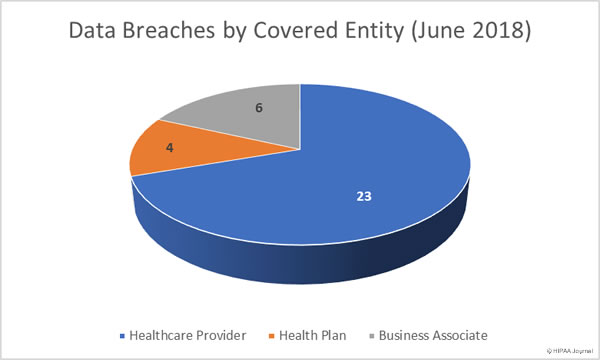
The types of breached entities followed a similar pattern to previous months, with healthcare providers accounting for the majority of breaches (84%). 5% of the breaches had some BA involvement and 3% affected health plans. 8% affected other entities.

Information on the length of time it took to detect breaches was only obtained for 11 of the 37 incidents. The median time from the incident to detection was 34 days and the average was 252 days. The average was affected by one incident that took 1445 days to discover.

The median time from discovery of a breach to reporting the incident was 59 days; one day shy of the 60-day absolute limit of the Breach Notification Rule. The average was 96 days. Four healthcare organizations took longer than 60 days to report their breaches, with one taking more than 800 days.

The post Hacking Responsible for 83% of Breached Healthcare Records in January appeared first on HIPAA Journal.
Fresh FBI Warning Issued Following Spike in W-2 Phishing Campaigns

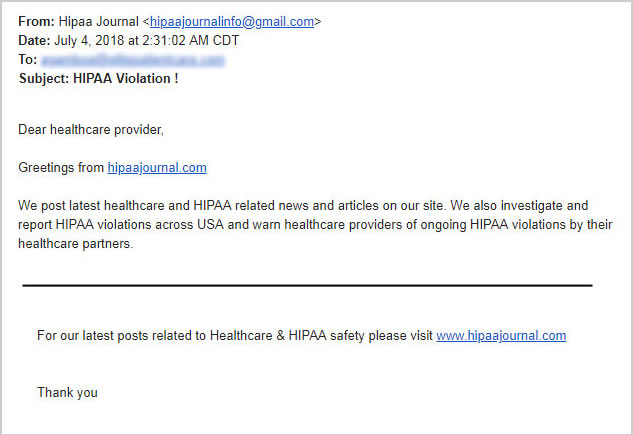
The Federal Bureau of Investigation has issued a fresh warning to businesses due to a significant rise in phishing attacks targeting payroll employees. The aim of the phishing attacks is to obtain copies of the W-2 forms of employees. Data on the forms is used for identity theft and tax fraud.

Last year saw record numbers of attacks on businesses, educational institutions, and healthcare organizations. In some cases, the W-2 form information of thousands of employees was emailed to scammers by payroll employees. The IRS reports that there were at least 200 businesses targeted and more than 900 complaints were received about tax-related scams.

The Internal Revenue Service’s Online Fraud Detection & Prevention division has been monitoring for phishing scams impersonating the IRS and has recorded a sharp increase in email scams. While some email scams have targeted consumers, businesses are most at risk.

Consumer-focused scams typically involve IRS-themed emails, whereas attacks on businesses typically see company executives and the CEO impersonated. The emails request copies of W-2 forms for employees who have worked in the past fiscal year.

The scammers typically research companies to identify the format of emails used, the name of the CEO and executives, and payroll and accounts department employees to target. Some scams involve spoofed email addresses, others have seen the emails accounts of executives compromised, adding legitimacy to the requests.

In many cases, once the attackers have obtained W-2 Form data a further request is sent requesting a wire transfer. Several organizations have fallen for these scams, which may not be detected for days, weeks, or months.

The email scams can be convincing and difficult to detect, especially when email accounts have been compromised. However, if basic security best practices are followed, risk can be minimized.

The FBI recommends:

  • Out of band authentication of all requests for copies of W-2 Form and tax-related information
  • Limiting the number of employees who have access to employee tax information and are authorized to make wire transfers
  • Implementation of procedures that require changes to bank account information of suppliers to be verified by phone with the telephone number taken from a contact list
  • Procedures requiring wire transfers over a set threshold to be subjected to more rigorous security checks, including verification by more than one member of staff
  • Dual approval of wire transfers for all new trading partners and for non-standard transactions, including transfers to overseas accounts
  • Delaying transactions to allow additional verifications to be performed

The post Fresh FBI Warning Issued Following Spike in W-2 Phishing Campaigns appeared first on HIPAA Journal.
OPM Alleges Health Net Refused to Fully Comply with Recent Security Audit

The U.S. Office of Personnel Management (OPM) Office of the Inspector General Office of Audits (OIG) has issued a Flash Audit Alert alleging Health Net of California has refused to cooperate with a recent security audit.

Health Net provides benefits to federal employees, and under its contract with OPM, is required to submit to audits. OPM has been conducting security audits on FEHBP insurance carriers for the past 10 years, which includes scanning for vulnerabilities that could potentially be exploited to gain access to the PHI of FEHBP members.

When OPM conducts audits, it is focused on the information systems that are used to access or store the data of Federal Employee Health Benefit Program (FEHBP) members. However, OPM points out that many insurance carriers do not segregate the data of FEHBP members from the data of commercial and other Federal customers. Audits of technical infrastructure need to be conducted on all parts of the system that have a logical or physical nexus with FEHBP data. Consequently, systems containing data other than that of FEHBP members will similarly be assessed for vulnerabilities.

In its Flash Audit Alert, OPM said Health Net refused to allow OPM to conduct vulnerability and configuration management testing and documentation was not provided that would allow OPM to test whether Health Net was able to remove information system access for contractors who no longer needed data access and for terminated employees.

By refusing to cooperate, OPM was unable to determine whether Health Net has been acting as a responsible custodian of sensitive protected health information of FEHBP members.

Health Net maintains that it has cooperated with OPM and allowed the agency to conduct the audit, although the insurance carrier consulted with its external counsel and was advised that if it cooperated fully with OPMs requests and submitted to certain parts of the audit process, it would risk violating contracts with other third parties. Health Net has obligations to those third parties to ensure their data is protected.

Health Net maintains that it has – and will – be able to satisfy the requests of OPM and OIG without compromising the security of its system and the privacy and confidentiality of members’ and employees’ data. Health Net also claims that the allegations made in the OPM report are unfounded.

“We understand the concerns associated with work of this nature, we take great care to minimize risk. Our procedures were developed as part of a collaborative working group comprised of health insurance industry Chief Information Officers and Chief Information Security Officers,” said OPM in its report. “There is nothing unique about Health Net, its technical environment, or the nature of our proposed testing that would exempt Health Net from our oversight and this testing.”

At this stage it is unclear what, if any, action OPM will take against Health Net if the company continues to refuse to comply with its audit requests in full.

The post OPM Alleges Health Net Refused to Fully Comply with Recent Security Audit appeared first on HIPAA Journal.

PhishMe Rebrands as Cofense and Announces Acquisition by Private Equity Syndicate

PhishMe, the leading provider of human phishing defense solutions, has announced that from February 26, 2018, the firm will be known as Cofense. Along with the name change, the firm has announced it has been acquired by a private equity syndicate, which valued the firm at $400 million.

PhishMe was formed in 2007 with the aim of developing products and services to tackle the growing threat from phishing. Employees have long been viewed as the weakest link in security, yet the human element of security defenses was often neglected. Over the years, PhishMe developed its products and services to help companies improve their last line of defense and turn security liabilities into security assets.

PhishMe has helped thousands of organizations improve their defenses against phishing through training and phishing simulations. The firm has also developed a range of associated products and services including a reporting platform that has now been adopted by more than 2 million users, as well as incident response and threat intelligence services.

While phishing defense is still at the heart of the, the name change reflects the more comprehensive range of products and services now being offered and future plans for expansion of its enterprise-wide attack detection, response, and orchestration solutions.

The acquisition will help in that regard. With the backing of the private equity syndicate, the company’s finances have been secured and the firm is planning to expand and enhance its products and services and increase its global reach.

“This acquisition further strengthens the alignment between our management team, employees, and investors as we focus on building an enduring company,” explained Cofense co-founder and CEO Rohyt Belani. “With cybersecurity a top priority for organizations everywhere, our goal is to continue bringing innovative products to markets around the globe to help stop active attacks faster than ever.”

The post PhishMe Rebrands as Cofense and Announces Acquisition by Private Equity Syndicate appeared first on HIPAA Journal.

AJMC Study Reveals Common Characteristics of Hospital Data Breaches

The American Journal of Managed Care has published a study of hospital data breaches in the United States. The aim of the study was to identify common characteristics of hospital data breaches, what the biggest problem areas are, the main causes of security incidents and the types of information most at risk.

The study revealed hospitals are the most commonly breached type of healthcare provider, accounting for approximately 30% of all large healthcare security incidents reported to the Department of Health and Human Services’ Office for Civil Rights by providers between 2009 and 2016.

Over that 7-year time period there were 215 breaches reported by 185 nonfederal acute care hospitals and 30 hospitals experienced multiple breaches of 500 or more healthcare records. One hospital experienced 4 separate breaches in the past 7 years, five hospitals had 3 breaches, and 24 hospitals experienced 2 breaches. In addition to hospitals experiencing the highest percentage of security breaches, those breaches also resulted in the theft/exposure of the highest number of health records.

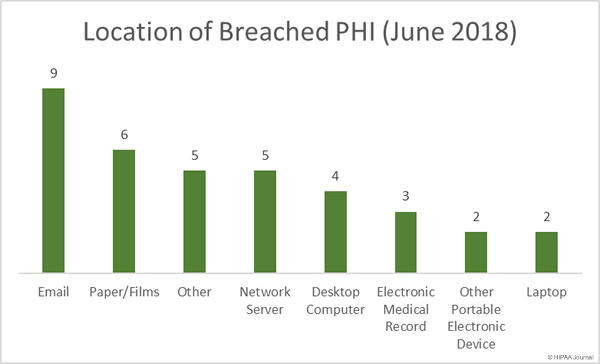
While hacks were commonly experienced, it was not electronic healthcare data that was the biggest problem area. Paper and film were the most common locations of breached protected health information. 65 hospitals reported paper/film data breaches over the time period that was studied; however, while those breaches were the most common, they typically affected a relatively small number of patients.

Recently, there has been an increase in hacks and malware and ransomware attacks on network servers, although between 2009 and 2016 – for hospitals at least – network servers were the least common location of breached PHI. While the least common, they were the most severe. Network server breaches resulted in the highest number of stolen records.

The second most common location of breaches was PHI stored in locations other than paper/film, laptops, email, desktops, EHRs, or network servers. Those breaches had been reported by 56 hospitals. In third place was laptop breaches, reported by 51 hospitals.

The types of data breaches most commonly experienced were theft incidents, which had been reported by 112 hospitals. Unauthorized access/disclosures were in second place with incidents reported by 54 hospitals. Hacking/IT incidents was third and was behind 27 hospital data breaches.

Multivariate logistic regression analyses were performed to explore factors associated with hospital data breaches. The researchers found significant differences between hospitals that had experienced a data breach and those that had not.

Teaching hospitals and pediatric hospitals were found to be the most susceptible to data breaches. 18% of teaching hospitals had experienced at least one data breach, compared to 3% without a breach. Six percent of pediatric hospitals had experienced a breach compared to 2% that had not.

Larger hospitals were also more prone to data breaches than smaller facilities. 26% of large hospitals had experienced a data breach, compared to 10% that had no breaches. Investor-owned hospitals had reported fewer breaches than not-for profit hospitals.

There were no significant differences based on the level of IT sophistication, health system membership, biometric security use, hospital region, or area characteristics.

The researchers suggest that while hospitals have invested in technology and have digitized health data to meet Meaningful Use requirements, security has not been a major focus and investment in data security has been lacking. Hospitals are typically only spending 5% of their IT budgets on security and that needs to improve if hospital data breaches are to be prevented. Security measures also need to be improved for paper/films to reduce the opportunity for unauthorized access and theft.

The researchers suggest hospitals should be conducting regular audits to determine who is accessing PHI, while audits of data security protections will help hospitals identify vulnerabilities before they are exploited.

The use of biometric identifiers can limit the potential for unauthorized access of ePHI and 2-Factor authentication should be implemented on all user accounts.

The researchers also suggest access to PHI should be limited to the minimum necessary amount to allow employees to complete their work duties. By restricting access, the severity of data breaches will be reduced.

The methodology, full results, and conclusions can be found on this link.

The post AJMC Study Reveals Common Characteristics of Hospital Data Breaches appeared first on HIPAA Journal.

What Covered Entities Should Know About Cloud Computing and HIPAA Compliance

Healthcare organizations can benefit greatly from transitioning to the cloud, but it is essential to understand the requirements for cloud computing to ensure HIPAA compliance.

In this post we explain some important considerations for healthcare organizations looking to take advantage of the cloud, HIPAA compliance considerations when using cloud services for storing, processing, and sharing ePHI, and we will dispel some of the myths about cloud computing and HIPAA compliance.

Myths About Cloud Computing and HIPAA Compliance

There are many common misconceptions about the cloud and HIPAA compliance, which in some cases prevent healthcare organizations from taking full advantage of the cloud, and in others could result in violations of HIPAA Rules.

Some of the common myths about cloud computing and HIPAA compliance are detailed below:

Use of a ‘HIPAA compliant’ cloud service provider will ensure HIPAA Rules are not violated

False: A cloud service provider can incorporate all the necessary safeguards to ensure the service or platform can be used in a HIPAA compliant manner, but it is the responsibility of the covered entity or business associate using the service to ensure that HIPAA Rules are followed. CSPs will not accept liability for misuse of their service/platform or misconfigurations by healthcare employees.

Cloud service providers are classed as conduits and a BAA is not required

False: Cloud services providers are considered business associates (see below) even if they do not – or cannot access stored data. The failure to enter into a business associate agreement prior to using the platform or service in connection with ePHI is a serious violation of HIPAA Rules.

A business associate agreement is required before de-identified PHI can be stored in the cloud

False: There are no HIPAA Privacy Rule restrictions covering the use or storage of de-identified PHI. De-identified PHI is not considered to be protected health information.

Physicians cannot use mobile devices to access ePHI stored in the cloud

False. There is nothing in HIPAA Rules that prevents the use of mobile devices for accessing data stored in the cloud, provided administrative, technical, and physical safeguards are in place to ensure the confidentiality, integrity, and availability of PHI for any data stored in the cloud or downloaded to a mobile device.  However, some healthcare organizations may have internal policies prohibiting the use of mobile devices with cloud services.

Cloud service providers must retain PHI for 6 years

False: HIPAA-covered entities must retain PHI for 6 years, but that rule does not apply to cloud service providers. If a HIPAA covered entity stops using a cloud service, all stored data must be returned to the covered entity or should be permanently deleted. If the CPS is required to retain stored data to meet the requirements of other laws, the information must be returned or deleted when that time period has elapsed.

A cloud service provider cannot be used if data is stored outside of the United States

False: A cloud service provider can store data on servers located in any country. There are no geographical restrictions. However, HIPAA covered entities should assess the risks – by means of a risk analysis – before using such a cloud service, as data stored on servers overseas may not be subject to the same level of protection as data stored on U.S-based servers.

Cloud Service Providers and Business Associate Agreements

While cloud service providers have long been known to be HIPAA business associates, the introduction of the HIPAA Omnibus Rule in 2013 made this clearer. “A data storage company that has access to protected health information (whether digital or hard copy) qualifies as a business associate, even if the entity does not view the information or only does so on a random or infrequent basis.”

The HIPAA conduit exception rule does not apply to cloud service providers. Companies are only considered ‘conduits’ if they offer a transmission only communication services when access to communications is only transient in nature. Cloud service providers are not considered to be conduits, even if the service provider encrypts all data and does not hold the keys to unlock the encryption.

Consequently, a business associate agreement must be entered into with the cloud platform or service provider before the platform or service is used for storing, processing, or transmitting ePHI.

If the cloud service is only ever used for sharing or storing de-identified PHI, a BAA is not required. De-identified PHI is no longer PHI, provided all identifiers have been stripped from the data. (See deidentification of PHI for further information.)

Cloud Computing and HIPAA Compliance

Cloud computing and HIPAA compliance are not at odds. It is possible to take advantage of the cloud and even improve security, but there are important considerations for any healthcare organizations considering using cloud services for storing, sharing, processing, or backing up ePHI

Risk Analysis and Risk Management

Prior to the use of any cloud service it should be subjected to a risk assessment. HIPAA-covered entities and their business associates must conduct their own risk analysis and establish risk management policies.

Business Associate Agreements

Before any cloud platform or service is used in connection with ePHI, the service provider and covered entity must enter into a HIPAA-compliant business associate agreement. The use of a cloud service without a BAA in place is a violation of HIPAA Rules.

Service Level Agreements (SLA)

In addition to a BAA, covered entities should consider a service level agreement (SLA) covering more technical aspects of the service, which may or may not address HIPAA concerns. The service level agreement can cover system uptime, reliability, data backups, disaster recovery times, customer service response times, and data return or deletion when the BAA is terminated. The SLA should also include the penalties should performance fall short of what has been agreed.

Encryption

Any data shared via the cloud should be protected by end-to-end encryption, and any data stored in the cloud should be encrypted at rest. Full considerations should be given to the level of encryption used by the CSP, which should meet NIST standards. While encryption is important, it will not satisfy all Security Rule requirements and will not maintain the integrity of ePHI nor ensure its availability.

Access Controls

Covered entities must ensure that access controls are carefully configured to ensure that only authorized individuals are able to access ePHI stored in the cloud. Prior to the use of any cloud platform or service, the administrative and physical controls implemented by the cloud service provider should be carefully evaluated.

Data Storage Locations

Covered entities should determine the locations where data is stored and risks associated with those locations should be evaluated during the risk analysis. Cloud service providers often store data in multiple locations to ensure fast access and rapid data recovery in the event of disaster. Data protection laws in foreign countries may differ considerable from those in the U.S.

Maintaining an Audit Trail

Healthcare organizations must have visibility into how cloud services are used, who is accessing cloud data, failed attempts to view cloud resources, and files that have been shared, uploaded, or downloaded. An audit trail must be maintained and logs should be reviewed regularly.

Cloud Benefits for Healthcare Organizations

Some of the key benefits for healthcare organizations from transitioning to the cloud are detailed below:

  • Linking a public cloud with data centers allows healthcare organizations to increase capacity without having to invest in additional hardware
  • The cloud is highly scalable – Capacity can be easily increased to meet business demands
  • Healthcare organizations can improve security by avoiding transporting ePHI on portable devices such as zip drives, portable hard drives, and laptop computers. The loss and theft of portable devices is a major cause of HIPAA data breaches
  • The cloud makes sharing ePHI with partners, patients, and researchers easier and faster
  • An unlimited number of data backups can be stored in the cloud. Data can be recovered quickly in the event of disaster
  • The cloud can help healthcare organizations decommission legacy infrastructure and improve security
  • The cloud allows healthcare organizations to reduce their data center footprints
  • Healthcare data can be securely accessed by authorized individuals in any location
  • The cloud allows healthcare organizations to offer and improve their telehealth services
  • The cloud supports the creation of an edge computing system to reduce latency and speed up data access

Choosing a Cloud Partner

While there are many cloud service providers that are willing to work with healthcare organizations, not all are prepared to accept liability for data breaches or violations of HIPAA Rules. Any CSP that will not sign a BAA should be avoided; however, not all cloud companies offer the same level of protection for stored and transmitted data. Willingness to sign a BAA is no guarantee of the quality of the service.

It is essential for a HIPAA covered entity to carefully assess any cloud service, even if the company claims it supports HIPAA compliance.

HIPAA-Compliant Cloud Platforms and Cloud Services

Over the coming weeks we will be assessing the services of a wide variety of cloud service providers to determine whether their platforms support HIPAA compliance.

For further information on specific vendors and to find out if they offer platforms that support HIPAA compliance, visit the links below:

Cloud Platforms

Cloud-Based Services

The post What Covered Entities Should Know About Cloud Computing and HIPAA Compliance appeared first on HIPAA Journal.

Healthcare Industry Scores Poorly on Employee Security Awareness

A recent report published by security awareness training company MediaPro has revealed there is still a lack of preparedness to deal with common cyberattack scenarios and privacy and security threats are still not fully understood by healthcare professionals.

For MediaPro’s 2017 State of Privacy and Security Awareness Report, the firm surveyed 1,009 US healthcare industry employees to assess their level of security awareness. Respondents were asked questions about common privacy and security threats and were asked to provide answers on several different threat scenarios to determine how they would respond to real world threats.

Based on the responses, MediaPro assigned respondents to one of three categories. Heroes were individuals who scored highly and displayed a thorough understanding of privacy and security threats by answering 93.5%-100% of questions correctly. Novices showed a reasonable understanding of threats, answering between 77.4% and 90.3% of answers correctly. The lowest category of ‘Risks’ was assigned to individuals with poor security awareness, who scored 74.2% or lower on the tests. Those individuals were deemed to pose a significant risk to their organization and the privacy of sensitive data.

Overall, 78% of healthcare employees were classified as risks or novices. The percentage of individuals rated in these two categories across all industry sectors was 70%, showing the healthcare industry still lags behind other industry sectors on security awareness and privacy and security best practices.

The survey revealed physicians’ understanding of privacy and security threats was particularly poor. Half of physicians who took part in the study were classified as risks, meaning their actions were a serious security threat to their organization. Awareness of the common identifiers of phishing emails was particularly poor, with 24% of physicians displaying a lack of understanding of phishing, compared with 8% of office workers and non-provider counterparts.

One of the main areas where security awareness was lacking was the identification of the common signs of a malware infection. 24% of healthcare employees had difficulty identifying the signs of a malware infection compared to 12% of the general population.

Healthcare employees scored worse than the general population in eight areas assessed by MediaPro: Incident reporting, identifying personal information, physical security, identifying phishing attempts, identifying the signs of malware infections, working remotely, cloud computing, and acceptable use of social media.

MediaPro points out that the 2017 Data Breach Investigations Report from Verizon showed human error accounted for more than 80% of healthcare data breaches last year, emphasizing the need for improved security awareness training for healthcare employees. Further, cybercriminals have been increasing their efforts to gain access to healthcare networks and sensitive patient information.

“The results of our survey show that more work needs to be done,” MediaPro explains in the report. “HIPAA courses often do not include information on how to stay cyber-secure in an increasingly interconnected world. Keeping within HIPAA regulations, while vital, does not educate users on how to spot a phishing attack, for example.”

If the security awareness of healthcare employees is not improved, the healthcare industry is likely to continue to be plagued by data breaches, irrespective of the level of maturity of their security defenses.

The post Healthcare Industry Scores Poorly on Employee Security Awareness appeared first on HIPAA Journal.

How Many HIPAA Violations in 2017 Resulted in Financial Penalties?

We are often asked about healthcare data breaches and HIPAA violations and two of the most recent questions are how many HIPAA violations in 2017 resulted in data breaches and how many HIPAA violations occurred in 2017.

How Many HIPAA Violations Occurred in 2017?

The problem with determining how many HIPAA violations occurred in 2017 is many violations are not reported, and out of those that are, it is only the HIPAA breaches that impact more than 500 individuals that are published by the Department of Health and Human Services’ Office for Civil Rights on its breach portal – often incorrectly referred to as the “Wall of Shame”.

To call it a ‘Wall of Shame’ is not fair on healthcare organizations because the breach reports show organizations that have experienced data breaches, NOT organizations that have violated HIPAA Rules. Even organizations with multi-million-dollar cybersecurity budgets, mature security defenses, and advanced employee security awareness training programs can experience data breaches. All it takes if for a patch not to be applied immediately or an employee to accidently click on a phishing link for a data breach to occur. The breach reports are therefore not an accurate guide to the number of HIPAA violations that have occurred.

Some attorneys general publish details of data breaches, and many of those breaches are the result of HIPAA violations; however, only a small number of states publish that data breach summaries and as with OCR’s breach portal, there are many breaches that have occurred at organizations that are fully compliant with HIPAA Rules. It is also not possible to say how many of those breaches were the result of HIPAA violations. That can only be determined with a detailed investigation.

Complaints about potential HIPAA violations are frequently submitted to OCR. These tend to be smaller incidents involving relatively few individuals, such as a patient who believes HIPAA Rules have been violated or employees who believe colleagues have violated HIPAA Rules. OCR occasionally releases figures on the number of complaints that it receives, but many of those complaints turn out to be unfounded and, in many cases, OCR cannot prove beyond reasonable doubt that a HIPAA violation has occurred.

It is also not possible to gauge the level of serious HIPAA violations that have occurred based on settlements and civil monetary penalties. Even when there is evidence to suggest HIPAA Rules have been violated, financial settlements are typically only pursued when a case against a HIPAA-covered entity is particularly strong and likely to be won.

It is therefore not possible to determine how many HIPAA violations in 2017 resulted in data breaches nor how many violations occurred last year.

How Many HIPAA Violations in 2017 Resulted in Financial Settlements?

It is also not possible to determine how many HIPAA violations in 2017 have resulted in financial penalties being issued, at least not yet. OCR and state attorneys general open investigations when data breaches are experienced or complaints are received about potential HIPAA violations. However, it takes time to conduct investigations and gather evidence. Even when there is evidence of HIPAA violations, cases can take years before settlements are reached or civil monetary penalties are issued.

The latest HIPAA settlement is a good example. Fresenius Medical Care North America settled its case with OCR for $3,500,000 in 2018, yet the data breaches that triggered the investigation occurred in 2012. The list below shows the settlements and civil monetary penalties issued in 2017 and the years in which the violations occurred.

So unfortunately, it is not possible to say how many HIPAA violations in 2017 resulted in financial penalties, as that will not be known for many years to come

HIPAA Settlements and Civil Monetary Penalties in 2017


Covered Entity Penalty Amount Penalty Type Reason for Penalty Date of Violation(s)
21st Century Oncology $2,300,000 Settlement Multiple HIPAA Violations 2015
Memorial Hermann Health System $2,400,000 Settlement Careless Handling of PHI 2015
St. Luke’s-Roosevelt Hospital Center Inc. $387,000 Settlement Unauthorized Disclosure of PHI 2014
The Center for Children’s Digestive Health $31,000 Settlement Lack of a Business Associate Agreement 2003-2015
Cardionet $2,500,000 Settlement Impermissible Disclosure of PHI 2011
Metro Community Provider Network $400,000 Settlement Lack of Security Management Process 2011
Memorial Healthcare System $5,500,000 Settlement Insufficient ePHI Access Controls 2007-2012
Children’s Medical Center of Dallas $3,200,000 Civil Monetary Penalty Impermissible Disclosure of ePHI 2006-2013
MAPFRE Life Insurance Company of Puerto Rico $2,200,000 Settlement Impermissible Disclosure of ePHI 2011
Presense Health $475,000 Settlement Delayed Breach Notifications 2013


What we can say is HIPAA violations have occurred at most healthcare organizations, although oftentimes the violations are minor and inconsequential. We can go further and say that a majority of healthcare organizations have failed to follow HIPAA Rules to the letter all of the time.

The evidence comes from the second round of HIPAA compliance audits conducted by OCR in late 2016 and 2017. A final report on the findings of the audits has yet to be published, but last September preliminary results were released. They showed that healthcare organizations are still not getting to grips with HIPAA Rules and noncompliance is commonplace.

Findings of the 2017 HIPAA Compliance Audits

Listed below are the preliminary findings of the second round of HIPAA compliance audits. The audits consisted of ‘Desk Audits’ conducted on 166 covered entities on the HIPAA Privacy, Security, and Breach Notification Rules and 41 business associates of HIPAA covered entities on the Security and Breach Notification Rules.

OCR gave each audited entity a rating from 1-5 based on the level of compliance. A rating of 1 means the organization was in compliance with the goals and objectives of the audited standards and implementation specifications. A rating of 5 was given to entities that did not provide OCR with evidence to show that a serious attempt had been made to comply with HIPAA Rules.

HIPAA Rule Aspect of HIPAA Rule 1 Rating 2 Rating 3 Rating 4 Rating 5 Rating N/A
Breach Notification Rule Timeliness of Notification 65% 6% 2% 9% 11% 7%
Breach Notification Rule Content of Notification 14% 14% 23% 37% 7% 5%
Privacy Rule Patient Right to Access 1% 10% 27% 54% 11% N/A
Privacy Rule Notice of Privacy Practices 2% 33% 39% 11% 15% 2%
Privacy Rule Provision of eNotice 57% 15% 4% 6% 15% 3%
Security Rule Risk Analysis 0% 2% 19% 23% 13% N/A
Security Rule Risk Management 1% 3% 13% 29% 17% N/A

The post How Many HIPAA Violations in 2017 Resulted in Financial Penalties? appeared first on HIPAA Journal.

VA OIG Discovers Security Vulnerabilities Introduced at Orlando VA Medical Center

The VA Office of Inspector General has discovered a Wi-Fi network was set up at a Florida VA medical center without being coordinated with the VA’s Office of Information & Technology (OI&T). As a result, vulnerabilities were introduced that could have been exploited to gain unauthorized access to VA systems.

The VA Office of Inspector General conducted an audit of the Orlando Veterans Affairs Medical Center (VAMC) at Lake Nona, FL after receiving a complaint that the Veterans Services Adaptable Network (VSAN) was being developed without coordination with the Office of Information & Technology (OI&T), and that appropriate funding for the project had not been obtained through proper channels.

While evidence of funding irregularities was not uncovered, the VA OIG did confirm that a WiFi network for patients had been set up without coordination with OI&T, and that the network did not have the appropriate security controls applied in accordance with VA policies.

After the network had been set up, a risk assessment was not performed and there was no segregation between the VSAN and VA network. The VA OIG explained in its report that the lack of oversight by local OI&T staff resulted in unnecessary risks being introduced that could have resulted in other VA systems being compromised. No evidence was uncovered to suggest any vulnerabilities had been exploited.

The VA OIG reports that staff did not ensure security controls were applied in accordance with the VA’s security requirements due to competing priorities and resources. A security risk assessment was not performed because management did not allocate the necessary resources to the task.

The VA OIG has recommended the executive in charge for the Office of the Under Secretary for Health and the executive in charge for the Office of Information and Technology ensure that all guest Internet networks, industrial control systems, and external air-gapped networks are properly segregated and meet VA security requirements.

The report highlights a common problem: The installation of software or use of hardware that has not been authorized by IT departments. Referred to as shadow IT, the unauthorized hardware and software can introduce vulnerabilities that may not be discovered and corrected by IT departments.

Without the oversight of the IT department, software may not be kept up to date and vulnerabilities could easily be exploited to gain access to healthcare networks.

Health IT departments can implement controls that prevent the installation of software by employees and employees should be instructed, in no uncertain terms, that the installation of software or use of devices without first having obtained authorization from the IT department is strictly prohibited.

IT departments should also consider conducting scans of the network to identify rogue devices that have been connected, although that means that IT departments must also maintain an accurate inventory of all authorized devices.

Network access tools can also be deployed to further protect healthcare networks. These tools restrict network access to authorized devices that have the appropriate security controls, AV software, and latest versions of software installed.

The post VA OIG Discovers Security Vulnerabilities Introduced at Orlando VA Medical Center appeared first on HIPAA Journal.