OCR finalizes rule prohibiting certain reproductive health care disclosures | AHA News – American Hospital Association
OCR finalizes rule prohibiting certain reproductive health care disclosures | AHA News American Hospital Association
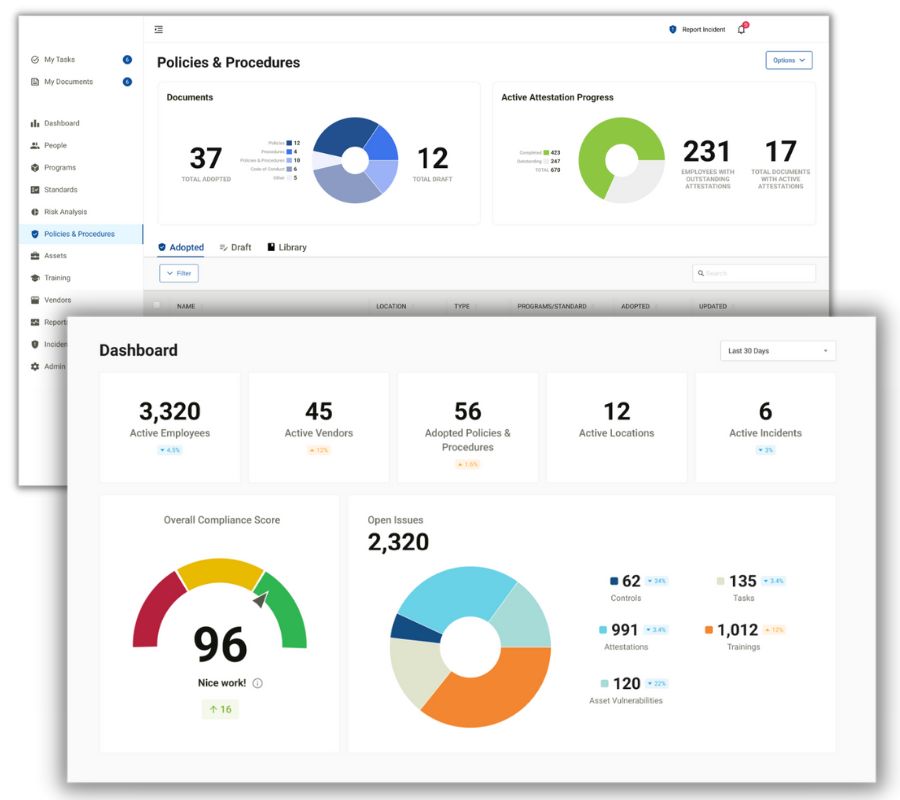
The best healthcare compliance software is a comprehensive management tool, that helps chief compliance officers to effectively oversee compliance efforts across all their organization’s facilities, by proactively managing risks, streamlining workflows, improving collaboration, and demonstrating the achievement of compliance objectives to stakeholders.
For the chief compliance officer of an organization, the benefits of using healthcare compliance software that are:
1. Streamlined Workflow: Compliance software automates many administrative tasks related to compliance management, such as tracking compliance activities, scheduling self audits and managing documentation. This saves time and reduces manual effort.
2. Increased Visibility: Compliance software provides real-time visibility into compliance activities, allowing the chief compliance officer to monitor progress, track key metrics, and identify areas that require attention. This increased visibility enhances the CCO’s ability to effectively oversee compliance efforts across the organization, reducing the likelihood of compliance failures.
3. Enhanced Reporting Capabilities: Regulatory compliance software offers customised reporting and analytics, allowing the chief compliance officer to generate detailed reports on compliance activities, performance metrics, and audit findings. These reports help communicate compliance efforts to senior management, regulators, and other stakeholders effectively, and showcasing a commitment to compliance excellence.
4. Centralized Documentation Management: Healthcare compliance management software provides a centralized repository for storing and managing compliance-related documents, such as policies, procedures, training materials, and audit reports. This centralization ensures that all relevant documentation is organized, up-to-date, and easily accessible when needed.
5. Improved Collaboration: Compliance software facilitates collaboration and communication among compliance team members, stakeholders, and other departments within the organization. This improves coordination and alignment on compliance initiatives, enhancing the chief compliance officer’s ability to drive compliance culture and initiatives across the organization.
6. Reduced Failure Risk: By automating compliance processes, providing real-time visibility into compliance activities, and facilitating proactive risk management, the best healthcare compliance software helps compliance officers minimize compliance risk and mitigate potential compliance failures.
 By following our buyer’s guide framework, you can make a thorough assessment of the best healthcare compliance software options and select the most suitable solution to support your organization’s compliance objectives. There are three aspects to consider when purchasing healthcare compliance software which are discussed in detail below:
1. Essential Functionality
2. Software Specifications
3. Business Considerations
The best healthcare compliance software solution should include functionality to identify and manage risk, report and track incidents, educate employees, manage vendors, and it should include sophisticated reporting that demonstrates in real-time that all compliance objectives are being met across all the organization’s facilities.
Any solution worth consideration needs to be a flexible all-in-one compliance system that follows a recognized framework like the OIG-HHS Seven Fundamental Elements Of An Effective Compliance Program. Because all organizations are different, it should offer both a prebuilt approach and fully customizable options.
The following essential functionality will allow you to confidently address your organization’s compliance requirements:
 What other features should you consider for your HIPAA compliance solution?
Consider if you also need OSHA (Dental or Medical) and SOC 2 compliance, and if so, ensure your chosen software can provide this as an all-in-one healthcare compliance solution.
Software specifications are aspects of a solution, such as usability or scalability, that are not about specific functionality but describe the broader qualities of the software. Specifications will help inform your decision when comparing HIPAA compliance software solutions.
You may find that when evaluating functionality and specifications, a favoured vendor will emerge and you feel ready to award them the business right away. It is highly recommended that you don’t allow yourself to be pressured into a fast decision before fully examining the commercial and business considerations.
 Free Buyer’s Guide
We have compiled a free buyer’s guide to choosing HIPAA compliance software that includes a checklist for the three aspects discussed in this article. This can be downloaded by filling in the form on this page.
The post What Is The Best Healthcare Compliance Software? appeared first on HIPAA Journal.
The Occupational Safety and Health Administration has published injury and illness data for 2023, which was collected under OSHA’s July 2023 new Improve Tracking of Workplace Injuries and Illnesses final rule. The final rule requires some establishments with 100 or more employees to electronically submit data from their OSHA Forms 300 and 301 to OSHA once a year. The data are collected through OSHA’s Injury Tracking Application (ITA). The deadline for submitting injury and illness data for 2023 was March 2, 2024; however, if any establishment has missed the deadline, they are still required to submit their data.
Aside from certain low-risk industries, many employers with more than 10 employees are required to maintain records of serious workplace injuries and illnesses. Records must be maintained at the worksite for 5 years, and a summary of the injuries and illnesses recorded over the previous year must be posted each February through April. Copies of the records must be provided to current and former employees or their representatives on request. Fatalities must be reported to OSHA within 8 hours, and severe injuries involving amputation, loss of an eye, or hospitalization must be reported within 24 hours.
Throughout 2023, OSHA has been conducting outreach through webinars, social media, and educational videos to ensure that establishments are aware of their obligations. OSHA is actively enforcing compliance with the reporting requirements by identifying establishments that have failed to submit the required data.
Submitting data to OSHA on injuries, illnesses, and fatalities in the workplace allows OSHA to identify the safety and health problems that workers face and determine the extent of workplace illnesses and injuries. Accurate and detailed data are vital to OSHA’s mission to prevent and control workplace hazards, injuries, and illnesses. OSHA reviews the data and intervenes through strategic outreach and enforcement to reduce worker injuries and illnesses. The data improves research into the occurrence, prevention, and control of workplace hazards, injuries, and illness types, and provides the public with information about the risk of injuries and illnesses in specific sectors. Workers and employers can also use the data to make more informed decisions about safety and health in their workplaces.
The published data for 2023 includes illness and injury data collected from more than 375,000 establishments via their submitted OSHA Form 300A Summary of Work-Related Injuries and Illnesses, data on individual injuries and illnesses collected from employers with 100 or more employees in high-hazard industries, and partial data collected via 850,000 Form 300 Log of Work-Related Injuries and Illnesses and Form 301 Injury and Illness Incident Report records.
The post OSHA Publishes 2023 Injury and Illness Data appeared first on HIPAA Journal.
New York Attorney General, Letitia James, has announced a settlement with New York’s largest health network, Northwell Health, to resolve allegations it deceptively advertised its emergency departments as COVID-19 testing sites during the COVID-19 public health emergency. Northwell Health claimed in advertisements that three emergency departments in New York City and Long Island were COVID-19 testing sites; however, when patients visited to be tested they were billed for emergency room visits.
The Office of the Attorney General (OAG) investigated Northwell Health after complaints were received from patients who claimed they had been overcharged for testing. OAG investigated and found that Lenox Hill Hospital, Lenox Health Greenwich, and Huntington Hospital had signs advertising their emergency departments as COVID-19 testing sites between March 2020 and March 2021. Hundreds of patients visited the emergency departments solely to be tested for COVID-19 but were billed standard emergency department charges. In the case of Huntington Hospital, even patients who used the drive-in testing facility were charged for emergency room visits. OAG determined that Northwell Health collected $81,761.46 in out-of-pocket payments from 559 New Yorkers for COVID-19 tests and related services, and patients visiting the emergency department for other reasons were also charged for COVID-19 tests.
OAG found that the actions of Northwell Health violated New York Executive Law § 63(12) and General Business Law §§ 349 and 350. Under the terms of the settlement, Northwell Health has issued more than $400,000 in refunds to 2,048 patients and will pay a civil monetary penalty of $650,000 to the state. “During a time of great stress at the height of the pandemic, Northwell Health caused more worry and frustration for New Yorkers who were sent emergency room bills for simply taking a COVID-19 test,” said Attorney General James. “Today we are putting money back in New Yorkers’ pockets after Northwell Health misled them. New York patients should not get surprise fees, and I encourage anyone who thinks they’ve been taken advantage of through deceptive advertising to file a complaint with my office.”
The post NY Attorney General Finds Northwell Health Deceptively Advertised COVID-19 Testing Sites appeared first on HIPAA Journal.