HIPAA Breach News

OCR HIPAA Audits Industry Report Identifies Common Areas of Noncompliance with the HIPAA Rules

The Department of Health and Human Services’ Office for Civil Rights has published its 2016-2017 HIPAA Audits Industry Report, highlighting areas where HIPAA-covered entities and their business associates are complying or failing to comply with the requirements of the Health Insurance Portability and Accountability Act.

The Health Information Technology for Economic and Clinical Health (HITECH) Act requires the HHS to conduct periodic audits of HIPAA covered entities and business associates to assess compliance with the HIPAA Rules. Between 2016 and 2017, the HHS conducted its second phase of compliance audits on 166 covered entities and 41 business associates to assess compliance with certain provisions of the HIPAA Privacy, Security, and Breach Notification Rules.

The 2016/2017 HIPAA compliance audits were conducted on a geographically representative, broad cross-section of covered entities and business associates and consisted of desk audits – remote reviews of HIPAA documentation – rather than on-site audits. All entities have since been notified of the findings of their individual audits.

The 2016-2017 HIPAA Audits Industry Report details the overall findings of the audits, including key aspects of HIPAA compliance that are proving problematic for covered entities and business associates.

In the report, OCR gives each audited entity a rating based on their level of compliance with each specific provision of the HIPAA Rules under assessment. A rating of 1 indicates the covered entity or business associate was fully compliant with the goals and objectives of the selected standards and implementation specifications. A rating of 2 means the entity substantially met the criteria and maintained adequate policies and procedures and could supply documentation or other evidence of compliance.

A rating of 3 means the entity minimally addressed the audited requirements and had made some attempt to comply, although had failed to comply fully or had misunderstood the HIPAA requirements. A rating of 4 means the entity made negligible efforts to comply, such as supplying policies and procedures for review that were copied directly from an association template or providing poor or generic documentation as evidence of training.  A rating of 5 means OCR was not provided with evidence of a serious attempt to comply with the HIPAA Rules.

The table below summarizes the audit results on key provisions of the HIPAA Rules. The blue and red figures indicate the most common rating in each category, with blue corresponding to mostly ratings of 1 or 2 (compliant) and red indicating implementation was inadequate, negligible, or absent.

The table clearly shows that most audited entities largely failed to successfully implement the HIPAA Rules requirements.

OCR 2016-2017 HIPAA Audits Industry ReportMost covered entities complied with the requirement of the Breach Notification Rule to send timely notifications in the event of a data breach. HIPAA requires those notifications to be sent within 60 days of the discovery of a data breach; however, most covered entities failed to include all the required information in their breach notifications.The audits revealed widespread compliance with the requirement to create and prominently post a Notice of Privacy Practices on their website. The Notice of Privacy Practices gives a clear, user friendly explanation of individuals’ rights with respect to their personal health information and details the organization’s privacy practices. However, most audited entities failed to include all the required content in their Notice of Privacy Practices.

The individual right of access is an important provision of the HIPAA Privacy Rule. Individuals have the right to obtain and inspect their health information. Most covered entities failed to properly implement the requirements of the HIPAA Right of Access, which includes providing access to or a copy of the PHI held within 30 days of receiving a request and only charging a reasonable cost-based fee for access.

The first phase of HIPAA compliance audits conducted by OCR in 2012 revealed widespread noncompliance with the requirement to conduct a comprehensive, organization-wide risk analysis to identify vulnerabilities and risks to the confidentiality, integrity, and availability of protected health information. In its enforcement activities over the past 11 years, a risk analysis failure is the most commonly cited HIPAA violation.

HIPAA covered entities are still failing in this important provision of the HIPAA Security Rule, with the latest round of audits revealing most audited entities failed to implement the HIPAA Security Rule requirements for risk analysis and risk management.

“The audit results confirm the wisdom of OCR’s increased enforcement focus on hacking and OCR’s Right of Access initiative,” said OCR Director Roger Severino. “We will continue our HIPAA enforcement initiatives until health care entities get serious about identifying security risks to health information in their custody and fulfilling their duty to provide patients with timely and reasonable, cost-based access to their medical records.”

You can view the full 2016-2017 HIPAA Audits Industry Report on this link: https://www.hhs.gov/sites/default/files/hipaa-audits-industry-report.pdf.

The post OCR HIPAA Audits Industry Report Identifies Common Areas of Noncompliance with the HIPAA Rules appeared first on HIPAA Journal.

FTC Settles 2019 Consumer Data Breach Case with SkyMed

The Nevada-based emergency services provider SkyMed has reached a settlement with the Federal Trade Commission (FTC) following an audit of its information security practices in the wake of a 2019 data breach that exposed consumers’ personal information.

SkyMed was notified by security researcher Jeremiah Fowler in 2019 that it had a misconfigured Elasticsearch database that was leaking patient information. The lack of protection meant the records of 136,995 patients could be accessed over the internet without the need for any authentication. The database could be accessed using any Internet browser and personal information in the database could be downloaded, edited, or even deleted.

The database contained information such as patient names, addresses, email addresses, dates of birth, membership account numbers, and health information, according to Fowler. Fowler also identified artifacts related to ransomware in the database. When notified about the exposed database, SkyMed launched an investigation but found no evidence to indicate any information in the database had been misused.

It its breach notification, SkyMed explained, “Our investigation learned that some old data may have been exposed temporarily as we migrated data from an old system to a new system. At this time, the exposed data has been removed and appears to be limited to only a portion of our information and was restricted to names, street and email addresses, phone and membership ID numbers. There was no medical or payment-related information visible and no indication that the information has been misused.”

The FTC investigated the breach and conducted an audit to determine whether there had been a breach of the FTC Act. The FTC found multiple security and breach response failures. The FTC alleged SkyMed had not investigated whether the database had been accessed by unauthorized individuals during the time protections were not in place, and that the company failed to adequately review the database to determine what information it contained. SkyMed was therefore unable to determine whether any health information had potentially been compromised. When SkyMed confirmed that the database had been exposed, the company deleted the database to prevent any unauthorized access. SkyMed also failed to identify the individuals affected by the breach.

The FTC said every page of the SkyMed website displayed a “HIPAA Compliance” seal, which gave the impression that SkyMed’s privacy and security policies were in compliance with the standards demanded by the Health Insurance Portability and Accountability Act, yet the company had not undergone a third-party audit of its information security practices and no government agency had reviewed the HIPAA compliance claims. The FTC alleged SkyMed had deceived customers for more than 5 years by displaying the HIPAA Compliance seal on its company website.

“People who bought travel protection services trusted SkyMed with their personal health information, and SkyMed had an obligation to keep that information secure,” Andrew Smith, director of the FTC Bureau of Consumer Protection. The company’s security practices did not meet the required standards and those expected by its customers.

The FTC said “reasonable measures” to secure the personal information of individuals who signed up for its emergency services had not been implemented. SkyMed had not used any data loss prevention tools, there was a lack of access controls, and a failure to implement authentication for its networks. When a security breach occurred and a database containing personal information was exposed, SkyMed failed to detect the exposed database for 5 months, and only then because it was found by a security researcher.

The nature of the information exposed “has caused or is likely to cause substantial injury to customers,” explained the FTC. “[SkyMed] could have prevented or mitigated these information security failures through readily available, and relatively low-cost, measures.”

The FTC alleged SkyMed had engaged in unfair and/or deceptive acts or practices under Section 5 of the FTC Act, which included two counts of deception about HIPAA compliance and its breach response. SkyMed was also determined to have engaged in unfair information security practices.

Under the terms of the settlement, SkyMed is prohibited from misrepresenting its data security practices, data breach response, and how the company protects the privacy, security, integrity, and confidentiality of the personal information, and participation in any privacy or security program sponsored by a government or any third party, including any self-regulatory or standard setting organization.

SkyMed must send breach notifications to all impacted consumers and provide information about any information that has potentially been exposed. An information security program must be implemented, which must be coordinated by a designated, qualified employee. The program must include an organization-wide risk assessment to identify potential internal and external risks, and safeguards must be implemented to ensure those risks are mitigated and personal information is protected.

Logs of database access must be created and monitored, and data encryption must be implemented for sensitive data such as financial account information, passport numbers, and health information.  Access controls are required for all data repositories containing personal data and restrictions must be put in place to limit access to sensitive data. SkyMed is also required to certify annually that it is in compliance with the requirements detailed in the FTC settlement.

The post FTC Settles 2019 Consumer Data Breach Case with SkyMed appeared first on HIPAA Journal.

Lost Storage Device Contained Unencrypted PHI of Cedar Springs Hospital Patients

Cedar Springs Hospital in Colorado Springs, CO is notifying certain patients that some of their protected health information was stored on a portable storage device that was lost in October 2020. The Colorado Department of Public Health and Environment had sent a request to the hospital to provide a copy of certain patient records on an external storage device as part of a survey. The information was provided, but the storage device was misplaced by a Colorado health department surveyor.

The state health department has a policy that requires data on external storage devices to be encrypted; however, Cedar Springs Hospital learned on October 28, 2020 that the device was not encrypted. Consequently, protected health information such as names, addresses, dates of birth, Social Security numbers, medical record numbers, patient ID numbers, diagnoses, treatment information, dates of treatment, treatment location, treating physician and prescription information could potentially be accessed by unauthorized individuals.

A review of the data on the device was completed on November 9, 2020 and affected individuals are now being notified. Additional safeguards are being implemented to prevent any further incidents of this nature from exposing patient information.

Konikoff Dental Associates Discover Unauthorized Network Access

Konikoff Dental Associates, d/b/a Konikoff Dental Associates Harbour View, has discovered an unauthorized individual gained access to its computer network and potentially viewed or obtained patient information.

Suspicious activity was identified on its network on October 11, 2020 and an investigation was immediately launched to determine the extent and nature of the breach. Assisted by third-party forensic specialists, it was determined that unauthorized individuals had accessed certain files on the network that contained patient information.

The investigation confirmed the breach occurred between September 18, 2020 and October 13, 2020. A review of the files revealed they contained individuals’ names, addresses, dental diagnoses and treatment information, patient account numbers, billing information, dentists’ names, bank account numbers, and health insurance information.

No reports have been received that suggest patient data has been misused, and while files were accessed, no specific evidence was found to indicate patient information was actually viewed or obtained.

Staff training on data security has now been enhanced and a review of system security is being conducted. Additional safeguards will be implemented, as appropriate, to improve security.

Central Health Investigates Travis County Health District Cyberattack

Central Health in Texas is investigating a cyberattack that has affected Travis County Health District. A security incident was detected on December 4 involving unauthorized access on a computer server. An investigation is currently underway to determine the extent and scope of the breach, and whether protected health information has been compromised.

Forensic specialists have been engaged to analyze the software, hardware, and data affected. At this stage in the investigation, it does not appear that employee or patient data has been compromised. Further information on the breach will be shared at the conclusion of the investigation.

The post Lost Storage Device Contained Unencrypted PHI of Cedar Springs Hospital Patients appeared first on HIPAA Journal.

Email Account Breaches Reported by Meharry Medical College and MEDNAX Services

Meharry Medical College in Nashville, TN, has discovered an email account breach may have resulted in unauthorized individuals viewing or acquiring the protected health information of up to 20,983 patients.

The email account breach was detected and blocked around July 28, 2020. Third-party technical experts were engaged to investigate the breach and confirmed that the incident was limited to a single email account. On September 1, 2020, Meharry Medical College was informed that the nature of the breach meant it was possible that the contents of the email account may have been copied, most likely inadvertently during the standard email synchronization process.

A review of the content of the email account was performed and it was determined the email account contained patients’ full names, dates of birth, diagnoses/diagnostic codes, internal patient account numbers, provider names, and other health information. A limited number of patients also had their Social Security numbers, Medicare/Medicaid numbers, and health insurance information compromised.

Individuals whose Social Security number was potentially compromised have been offered complimentary membership to identity theft protection services.

PHI Potentially Compromised in Phishing Attack on MedNAX Services Inc.

Sunrise, FL-based MEDNAX Services Inc, a provider of revenue cycle management and other administrative services to its affiliated physician practice groups, discovered on June 19, 2020 that unauthorized individuals had gained access to its Microsoft Office 365-hosted email system after employees responded to phishing emails.

Assisted by a national forensic firm, MEDNAX determined multiple busines email accounts had been compromised between June 17, 2020 and June 22, 2020. A review of the accounts, which were separate from MEDNAX’s internal network and systems, revealed they contained patient names, guarantor names, email addresses, addresses, dates of birth, Social Security numbers, driver’s license numbers, state ID numbers, financial account information, health insurance information, Medicare/Medicaid numbers, medical and treatment information, and billing and claims information. It was not possible to determine what patient information, if any, was accessed by unauthorized individuals.

Affected individuals have been offered a complimentary 12-month membership to identity monitoring services. MEDNAX has conducted a review of its security controls and steps will be taken to enhance security to prevent similar breaches in the future.

The post Email Account Breaches Reported by Meharry Medical College and MEDNAX Services appeared first on HIPAA Journal.

Tufts Health Plan Members’ PHI Exposed in EyeMed Phishing Attack

60,545 members of Tufts Health Plan have had their protected health information exposed in a phishing attack on the vision benefits management company EyeMed.

The phishing attack occurred in June 2020 and was discovered by EyeMed on July 1, 2020. Access to the breached account was terminated the same day. EyeMed notified Tufts Health Plan about the breach in September 2020.

The compromised email account contained the following types of protected health information: Names, addresses, dates of birth, phone numbers, email addresses, vision insurance account/identification numbers, health insurance account/identification numbers, Medicaid or Medicare numbers, driver’s license or other government identification numbers, and birth or marriage certificates. Partial or full social security numbers and/or financial information, medical diagnoses and conditions, treatment information, and/or passport numbers were implicated for some individuals.

Affected individuals have been offered a 2-year complimentary membership to credit monitoring and identity protection services.

Security Incident Affects Tennessee Proton Radiation Therapy Centers

Two proton radiation therapy centers in Tennessee have been impacted by a security incident. The attack occurred in the early hours of October 28, 2020 and affected The Proton Therapy Center, LLC in Knoxville and MTPC, LLC in Nashville.

The attack has caused continued disruption to some clinical and financial operations, although care continues to be delivered safely and effectively. Efforts are underway to mitigate the attack and established back-up processes including offline documentation methods have been adopted.

The investigation into the breach has not uncovered evidence so far to indicate patient or employee information was copied, accessed, or misused.

Liv-On Family Care Center Patients Notified of PHI Theft

St. Paul, MN-based Liv-On Family Care Center is notifying 1,580 patients that computer equipment containing their protected health information was stolen in a break-in on October 25, 2020.

The thieves stole computers, laptops, and tablets that contained information such as patients’ names, date of births, addresses, social security numbers, medical records, and other information. The devices were password protected, but not encrypted, so it is possible that the PHI could be accessed. The break-in has been reported to law enforcement, but the stolen computer equipment has not been recovered.

Presbyterian Health Plan Mailing Error Affects More Than 3,500 Members

Albuquerque, NM-based Presbyterian Health Plan is notifying 3,557 plan members about a mailing error that saw letters misdirected to other health plan members. On October 1, 2020, letters were sent to plan members advising them about recommended health screenings for managing their healthcare treatment and provided contact information for care coordination. Those letters were addressed to patients by name but were sent to other members’ addresses. The mailing did not include any Social Security numbers, financial or credit card information, or any information contained in medical systems or any other health information.

The post Tufts Health Plan Members’ PHI Exposed in EyeMed Phishing Attack appeared first on HIPAA Journal.
Dental Care Alliance Data Breach Impacts More Than 1 Million Patients

Sarasota, FL-based Dental Care Alliance, LLC, a dental support organization with more than 320 affiliated dental practices across 20 states, has been hacked and the protected health information of more than a million individuals has potentially been compromised. The breach occurred on September 18, 2020, was detected on October 11, and was contained on October 13.

The breach investigation did not uncover any specific evidence to suggest patient information has been obtained by the attackers or misused. A review of the systems accessible to the attackers revealed they contained names addresses, diagnoses, treatment information, patient account numbers, billing information, dentists’ names, health insurance information, and for around 10% of affected individuals, bank account numbers.

Notification letters were sent to the 1,004,304 affected individuals by Dental Care Alliance in November.

Legacy Community Health Services Email Breach Impacts 3,076 Patients

Legacy Community Health Services (LCHS) in Texas is notifying 3,076 individuals that some of their protected health information was contained in an email account that was accessed by an unauthorized individual.  LCHS identified an unauthorized login to an employee’s email account on July 24, 2020 and a password reset was performed the same day.

A third-party cybersecurity firm was engaged to investigate the breach and the review of the compromised account was completed on September 22, 2020. The review revealed the account contained patient names and limited clinical information related to care received and one patient’s driver’s license number. Misuse of patient information is not suspected. Notifications were sent to the 3,076 patients on November 20, 2020.

This is the third email breach to be reported by LCHS in 2020. An email account breach was reported to the HHS’ Office for Civil Rights in September as affecting 228,000 individuals, and a breach was reported as affecting 19,000 individuals in June 2020.

Hillcrest Nursing Center Discovers Unauthorized Medical Record Access by Former Employee

Hillcrest Nursing Center in Round Lake Beach, IL has discovered the protected health information of certain residents may have been viewed by an unauthorized individual.

On or around August 4, 2020, Hillcrest Nursing Center terminated one of its staff physicians. On August 23, 2020, Hillcrest was informed by some family members of residents that they had received a phone call from the terminated physician who had discussed care and treatment. An investigation was launched which revealed the physician still had access to the Hillcrest medical record system.

The physician’s login was immediately revoked, and a review was conducted to determine which records could potentially have been accessed. The review was completed on October 9, 2020 and confirmed the terminated physician had access to 1,030 records which included names, Social Security numbers, insurance information, medical histories, and treatment information.

All affected individuals have now been notified and complimentary identity theft restoration and credit monitoring services are being provided. A new policy has now been implemented that requires access to the electronic medical record system to be immediately revoked when staff members are terminated or otherwise leave employment.

The post Dental Care Alliance Data Breach Impacts More Than 1 Million Patients appeared first on HIPAA Journal.

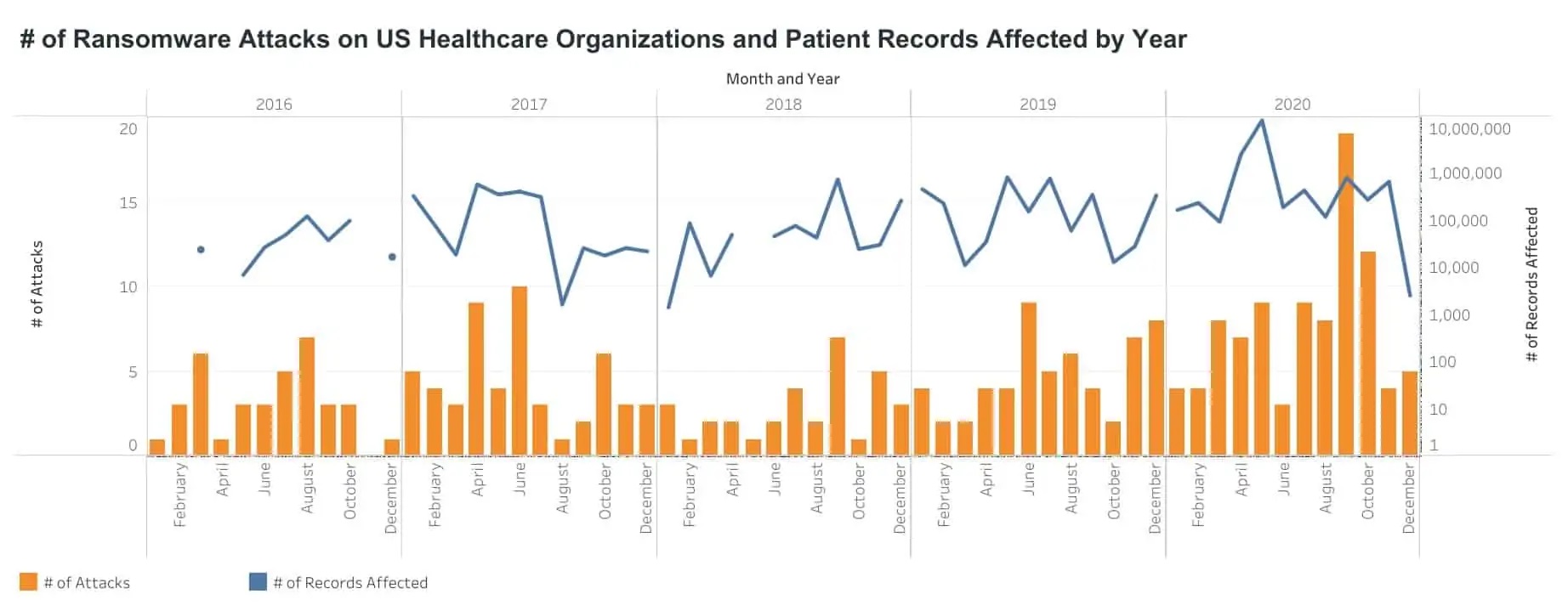
Six More Healthcare Providers Impacted by Ransomware Attacks

GBMC HealthCare in Maryland, Golden Gate Regional Center in California, and Dyras Dental in Michigan have recently suffered ransomware attacks and Allegheny Health Network, AMITA Health, and Bayhealth have announced they have been affected by the ransomware attack on Blackbaud Inc.

GBMC HealthCare

Towson, MD-based GBMC HealthCare has announced it suffered a ransomware attack on December 6, 2020 that forced its computer systems offline and the healthcare provider is now operating under EHR downtime procedures while the attack is mitigated.  GBMC HealthCare had planned for such an attack and had processes in place to ensure care could continue to be provided to patients while keeping disruption to a minimum.

Safe and effective care continues to be provided to patients and its emergency department did not stop receiving patients; however, some elective procedures scheduled for Monday 7, December were postponed. Efforts are underway to bring systems back online and restore the encrypted data and law enforcement has been notified and is investigating the attack. The Egregor ransomware gang has claimed responsibility for the attack.

Golden Gate Regional Center

Golden Gate Regional Center, a provider of services for individuals with developmental disabilities in Marin, San Francisco, and San Mateo counties in California, identified suspicious activity on its computer systems on September 23, 2020. The investigation revealed the protected health information of 11,315 had been exfiltrated from its computer systems prior to the deployment of ransomware.

Data stolen in the attack was limited to names, GGRC client identification numbers, service codes/descriptions, vendor/service provider names/numbers, month or year of service, and cost information related to the services provided. The investigation did not uncover evidence to suggest any stolen data has been misused. Affected individuals were notified by mail in November and complimentary identity theft protection services have been provided to breach victims.

Dyras Dental

Dyras Dental in Lansing, MI has experienced a ransomware attack involving Egregor ransomware, although this has not been confirmed by the dental service provider. A dump of data stolen in the attack was identified by databreaches.net on September 24, 2020. Attempts were made to contact Dyras Dental, but no response was received. Databreaches.net has referred the breach to the Department of Health and Human Services’ Office for Civil Rights as it would appear that the breach has not been reported and patients have not received notification that their PHI has been stolen.

According to Databreaches.net, the dumped data included over 100 files that included insurance billing information, employee W-2 statements, and voicemail recordings containing PHI.

Allegheny Health Network, AMITA Health, and Bayhealth Impacted by Blackbaud Ransomware Attack

Pennsylvania-based Allegheny Health Network, Illinois-based AMITA Health, and Delaware-based Bayhealth have recently announced they have been impacted by the ransomware attack on the software and cloud computing services provider Blackbaud. The healthcare providers used Blackbaud to maintain their fund-raising records and donor databases.

Blackbaud assured the three healthcare providers that no credit card information, bank account information, or social security numbers were compromised in the attack, but some protected health information was stolen by the attackers prior to the deployment of ransomware. Blackbaud paid the ransom demand and received assurances that all stolen data was subsequently destroyed and has not been, and will not be, sold on, published, or misused.

Allegheny Health Network was one of the worst affected clients with the records of 299,507 individuals stolen in the attack. AMITA Health has reported the breach as affecting 261,054 individuals and Bayhealth says 78,006 individuals were affected.

University of Vermont Medical Center Ransomware Attack Cost Could Exceed $63 Million

Ransomware attacks can prove extremely costly. The October 2020 ransomware attack on the University of Vermont Medical Center has reportedly cost more than $1.5 million per day in lost revenue and increased expenses, according to hospital president Stephen Leffler, not including the cost of getting its systems back up and running. The attack occurred on October 28, 2020 and 42 days later losses continue to be experienced. Lost revenue and expenses could exceed $63 million.

The hospital has restored many systems and is operational; however, around 30% of the 600 applications used by the hospital remain out of action and disruption is still being experienced in some areas. Most of the radiology systems have now been restored, although that process has taken around six weeks, cancer treatment capabilities are still not fully restored, sleep studies have not been restarted, and the process of addressing the backlog of postponed appointments and entering handwritten records into its systems is expected to take several more weeks.

The post Six More Healthcare Providers Impacted by Ransomware Attacks appeared first on HIPAA Journal.

Insider Data Breaches Reported by Montefiore Medical Center and Mercy Health

Two insider data breaches have been reported in the past few days by Montefiore Medical Center and Mercy Health. Both incidents involved an employee accessing patient information when there was no legitimate work-related reason for doing so.

Former Montefiore Medical Center Employee Accessed Patient Data for Billing Scam

Montefiore Medical Center in New York City has discovered a former employee accessed patient information as part of a billing scam. Patient names, medical record numbers, and surgery dates were viewed and used to create invoices for unused surgical products, in connection with a vendor.

Montefiore Medical Center discovered the fraud after the invoices had been paid and launched an investigation that revealed the former employee had accessed the information of approximately 4,000 patients without authorization between January 2018 and July 2020.

Medical records, Social Security numbers, and financial information were not accessed, and the investigation has not uncovered any evidence to suggest patients or their insurance companies were defrauded. The fraud has been reported to law enforcement and the investigation is ongoing.

Montefiore Medical Center said the former employee died during the investigation and the vendor has been banned from all Montefiore campuses.

Montefiore Medical Center has taken steps to prevent similar incidents in the future. The paper forms involved in the scam are no longer used and procedures for processing invoices for surgical supplies are being reviewed.

Criminal background checks are already conducted prior to appointment and all employees receive training on privacy policies and are made aware that the medical center has a zero-tolerance policy concerning accessing medical records unless there is a work-related reason for doing so.

Mercy Health Discovers Unauthorized PHI Access by Former Employee

Cincinnati, OH-based Mercy Health has started notifying certain patients that some of their protected health information has been accessed by a member of staff for reasons other than providing care.

The insider breach was discovered by Mercy Health on October 7, 2020. The investigation revealed the employee had accessed patient information on multiple occasions when the information was not required for providing care to patients. The reason for the unauthorized access has not been made public.

Affected patients have been advised to monitor their credit reports and billing/accounts statements and to report any unauthorized activity. As a precaution against identity theft and fraud, affected patients have been offered a complimentary 1-year membership to IDX identity theft protection services.

For the majority of affected patients, the information accessed was limited to name, address, demographic information, date of birth, medical record number, treatment information, clinical information, and/or radiological images.  The former employee also viewed the health insurance ID numbers of a limited number of patients.

Mercy Health has since enhanced procedures to prevent similar incidents in the future and the staff has been re-educated on compliance with Mercy Health’s policies and procedures.

At the time of writing, the incident has not appeared on the HHS’ Office for Civil Rights breach portal so it is unclear how many patents have been affected.

The post Insider Data Breaches Reported by Montefiore Medical Center and Mercy Health appeared first on HIPAA Journal.

Email Account Breaches Reported by University of Minnesota Physicians and McLeod Health

University of Minnesota Physicians has suffered a phishing attack that allowed unauthorized individuals to gain access to the email accounts of two employees. One email account was accessible between January 30 and January 31, 2020 and the other on February 4, 2020 for a short period of time.

Upon discovery of the breach, the accounts were immediately secured, and third-party forensic investigators were engaged to assess the nature and scope of the breach. The review did not uncover any evidence to suggest emails in the accounts had been viewed or patient data obtained, but it was not possible to rule out data access with a sufficiently high degree of certainty.

A review of the compromised accounts revealed they contained the protected health information of certain patients. The types of information in the accounts varied from patient to patient and may have included name, address, date of birth, date of death, date of service, telephone number, medical record number, account number, payment card number, health insurance information, and medical information. A limited number of individuals also had their Social Security number exposed.

Notification letters started to be sent to affected individuals on March 30, 2020, even though the investigation was still ongoing. That investigation has now been completed. The delay was due to the painstaking and lengthy process involved in identifying the relevant data.

University of Minnesota Physicians said that at the time of the breach, multiple email security controls were in place including multi-factor authentication, regular training was being provided to employees on privacy and security, and phishing simulations were being conducted.

Additional technology has now been implemented to further improve security and refresher security training has been provided to employees. Affected individuals have been offered 12 months of complimentary credit monitoring and identity theft protection services through Kroll.

The March 30, 2020 entry on the Office for Civil Rights breach portal indicates 683 individuals have been affected at the time of writing.

McLeod Health Discovers Email Account Breach

South Carolina-based Mcleod Health has discovered the email account of an employee has been accessed by unauthorized individual. Suspicious email account activity was detected on June 23, 2020 and the email account was immediately secured.

A comprehensive forensic review was conducted to determine the nature and scope of the breach, which revealed the email account was breached between April 13, 2020 and April 16, 2020. On August 19, 2020, McLeod Health determined the content of the email account had been downloaded by the attacker in April.

McLeod Health is in the process of conducting a review of the impacted email account to determine what information has been obtained by the attacker and which patients have been affected. Notifications will be mailed to affected patients when the review is completed.

McLeod Health had previously implemented multi-factor authentication to prevent compromised credentials from being used to gain access to email accounts; however, some internal settings had prevented it from being implemented on some devices. That issue is now being addressed and additional security awareness training is being provided to employees.

The post Email Account Breaches Reported by University of Minnesota Physicians and McLeod Health appeared first on HIPAA Journal.