Healthcare Cybersecurity

39% of Cybersecurity Professionals Say Their Company is Under Prepared for a Data Breach

A survey of cybersecurity and IT executives in the United States has revealed 39% believe their company is under prepared to handle a data breach, even through there is a high risk of a data breach occurring. A separate survey, conducted by the Ponemon Institute, revealed 76% of SMBs have experienced a data breach in the past 12 months.

The latest survey was commissioned by the cybersecurity consulting firm Avertium for the firm’s 2019 Cybersecurity and Threat Preparedness report. The survey was conducted on 223 respondents in the United States at companies with 50 or more employees.

When asked about the main problems they experienced in relation to cybersecurity, the two biggest issues were the increasing complexity of cybersecurity tech stacks, which was rated as a major pain point by 76% of respondents. Added to that is the increasing sophistication of cyberattacks, which was a pain point for 75% of cybersecurity professionals.

66% of respondents said third-party or partner vulnerabilities were a major problem area, and 65% said their jobs have been made much more difficult due to vulnerabilities introduced by their company’s digital transformation. The cost and complexity of regulatory compliance was also rated as a pain point by 65% of respondents.

The types of cyberattack that are causing the greatest concern are phishing and malware attacks, which were rated as a major area of concern by 81% and 67% of respondents respectively.

There is a tendency for businesses to rely on new technology to identify and block cyberattacks. While these cybersecurity solutions are certainly important, many attacks bypass these technical controls and target employees. Investment in training is therefore essential to ensure that the workforce is prepared and knows how to identify phishing emails and other common threats.

To help reduce the risk of phishing and malware attacks, 93% said they had implemented a formal employee education program; however, only 63% of firms said they incorporate cybersecurity training into their employee induction programs and just 46% provide annual security awareness training sessions. 74% of respondents said they send regular communications via email providing tips for identifying the latest phishing scams and 58% conduct regular phishing simulation exercises.

Even though technologies exist to automate many cybersecurity tasks, many processes are still being conducted manually, which is stretching IT departments to breaking point. Only 36% of respondents said they had implemented new technologies such as AI-based and machine learning-based cybersecurity solutions to lower the burden on their security staff.

52% said plans are underway to hire new skilled cybersecurity staff in 2020 and, on average, investment in cybersecurity is set to increase by 36% in 2020.

The post 39% of Cybersecurity Professionals Say Their Company is Under Prepared for a Data Breach appeared first on HIPAA Journal.
76% of SMBs Have Experienced a Data Breach in the Past Year

A recent survey conducted by the Ponemon Institute on behalf of Keeper Security has revealed 76% of small and medium sized businesses in the United States have experienced a data breach in the past 12 months.

The survey was conducted on 2,391 IT and IT security professionals in the United States, United Kingdom, and Western Europe for Keeper Security’s 2109 Global State of Cybersecurity report.

The survey revealed SMBs in the United States are more extensively targeted than in other countries. Globally, 66% of SMBs have experienced a data breach in the past year. The frequency of attacks has also increased. Since 2016, the number of cyberattacks on SMBs has risen by 20%. 69% of respondents said cyberattacks have become much more targeted.

The main methods used by cybercriminals to attack SMBs are phishing and social engineering, which were behind 57% of SMB cyberattacks in the past 12 months. 30% of attacks involved other forms of credential theft, and 33% of breaches were due to compromised or stolen devices. 70% of surveyed SMBs said they had experienced incidents in past 12 months in which employee passwords were either lost or stolen.

The root causes of most breaches differed from country to country. In Scandinavia, Austria, Germany, and Switzerland, phishing and social engineering attacks were the most common causes of data breaches, whereas in the United States, United Kingdom, Belgium, Netherlands, and Luxembourg breaches were most commonly due to employee negligence.

63% of respondents globally and 69% in the United States said a data breaches had resulted in the loss or theft of sensitive information, which is 50% higher than in 2016.

Many businesses have implemented an intrusion detection system to prevent and detect breaches, yet 69% of businesses reported that at least one attack had circumvented that system.

There has been a major rise in the use of mobile devices by SMBs and those devices are often used to access business-critical applications. 48% of respondents said they use mobile devices for that purpose and the same number said they do so even though it poses a security risk.

It is important for strong passwords to be set to reduce the potential for password guessing or brute force attacks. While many businesses had password policies in place, 54% said they had no visibility into the password practices of their employees.

There is also a lack of oversight of third parties with whom sensitive data is shared. 70% of respondents said they did not maintain a comprehensive record of the third parties with whom sensitive data was shared. Unless that information is recorded, it is impossible to conduct comprehensive assessments to determine whether business associates are implementing appropriate controls to keep confidential information secure.

45% of SMBs believed they cybersecurity defenses were ineffective at mitigating cyberattack and 39% said they had no incident response procedures in place to deal with data breaches when they occurred. Given the lack of incident response plans it is no surprise that only 26% of respondents said they had managed to decrease their response time to cyberattacks. 39% said their response times had increased.

The post 76% of SMBs Have Experienced a Data Breach in the Past Year appeared first on HIPAA Journal.

TitanHQ Announces Record Growth in MSP Market and New ‘Margin Maker for MSPs’ Initiative

Cloud security vendor and HIPAA Journal sponsor, TitanHQ, has enjoyed impressive growth in Q3, 2019, registering the busiest quarter for MSP business in the company’s 20+ year history.

From humble beginnings, the company has grown into the leading provider of cloud-based email and web security solutions for managed service providers that service the SMB market. Initially, the firm sold anti-spam appliances to local businesses in Galway, Ireland. Today, the company is a global provider of cloud-based network security solutions for SMBs and MSPs.

The company’s cloud-based network security solutions – SpamTitan email security, WebTitan DNS filtering, and ArcTitan email archiving – are used by more than 8,200 businesses around the world and the firm has over 2,200 MSP partners.

TitanHQ’s success in the MSP, OEM, and service provider markets can be attributed to several factors. Many other companies have only considered MSPs after products have been developed, with additional functionality added to appeal to the MSP market. With TitanHQ, MSPs have always been at the core of the design of its security solutions.

The company operates a transparent and flexibility pricing policy with highly competitive margins to help MSPs profit from offering TitanHQ’s core cloud-based network security products to their customers and grow their business.

When MSPs join the TitanShield partner program they are provided with extensive sales enablement and marketing support. Each MSP has a dedicated account manager, engineers, and a highly capable support team to help ensure success. By making it as easy as possible for its partners to succeed, the company has reaped the rewards.

The successes of Q3, 2019 look set to continue in Q4 with the launch of a new sales initiative. The Q4 program has been aptly named Margin Marker for MSPs – A disruptive price package covering both its email and web security platforms.

TitanHQ is offering an exclusive ‘once-in-a-lifetime’ price on an email and web security package that protects the two most mission critical vectors, email and the web, from malware, ransomware, botnets, phishing and spear phishing attacks.

The package includes security and breach protection for MSPs, their employees, and MSP clients, which is provided in two private clouds that can be customized to meet the needs of MSP partners. The package will ensure MSPs can build profitability instantly in Q4.

UK-based MSP, OpalIT, is already reaping the benefits of the new initiative. OpalIT operates out of Newcastle and Edinburgh and has recently transitioned from Vade and Barracuda and is now offering its clients all three TitanHQ solutions – SpamTitan email security, WebTitan DNS filtering, and ArcTitan email archiving – to its 6,000+ customer base and is reaping the rewards.

“Opal IT moved to TitanHQ because of our MSP focused solutions, ease of deployments, extensive APIs functionality and the increased margin they’re now making,” explained Rocco Donnino, EVP Strategic Alliances, TitanHQ. “Our cybersecurity bundle solutions allow MSPs to provide their downstream customers with a layered defense approach”

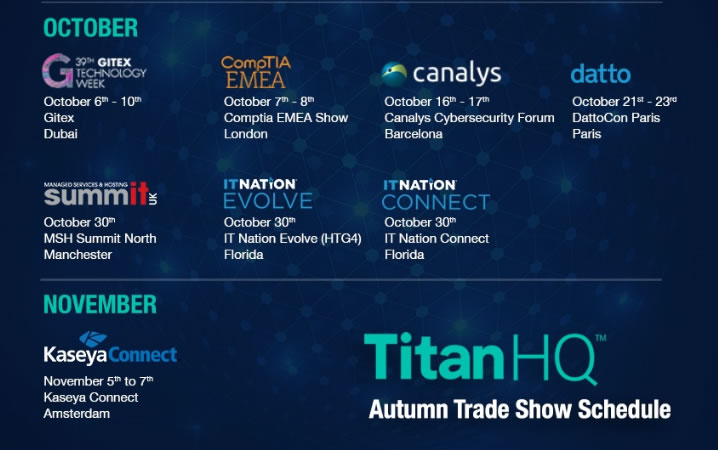
MSPs are encouraged to meet the TitanHQ team at key MSP events in October and November to learn more about the Margin Maker for MSPs initiative and the TitanShield partner program.

The post TitanHQ Announces Record Growth in MSP Market and New ‘Margin Maker for MSPs’ Initiative appeared first on HIPAA Journal.

September 2019 Healthcare Data Breach Report

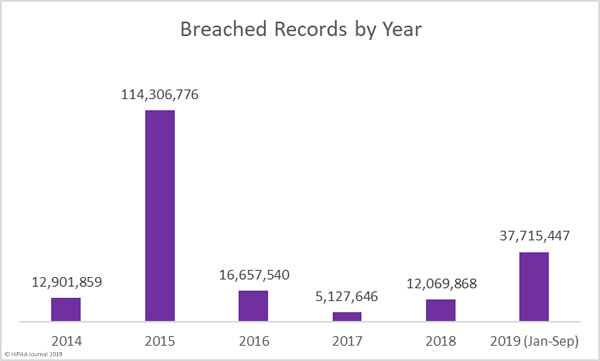
September saw 36 healthcare data breaches of more than 500 records reported to the Department of Health and Human Services’ Office for Civil Rights, which represents a 26.53% decrease in breaches from the previous month.

1,957,168 healthcare records were compromised in those breaches, an increase of 168.11% from August. The large number of breached records is largely down to four reported incidents, each of which involved hundreds of thousands of healthcare records. Three of those incidents have been confirmed as ransomware attacks.

Largest Healthcare Data Breaches in September 2019

The largest breach of the month was due to a ransomware attack on Jacksonville, FL-based North Florida OB-GYN, part of Women’s Care of Florida. 528,188 healthcare records were potentially compromised as a result of the attack. Sarrell Dental also experienced a ransomware attack in which the records of 391,472 patients of its Alabama clinics were encrypted. 320,000 records of patients of Premier Family Medical in Utah were also potentially compromised in a ransomware attack. The University of Puerto Rico reported a network server hacking incident involving 439,753 records of Intramural Practice Plan members. The exact nature of the breach is unclear.

Those four breaches accounted for 85.80% of the healthcare records breached in September.

Name of Covered Entity Covered Entity Type Individuals Affected Type of Breach Location of Breached Information
Women’s Care Florida, LLC Healthcare Provider 528188 Hacking/IT Incident Network Server
Intramural Practice Plan – Medical Sciences Campus – University of Puerto Rico Healthcare Provider 439753 Hacking/IT Incident Network Server
Sarrell Dental Healthcare Provider 391472 Hacking/IT Incident Network Server
Premier Family Medical Healthcare Provider 320000 Hacking/IT Incident Network Server
Magellan Healthcare Business Associate 55637 Hacking/IT Incident Email
CHI Health Orthopedics Clinic -Lakeside Healthcare Provider 48000 Hacking/IT Incident Desktop Computer, Electronic Medical Record, Network Server
Kilgore Vision Center Healthcare Provider 40000 Hacking/IT Incident Network Server
Peoples Injury Network Northwest Healthcare Provider 27000 Hacking/IT Incident Network Server
Sweetser Healthcare Provider 22000 Hacking/IT Incident Email
Perfect Teeth Yale, P.C. Healthcare Provider 15000 Loss Other Portable Electronic Device

Causes of September 2019 Healthcare Data Breaches

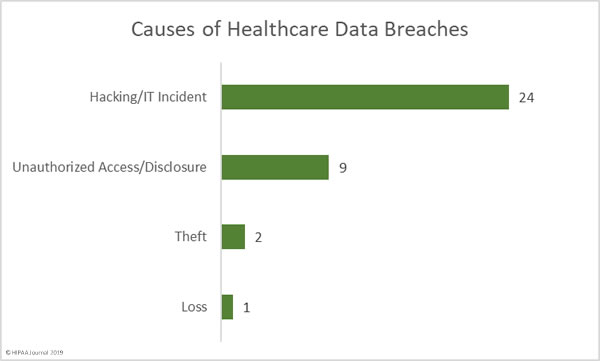
Hacking/IT incidents dominated the breach reports in September with 24 incidents reported. There were 9 unauthorized access/disclosure incidents and three cases of loss/theft of physical and electronic records.

1,917,657 healthcare records were compromised in the 24 hacking/IT incidents which accounted for 97.98% of breached records in September. The mean breach size was 958,829 records and the median breach size was 5,255 records.

Unauthorized access/disclosure incidents in September accounted for 1% or 19,741 breached records. The mean breach size was 2,193 records and the median breach size was 998 records. There were two reported theft incidents involving 4,770 physical and electronic records and a single loss incident involving 15,000 records stored on a portable electronic device.

Location of Breached Protected Health Information

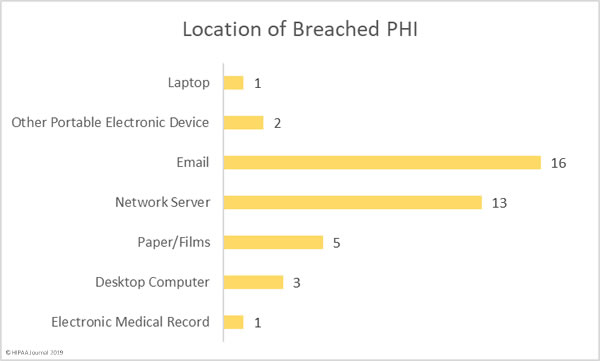
Phishing continues to be a major problem area for the healthcare industry. In September, 44.44% of all breaches – 16 incidents – involved PHI stored in email accounts. There were 13 network server incidents, a large percentage of which were ransomware attacks.

September 2019 Healthcare Data Breaches by Covered Entity Type

28 data breaches were reported by healthcare providers in September, four incidents were reported by health plans/health insurers, and four incidents were reported by business associates of HIPAA covered entities. A further four breaches had some business associate involvement but were reported by the covered entity.

States Affected by September 2019 Healthcare Data Breaches

September’s data breaches were reported by entities in 23 states and Puerto Rico. California, Maryland, and Washington were the worst affected with three breaches each. There were two breaches reported by entities based in Arkansas, Arizona, Colorado, Georgia, Indiana, and South Carolina, and one breach was reported in each of Alabama, Florida, Iowa, Illinois, Maine, Michigan, Nebraska, New Jersey, Ohio, Oklahoma, Tennessee, Texas, Utah, West Virginia, and Puerto Rico.

HIPAA Enforcement Activity in September 2019

In September 2019, the HHS’ Office for Civil Rights announced its third HIPAA violation penalty of the year. Bayfront Health St Petersburg in Florida was issued with an $85,000 financial penalty for the failure to provide a patient with a copy of her child’s fetal heart monitor records within a reasonable time frame. It took 9 months and multiple attempts by the patient before she was provided with the records.

This month, OCR Director Roger Severino gave an update on OCR’s main enforcement priorities and confirmed that noncompliance with the HIPAA right of access is still a major focus for OCR. Further financial penalties can be expected over the coming weeks and months for healthcare organizations that fail to provide individuals with copies of their health information within a reasonable time frame and at a reasonable cost.

There were no financial penalties issued by state attorneys general in September over HIPAA violations.

The post September 2019 Healthcare Data Breach Report appeared first on HIPAA Journal.

Microsoft and NCCoE Start Working on Guidelines for Implementing an Effective Enterprise Patch Management Strategy

A new project has been launched by Microsoft and the National Institute of Standards and Technology (NIST) National Cybersecurity Center of Excellence (NCCoE) to develop guidance on developing and implementing an effective patch management strategy.

Following the (Not)Petya wiper attacks in 2017, Microsoft embarked on a voyage of discovery into why companies had failed to exercise basic cybersecurity hygiene and had not patched their systems, even though patches had been released months previously and could have protected against the attacks.

Over the past 12 months, feedback has been sought from the Department of Homeland Security, the Cybersecurity and Infrastructure Security Agency (CISA), and the Center for Internet Security on the risk of exploitation and patch management strategies. Microsoft has also sat down with customers to find out more about the challenges they face applying patches and to discover exactly why patching is often delayed and why in some cases patches are not applied.

These meetings revealed many companies were unsure about what they should be doing in terms of patch testing. In some cases, patch testing appeared to consist only of asking questions on online forums to see if anyone had experienced any problems with recently released patches. Many customers were unsure about how fast patches needed to be applied.

The meetings prompted Microsoft to form a partnership with NCCoE to develop an enterprise patch management strategy to help companies plan and implement an effective patching strategy. The aim of the initiative is to devise industry guidance and standards to help companies improve their patch management processes.

The project is just about to commence and will involve developing common patch management architectures and processes. Appropriate vendors will assist by building and validating implementation instructions in the NCCoE lab and the project will ultimately result in a new NIST Special Publication 1800 practice guide on patch management.

An invitation has now been extended to vendors with technology offerings that can help with patch management, such as scanning, reporting, deployment, and risk measurement. Individuals and organizations willing to share patch management tips and tactics, and the lessons they have learned are also welcome to participate.

Any vendor, organization, or individual that wishes to participate should contact the project team on at cyberhygiene@nist.gov

The post Microsoft and NCCoE Start Working on Guidelines for Implementing an Effective Enterprise Patch Management Strategy appeared first on HIPAA Journal.

Adoption of Standards Improves Cybersecurity of Internet of Medical Things (IoMT) Devices

Internet of Medical Things (IoMT) technology is helping to increase efficiency, improve the quality of healthcare, and lower healthcare costs; however, IoMT introduces risks. The failure to reduce those risks to a low and acceptable level leaves IoMT devices vulnerable to cyberattacks. Those attacks can be expensive to resolve, which drives up the cost of healthcare and can result in patients coming to harm.

Not only must the devices be secured, cybersecurity must also be managed throughout the entire lifespan of the devices. Software and firmware must be kept up to date, patches must be applied promptly to fix vulnerabilities, and the devices need to be returned when they reach end of life and support comes to an end. Without a thorough understanding of the risks, securing IoMT devices can be a major challenge.

The U.S. Department of Veteran Affairs (VA) has taken steps to improve the safety and security of IoMT devices and has been seeking solutions for securing large-scale IoMT device deployments to better protect the 9 million people under its care. The VA, in conjunction with the global safety science organization, UL, launched a Cooperative Research and Development Agreement (CRADA) Program for medical device cybersecurity in 2016. This week, the VA announced that the program has now been completed.

The program was conducted between 2016 and 2018 and used the UL 2900 Series of Standards as a benchmark to identify critical medical device cybersecurity vulnerabilities in large-scale connected medical device deployments, including lifecycle management and created baseline cybersecurity requirements for medical device manufacturers.

“This collaboration helped us uncover new insights and further accelerate the sharing of medical device cybersecurity information, standards and lifecycle requirements with the intention of benefiting not only the VA hospital system but also the larger U.S. healthcare system of providers and manufacturers,” explained Anura Fernando, UL’s chief innovation architect, Life and Health Sciences.

Throughout the two years, the VA and UL tested hypotheses to expand their understanding of medical device cybersecurity and identify security gaps between in-facility and in-home care and ensure product functionality for FIPS 140-2 compliance. A simulated hacking attack was also conducted on a UL 2900 certified medical device at the Veterans Health Administration (VHA) site in Tampa, FL.

The report shows adoption of standards helps to ensure the safety and security of new medical devices. The findings of the study have resulted in the creation of a series of actionable steps that can be taken by healthcare organizations to improve the security of their medical devices.

“The report findings will help the VA ensure safety for its patient community while also serving as a model for how we can continue to drive innovation within the larger healthcare ecosystem,” said Marc Wine, Director, Technical Integration Support and Industry Liaison, U.S. Department of Veterans Affairs.

CRADA findings included:

  • Use of UL 2900 Series of Standards and product testing/certification accelerated adoption of innovative healthcare technologies through improved pre-procurement product vetting and post-procurement product management.
  • Testing and certification improved confidence in product development processes, security control design evaluation, post market patch management support provided by device manufacturers.
  • Compliance with UL 2900 enhanced endpoint security resulted in improved allocation of cybersecurity resources allowing them to be focused on critical threats to veterans’ safety and security.

The post Adoption of Standards Improves Cybersecurity of Internet of Medical Things (IoMT) Devices appeared first on HIPAA Journal.

Report Reveals the Most Common Cyber Threats Faced by Healthcare Organizations

A new report from Proofpoint offers insights into the cyber threats faced by healthcare organizations and the most common attacks that lead to healthcare data breaches.

Proofpoint’s 2019 Healthcare Threat Report highlights the ever-changing threat landscape and how the tactics used by cybercriminals are in a constant state of flux.

The study – conducted between Q2, 2018 and Q1, 2019 – shows how the malware variants used in attacks often change. Ransomware was a popular form of malware in Q2, 2018 and was used in many attacks on healthcare organizations, but ransomware incidents then dwindled rapidly as cybercriminals switched their attention to banking Trojans. For the remaining three quarters of the study period, banking Trojans were the malware variant of choice, although ransomware is now proving popular once again.

Proofpoint’s research shows banking Trojans were the biggest malware threat to healthcare organizations for the period of the study, accounting for 41% of malicious payloads delivered via email between Q2 2018 and Q1 2019. In Q1, 2019, the biggest threat came from the Emotet banking Trojan, which accounted for 60% of all malicious payloads.

While phishing attacks are a constant threat, malware attacks were more numerous over the period of study, although phishing attacks have increased considerably in 2019. Malware is often spread via email attachments, but URLs are also used to deliver malware. The embedded hyperlinks can direct users to phishing websites where credentials are stolen, but they can also send healthcare employees to websites where malware is silently downloaded. 77% of email-based attacks during the period of study used malicious URLs

Malicious emails are more likely to be opened if the sender of the email is known to the recipient. 95% of targeted healthcare companies received emails that spoofed their own trusted domain and 100% of targeted healthcare companies had their domain spoofed in attacks on their patients and business partners.

On average, targeted healthcare organizations received 43 imposter emails in Q1, 2019, an increase of 300% from Q1, 2018. Those attacks saw an average of 65 members of staff attacked at each healthcare organization.

While the subjects of the emails were highly varied, most commonly the subject lines contained the words “urgent”, “payment”, or “request.” Those words were included in 55% of malicious emails. Malicious emails are most commonly sent during business hours when employees are at their desks, usually between 7am and 1pm, Monday to Friday.

While spray and pray tactics are still used by cybercriminals to get their phishing emails and malware out to as many individuals as possible, many healthcare email attacks are much more targeted. Proofpoint analyzed email attacks at several healthcare organizations and found that some individuals are more targeted than others.

These “Very Attacked Persons” or VAPs include doctors/physicians, researchers, and admin staff at healthcare providers, customer support/sales staff, admin staff, and IT teams at health insurers, and executives, marketing employees, and logistics/sourcing and supply chain staff at pharma firms.

Shared email aliases used to request patient information or for patient portals received the most malicious emails. These email addresses have the potential to result in multiple malware infections and several responses to phishing emails.

Blocking these threats requires layered defenses. Anti-phishing and anti-malware solutions should be implemented to protect the email system, filtering controls are required to block web-based threats, anti-malware controls are required on endpoints, and employees must receive regular training to help them identify threats and condition them to take appropriate action when a suspicious email is received.

The post Report Reveals the Most Common Cyber Threats Faced by Healthcare Organizations appeared first on HIPAA Journal.

MITA Publishes New Medical Device Security Standard

The Medical Imaging & Technology Alliance (MITA) has released a new medical device security standard which provides healthcare delivery organizations (HDOs) with important information about risk management and medical device security controls to harden the devices against unauthorized access and cyberattacks.

The new voluntary standard – Manufacturer Disclosure Statement for Medical Device Security (MDS2) (NEMA/MITA HN 1-2019) – was developed in conjunction with a diverse range of industry stakeholders and aligns with the 2018 U.S. Food and Drug Administration (FDA) Medical Device Cybersecurity Playbook, issued in October 2018.

The guidance explains that cybersecurity of medical devices is a shared responsibility. HDOs must collaborate with medical device manufacturers to ensure best practices are adopted. Device manufacturers, HDOs, government entities, and cybersecurity researchers need to work together to ensure threats to medical devices are managed and reduced to reasonable and appropriate levels.

The new standard is intended to help streamline communications between device manufacturers and HDOs, increase transparency of information, and clarify the roles of each with respect to the security of medical devices.

“Transparent information and speed of getting that information from manufacturers to health delivery organizations are crucial, and this Standard helps foster both,” said Tim Walsh, Principal Information Security Analyst – CIS Operations, Mayo Clinic, and member of the MDS2 Canvass Group.

The guidance includes information on the standard security controls incorporated into medical devices to ensure they meet industry standards and can be used safely and securely; however, it is the responsibility of HDOs to ensure that the devices are configured correctly. HDOs need to assess medical device security controls and determine whether they are appropriate, work within their own environments, and allow risk to be effectively controlled and managed.

Worksheets have been created for assessing the features and security capabilities of each medical device, including the specifications, the management of personally identifiable information, audit controls, authorization controls, data backup and disaster recovery functions, data integrity controls, anti-malware protections, connectivity, node authentication, security guidance, how cybersecurity upgrades will be performed throughout the lifecycle of devices, and other key information for HDOs.

Medical device manufacturers should complete the worksheets to provide HDOs with the technical information they will need to conduct their own security risk assessments and build their security risk management programs.

While the MDS2 form contains important technical information on medical devices, MITA warns that it is not intended to be used as the sole basis for medical device procurement, as writing medical device procurement specifications requires more extensive knowledge of an HDO’s security environment and healthcare mission.

The information on the MDS2 form must be combined with detailed information collected about the care delivery environment in which the devices will be used. Tools such as ECRI’s Guide for Information Security for Biomedical Technology are useful in this regard.

The post MITA Publishes New Medical Device Security Standard appeared first on HIPAA Journal.

HHS Proposes New Stark Law Safe Harbor Covering Cybersecurity Donations

The U.S. Department of Health and Human Services (HHS) has proposed changes to physician self-referral and federal anti-kickback regulations which will see the creation of a new safe harbor covering hospital donations of cybersecurity software and associated services to physicians.

The proposed law change is detailed in two new rules issued by the HHS’ Office of Inspector General (OIG) and the Centers for Medicaid and Medicare Services (CMS) which aim to modernize and clarify regulations that interpret the Federal Anti-Kickback Statute and Physician Self-Referral law known as Stark Law.

The proposed rules are part of the HHS’s Regulatory Sprint to Coordinated Care which promotes value-based care by eliminating federal regulatory barriers that are impeding efforts to improve the coordination of care between providers.

“The digitization of the healthcare delivery system and related rules designed to increase interoperability and data sharing in the delivery of healthcare create numerous targets for cyberattacks,” explained OIG. “The healthcare industry and the technology used to deliver healthcare have been described as an interconnected ‘ecosystem’ where the ‘weakest link’ in the system can compromise the entire system.”

Physician practices are a possible weak link that could be exploited by threat actors to compromise the whole system. Many small healthcare providers lack the necessary resources to improve their security posture and ensure that their systems, networks, and patient data are adequately protected.

The proposed updates are intended to provide greater clarity for healthcare providers participating in value-based arrangements and are providing coordinated care for patients. They are intended to ease the compliance burden for healthcare providers while ensuring strong safeguards are maintained to protect patients and programs from fraud and abuse.

There is already an exception to Stark Law which permits healthcare providers to make EHR-related donations to physicians as well as donations of cybersecurity software and services. The proposed rule seeks to provide greater certainty for healthcare providers that such donations do not violate Stark Law.

The new safe harbor will remove real or perceived barriers that prevent parties from using cybersecurity technologies to improve security. The safe harbor was recommended by the HHS Healthcare Industry Cybersecurity Task Force in 2017 and will cover certain cybersecurity technologies and associated services that are essential for protecting against cyberattacks on the healthcare industry. Those attacks increase the costs of healthcare delivery and often prevent healthcare providers from accessing health records and other information essential for healthcare delivery.

In the context of the proposed rule changes, OIG defines cybersecurity as “the process of protecting information by preventing, detecting, and responding to cyberattacks.” Covered cybersecurity technology includes software or information technology that improves cybersecurity, but there are limitations on what can be donated. The rule includes software, cybersecurity training services, business continuity and data recovery services, services associated with security risk assessments, threat sharing services, and cybersecurity-as-a-service offerings.

The OIG rule does not permit donations of hardware as it could have uses outside of cybersecurity and would increase the risk of donations being made to influence referrals. OIG says it may consider updating its proposed rule to include certain types of stand-alone hardware that can only be used for cybersecurity purposes, such as multi-factor authentication dongles.

The proposed rules will help to reduce the cost of healthcare by helping smaller healthcare providers avoid the costs of improving their security posture and reduce the potential for costly cyberattacks. By receiving donations of necessary software and cybersecurity services, they will be able to direct funds to other items and services not covered by the proposed safe harbor.

“Administrative costs are driving up the cost of healthcare in America – to the tune of hundreds of billions of dollars. The Stark proposed rule is an important next step in President Trump’s healthcare agenda for Americans. We are updating our antiquated regulations to decrease burden for providers and helping bring down these increasingly escalating costs,” said CMS administrator Seema Verma.

“Regulatory reform has been a key piece of President Trump’s agenda not just for faster innovation and economic growth, but also better, higher-value healthcare. Our proposed rules would be an unprecedented opportunity for providers to work together to deliver the kind of high-value, coordinated care that patients deserve,” said HHS Secretary, Alex Azar.

The post HHS Proposes New Stark Law Safe Harbor Covering Cybersecurity Donations appeared first on HIPAA Journal.